
Why Travel Changes Perspective: Science-Backed Insights
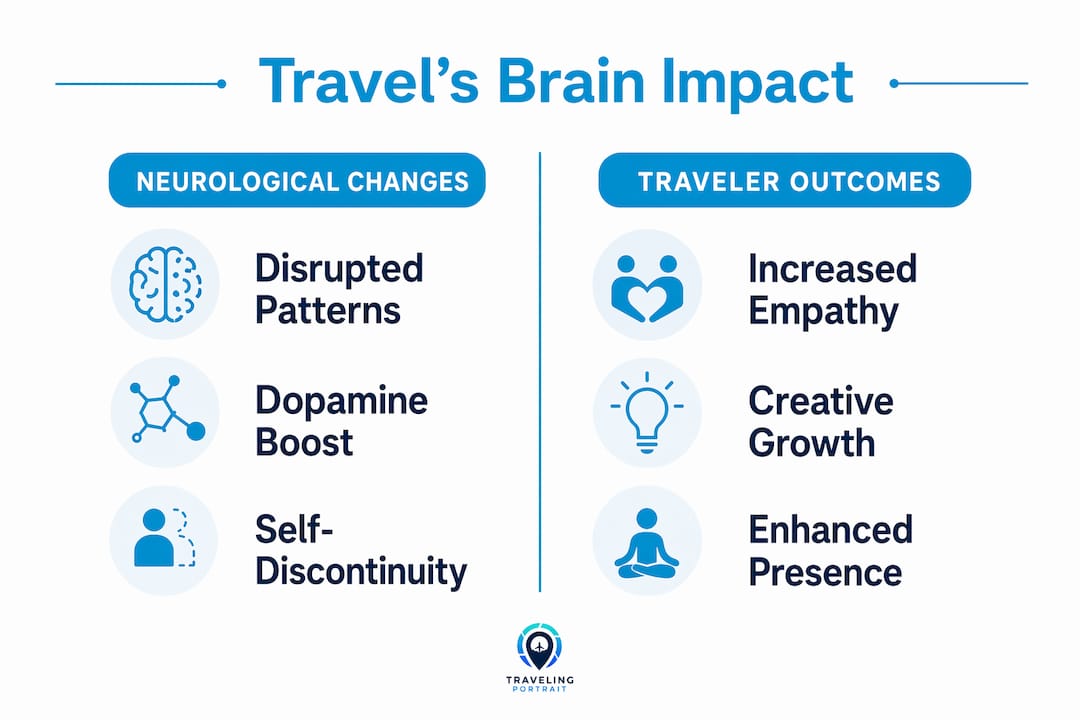
Travel genuinely rewires how you see the world, and neuroscience backs that up. When you step into an unfamiliar environment, your brain’s default mode network gets disrupted, breaking the autopilot patterns that govern most of your daily thinking. That disruption is the starting point for real perspective change. Here’s what actually happens:
- Identity loosening: Travel induces self-discontinuity, temporarily stripping away your usual roles and routines, which creates space for clearer self-reflection.
- Neuroplasticity activation: Novel environments trigger dopamine release and push your brain to form new neural connections, boosting creativity and cognitive flexibility.
- Empathy growth: Deep cultural immersion increases cognitive flexibility and empathy by forcing your brain to adapt to entirely different social logics.
- Awe effect: Vast, unfamiliar experiences trigger awe, which boosts empathy across populations, as demonstrated in a 2024 APA journal study across seven samples.
- Conscious presence: Travel forces active processing over autopilot, making you more emotionally present and aware of your surroundings.
- Lasting brain changes: The brain can rewire after a single novel experience through behavioral timescale synaptic plasticity, a mechanism tied to vivid travel memories.
These aren’t soft, feel-good claims. They’re measurable changes supported by psychology and neuroscience research, and understanding them helps you travel with far more intention.
Why travel changes perspective: the psychology and neuroscience behind it
Your brain runs on efficiency. Left to its own devices, it defaults to familiar patterns, recycling the same thoughts, assumptions, and reactions on loop. Travel breaks that loop hard.
The brain’s default mode network, which handles self-referential thinking and mind-wandering, gets interrupted the moment you’re navigating an unfamiliar city, deciphering a foreign menu, or adjusting to a completely different social rhythm. Research shows this interruption activates active processing, pulling you out of autopilot and into genuine engagement with your environment. That shift alone changes how you think.
Then there’s self-discontinuity. When you travel, especially for extended periods, you temporarily lose the identity scaffolding that defines you at home: your job title, your social circle, your daily rituals. Disorienting? Yes. But that disorientation is precisely what allows authentic self-reflection. Without the usual labels and roles, you start to see yourself more clearly.
Novelty also triggers dopamine release, which drives curiosity and keeps your brain actively engaged rather than passively coasting. Research by Maddux and Galinsky links time living abroad with measurable improvements in creative performance, suggesting that the mental suppleness gained from engaging with unfamiliar cultural schemas directly translates to better problem-solving back home.
| Travel Experience | Neurological Effect | Outcome |
|---|---|---|
| Navigating unfamiliar environments | Disrupts default mode network | Breaks autopilot thinking |
| Cultural immersion | Adapts brain to different social logics | Increases cognitive flexibility |
| Awe-inducing experiences | Activates empathy circuits | Boosts tolerance and connection |
| Novel sensory input | Triggers dopamine release | Drives curiosity and engagement |
| Single novel experience | Behavioral timescale synaptic plasticity | Lasting hippocampal changes |
| Extended time abroad | Expands mental schemas | Improves creative problem-solving |
Pro Tip: Lean into the disorientation rather than fighting it. The moments when you feel most lost or confused abroad are exactly when your brain is doing its deepest rewiring. Resist the urge to immediately Google your way back to comfort.
How travelers actually grow through confronting unfamiliar cultures
There’s a real difference between being a tourist and being a traveler who grows. Passive tourism, where you observe from a comfortable distance, produces far less personal transformation than active adaptation, where you genuinely engage with the friction of being somewhere foreign.
Meaningful perspective shifts come more from what challenges you in the environment than from the destination itself. That means the traveler who gets lost, attempts the local language badly, eats something unrecognizable, and figures out a bus system in a script they can’t read is growing far more than someone who stays in a resort bubble. The challenge is the point.
Solo travel accelerates this process significantly. When you’re traveling alone, every decision falls on you, from navigating transport to managing unexpected problems to choosing where to eat. That constant decision-making builds self-knowledge and confidence in a way that group travel, where responsibilities are shared, simply can’t replicate.

Exposure to diverse social logics also builds genuine tolerance. When you see that people in another culture organize family life, express emotion, or approach time completely differently, and that their way works perfectly well for them, your default assumption that your way is the “normal” way quietly dissolves. That’s not a small shift.
Common personal growth outcomes reported by seasoned travelers include:
- Increased comfort with ambiguity and uncertainty
- Stronger ability to read social cues across cultural contexts
- Greater confidence in making decisions under pressure
- Reduced fear of the unfamiliar
- Expanded sense of what’s possible in life
- Deeper empathy for people with radically different life circumstances
- A recalibrated sense of what actually matters day to day
The creativity boost linked to multicultural immersion is particularly well-documented. Deep cross-cultural engagement produces measurable improvements in cognitive flexibility, empathy, and creative problem-solving. The key word is “deep.” A weekend city break won’t do it. Sustained immersion, where you’re genuinely adapting to a different cultural logic rather than just observing it, is what moves the needle. If you’re planning a trip with real growth in mind, deliberate travel planning makes a measurable difference in how much you actually get out of it.
How travel makes you appreciate home and rethink your priorities
One of the stranger gifts of travel is what it does to your relationship with ordinary life. You leave home, and somewhere along the way, you start seeing it differently.
Travel creates psychological distance from your daily routine, and that distance is genuinely useful. When you’re not embedded in your usual habits and environment, you can look at your life more objectively. The job you’ve been complaining about, the neighborhood you take for granted, the relationships you’ve been neglecting: all of it comes into sharper focus when you’re 6,000 miles away living out of a backpack. Experts advocate using travel as a reset to disrupt stress-induced autopilot and realign priorities, and that’s exactly what the psychological distance enables.
Disrupting habitual automatic processing also heightens presence and gratitude. At home, you stop noticing the good stuff because familiarity makes it invisible. Travel strips that familiarity away. You notice the quality of light, the taste of food, the kindness of strangers, because everything is new and your brain is paying attention. When you return home, that attentiveness carries over, at least for a while.
The material versus experiential value shift is real too. Spending time in places where people have far less materially but seem genuinely content forces a reckoning with what you’ve been chasing. Many travelers come back and quietly start spending more on experiences and less on things, not because they made a conscious resolution, but because their frame of reference changed.
Key mindset shifts travelers commonly report after returning home:
- Renewed appreciation for relationships and community
- Less attachment to material possessions
- Greater clarity about career direction and life goals
- Permission to rest and pursue curiosity without guilt
- A recalibrated sense of urgency about what actually needs doing
- Stronger motivation to make changes they’d been postponing
The catch is that these shifts can fade within six weeks unless travelers make active changes upon return to reinforce them. The post-trip window is critical. Travelers who hold onto their gains tend to adapt habits or relationships in the weeks immediately after returning, rather than simply waiting for the perspective to stick on its own.
How immersive storytelling deepens and sustains what travel starts
Here’s something that doesn’t get talked about enough: the act of telling your travel story is itself a tool for deepening the perspective shift. It’s not just documentation. It’s integration.
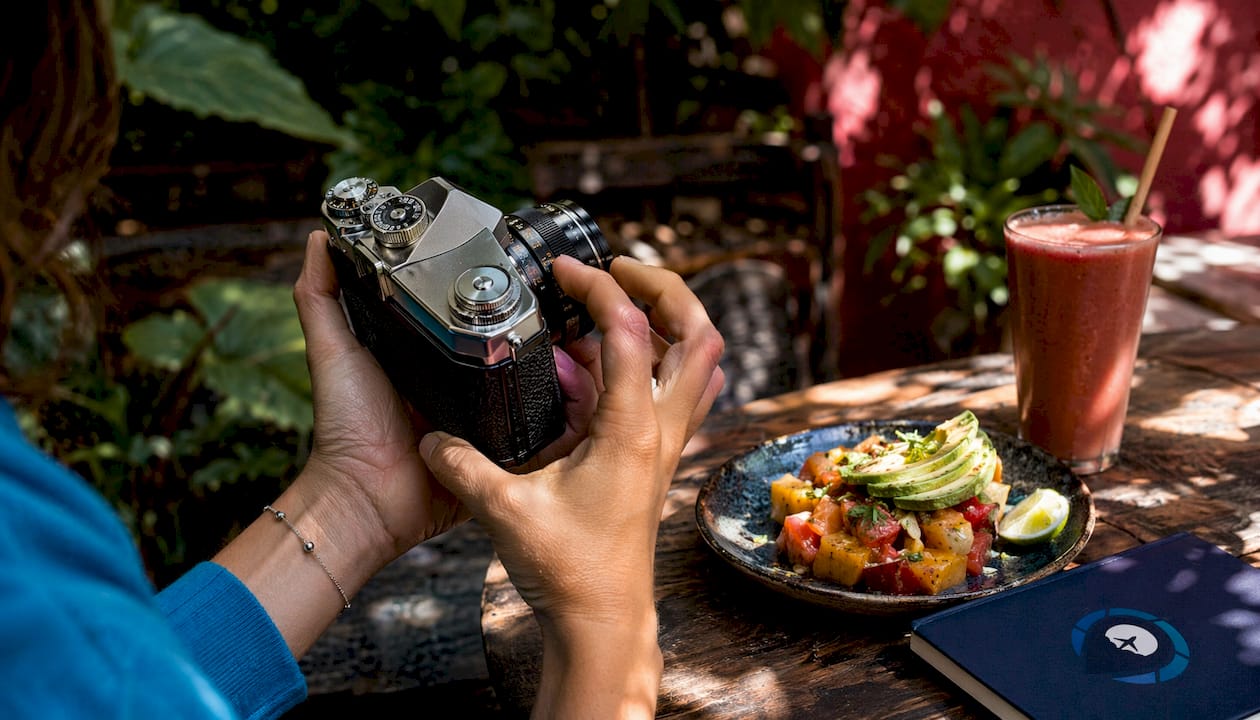
When you reflect on and articulate a travel experience, whether through journaling, photography, or narrative writing, you reinforce the neural pathways that formed during the trip. The brain doesn’t just store memories passively. It reconstructs them each time you revisit them, and that reconstruction process surfaces insights that weren’t fully conscious during the experience itself. Travel journaling is one of the most direct ways to access that process deliberately.
Vivid photographic documentation adds another layer. When you frame a scene through a lens, you’re forced to decide what matters, what’s worth capturing, and what the light is doing. That act of conscious selection trains your eye and your attention in ways that pure observation doesn’t. At Traveling Portrait, the whole approach is built around this idea: that immersive storytelling through photography and narrative doesn’t just record a trip, it extends and deepens the transformation the trip began.
The post-trip fading problem is real, as noted earlier. But storytelling is one of the most effective counters to it. Revisiting your travel stories, photos, and journals keeps the new neural pathways active and prevents the default mode network from simply reclaiming its old territory. Travelers who document their experiences richly tend to carry the perspective shifts longer and integrate them more fully into their daily lives.
Pro Tip: Don’t wait until you’re home to start documenting. Write a few sentences each evening about one moment that surprised or unsettled you. Those raw, in-the-moment notes capture the cognitive friction that drives real growth, and they’re far more useful than polished recaps written weeks later.
Shifting your mindset from seeing a trip as consumption to treating it as an encounter that challenges your habits is when transformation begins. Storytelling is how you make that transformation stick. If you want to go deeper into how travel diaries can anchor your growth, Traveling Portrait has a full guide on exactly that.
Ready to put this into practice? Traveling Portrait’s adventure travel resources are built for travelers who want more than a vacation. They’re for people who want to come back genuinely different.
Key Takeaways
Travel changes perspective by disrupting the brain’s default patterns, inducing self-discontinuity, and building empathy through cultural immersion, with gains that last only when actively reinforced after returning home.
| Point | Details |
|---|---|
| Brain disruption drives growth | Travel interrupts the default mode network, breaking autopilot thinking and enabling new self-insights. |
| Self-discontinuity is the mechanism | Temporarily losing your home-based identity creates the psychological space needed for authentic reflection. |
| Immersion beats observation | Deep cultural engagement produces measurable gains in creativity and empathy; passive tourism does not. |
| Perspective shifts fade fast | Gains can fade within six weeks unless travelers make active habit or relationship changes after returning. |
| Storytelling extends the shift | Journaling and photography reinforce new neural pathways, helping perspective changes last beyond the trip. |
Recommended
Other Posts You Might Like