What Does Expedition Travel Mean? A Real Explainer
What does expedition travel mean, exactly?
Expedition travel is a purposeful, organized journey into remote or wild environments, built around active immersion rather than passive sightseeing. The word “expedition” itself traces back to the Latin expeditio , meaning a journey undertaken with a specific, organized purpose, like exploration or scientific research. That origin still holds today. As Merriam-Webster defines it, an expedition is a serious, goal-driven journey involving groups and equipment, distinct from a casual leisure trip.
What sets expedition travel apart isn’t just the destination. It’s the intention. You’re not racing through five cities in a week. You’re spending that same time walking alongside Maasai guides in Tanzania, learning to read the land the way they do. Or stepping into an Icelandic ice cave with a glaciologist who explains how shifting glaciers have shaped the country for centuries. Both give you memories. One changes how you see the world.
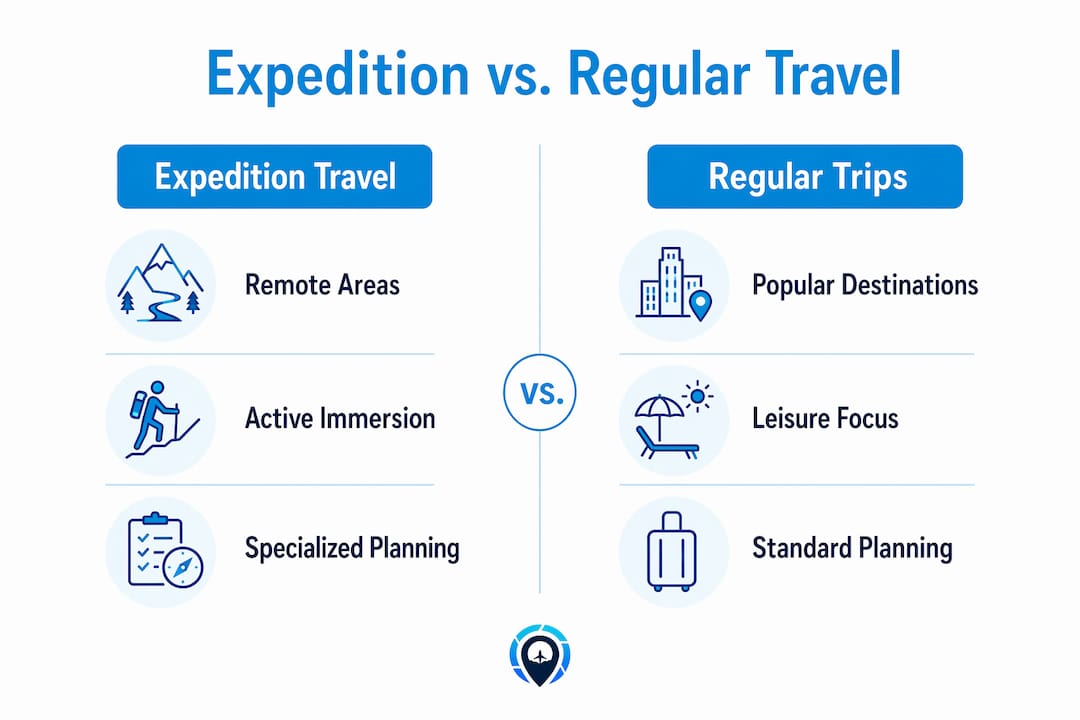
Here’s what makes an expedition different from a regular trip, at a glance:
- Purposeful intent: Every journey has a clear goal, whether wildlife observation, cultural exchange, or scientific learning.
- Expert guidance: Professional naturalists, local guides, and specialists lead the experience.
- Complex logistics: Permits, safety protocols, timing, and specialized equipment are handled by professionals.
- Active participation: You engage directly with the environment and communities, not just observe from a distance.
- Small group sizes: Fewer travelers means lighter environmental impact and richer personal connection.
- Responsible tourism: Expeditions support local communities financially and culturally.
- Remote or unusual access: You reach places standard tourism simply doesn’t touch.
How is expedition travel different from regular trips or cruises?
The clearest way to see the difference is to compare what each type of travel actually prioritizes. A traditional cruise ship functions as a floating resort. Think pools, buffets, nightly entertainment, and a schedule built around onboard amenities. The destination is almost secondary. Expedition vessels flip that entirely. The ship is a base camp, not the attraction. It’s designed to navigate harsh or remote environments, and the real experience happens the moment you step ashore.

Regular leisure trips tend to follow generic itineraries with set excursions at popular landmarks. Expedition travel, by contrast, prioritizes shore-side immersion and intentional participation. You’re not photographing a waterfall from a parking lot. You’re trekking to it with a local hydrologist who explains why it’s shrinking.
Key distinctions worth knowing:
- Ship vs. shore focus: Traditional cruises center on onboard life; expedition travel centers on what’s outside.
- Itinerary flexibility: Expeditions adapt to weather, wildlife, and local conditions rather than fixed schedules.
- Group size: Expedition groups are typically small, creating a more personal and lower-impact experience.
- Comfort expectations: Expedition travel doesn’t always mean roughing it, but comfort is secondary to access.
- Guide expertise: Expedition leaders are specialists, not generic tour hosts.
- Depth of engagement: You form real connections with places and people rather than collecting passport stamps.
Pro Tip: If you’re comparing expedition cruises to traditional ones, ask the operator how much time is spent on shore versus on the ship. That ratio tells you everything about the trip’s real focus.
Who is expedition travel actually for?
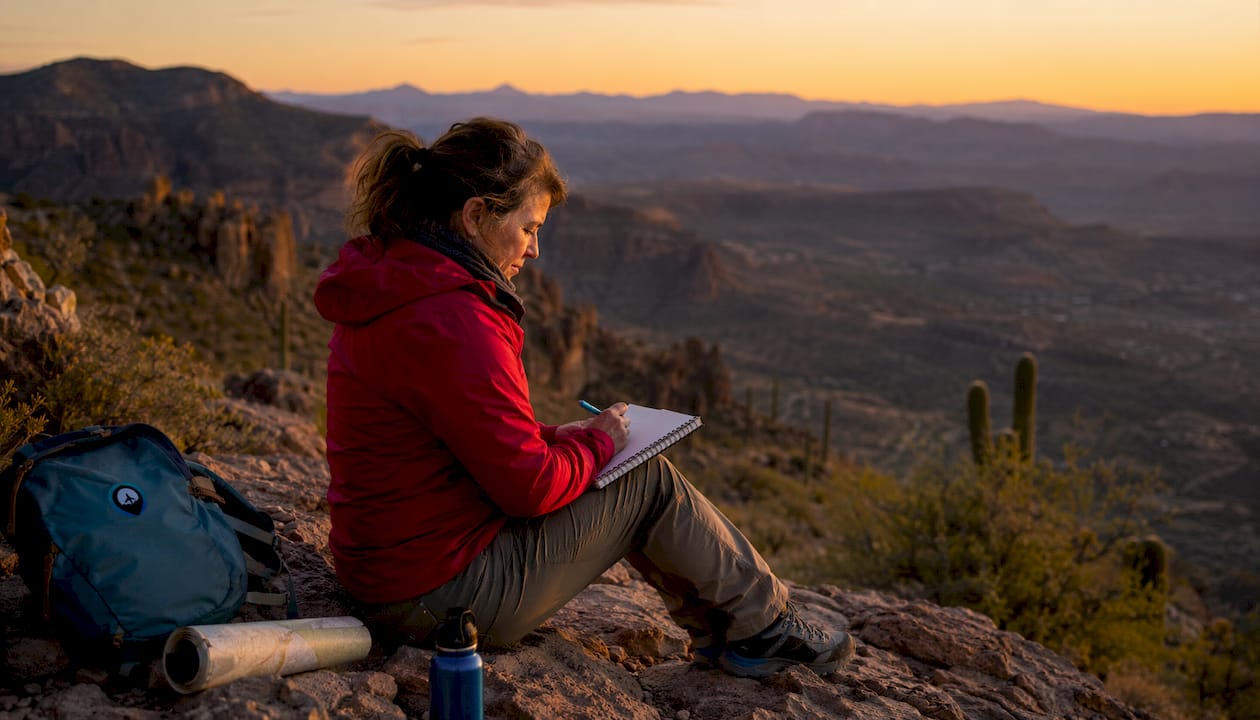
Here’s a misconception worth clearing up: expedition travel is not exclusively for hardcore adventurers or elite athletes. Expeditions aren’t about testing your endurance. They’re about discovery. Some expeditions involve serious physical effort. Others are perfectly relaxed, built around cultural immersion or wildlife observation from a comfortable base.
The traveler who thrives on expedition travel tends to share a few traits. They want depth, not just distance. They’re curious about how ecosystems work, how communities live, or how landscapes formed over millennia. They’re comfortable with some uncertainty and genuinely excited by it. Checking the benefits of guided adventure tours can help you figure out whether this style of travel fits how you naturally connect with the world.
Expedition travel suits you if you:
- Crave meaningful, immersive experiences over convenience.
- Feel drawn to wildlife, nature, indigenous cultures, or remote landscapes.
- Want to learn something real, not just collect photos.
- Are open to smaller groups and shared experiences with fellow travelers.
- Have some physical ability and willingness to engage actively, even if not at an extreme level.
- Care about where your travel dollars go and want them to benefit local communities.
- Feel restless on standard beach holidays or city breaks.
It’s worth noting that luxury expedition options exist too. Some operators blend remote access with genuinely upscale onboard amenities, so physical hardship is never a requirement. The defining factor is always intentionality, not toughness.
Why does expedition travel require specialized planning?
Getting to a remote glacier, a rainforest research station, or an indigenous community in a politically sensitive region doesn’t happen by booking a flight and showing up. Professional logistics are what make expedition travel both safe and meaningful. Permits, safety protocols, timing windows, and specialized equipment all need expert coordination before you ever pack a bag.

The stakes are genuinely higher in expedition environments. Political instability, environmental fragility, and health risks specific to remote locations all require advance preparation that goes well beyond a standard travel checklist. Specialized travel insurance is more critical here than on any other type of trip, covering scenarios that standard policies simply don’t address.
Planning elements that distinguish expedition travel:
- Permits and access: Many remote destinations require government or conservation permits obtained months in advance.
- Safety protocols: Emergency evacuation plans, medical kits, and communication equipment are standard.
- Specialized gear: From crampons for glacier travel to water purification systems for jungle treks, the right equipment is non-negotiable.
- Expert guides and local partnerships: Local knowledge isn’t a bonus; it’s what makes the experience possible and responsible.
- Timing and seasonality: Wildlife migrations, weather windows, and community availability all shape when an expedition can run.
- Health preparation: Vaccinations, altitude acclimatization plans, and fitness assessments often apply.
For a practical starting point, Traveling Portrait’s adventure travel gear checklist covers the equipment side in real detail. And if you want to understand why structured planning pays off so dramatically, the adventure travel planning guide breaks it down clearly.
Where can expedition travel take you?
The range of expedition destinations is genuinely staggering. Polar regions, tropical rainforests, high-altitude salt flats, remote island chains, highland communities, and ancient cultural territories all fall within the scope of expedition travel. Common expedition environments include the Arctic and Antarctic, the Amazon Basin, the Scottish Highlands, Bolivia’s Uyuni Salt Flats, Zambia’s Luangwa Valley, and the Faroe Islands, among many others. These are places where standard tourism either can’t reach or barely scratches the surface.
What you actually do in these places varies just as much as the destinations themselves. Wildlife tracking in Zambia looks nothing like a cultural homestay with Mongolian herders or a zodiac cruise among walruses off Svalbard. That variety is part of what makes expedition travel so hard to pin down with a single image.
Typical expedition environments and activities include:
- Polar regions: Arctic and Antarctic expeditions with zodiac landings, wildlife observation, and glaciologist-led ice exploration.
- Rainforests: Amazon Basin treks with expert naturalists focused on biodiversity and conservation.
- Remote islands: Faroe Islands hikes, Galápagos wildlife encounters, and isolated Pacific archipelagos.
- High-altitude landscapes: Himalayan trekking, Andean cultural routes, and volcano ascents.
- Salt flats and deserts: Bolivia’s Uyuni, Namibia’s Namib, and other surreal, rarely visited terrain.
- Indigenous community regions: Homestays and guided cultural exchanges that directly support local families.
- Highland wilderness: Scottish Highlands, Patagonia, and New Zealand’s backcountry with local historian guides.
Traveling Portrait’s destinations hub gives a real sense of the kinds of wild, remote places that expedition-style travel opens up.
Expert insights on what makes expedition travel worth it
The travel industry has been pretty clear on this for years: expedition travel’s value isn’t just about going somewhere remote. It’s about what happens when expert guidance, local knowledge, and careful logistics all come together in one place. When that alignment works, you stop being a tourist and start being a participant in the story of a place.
Responsible tourism sits at the core of every well-run expedition. Small group sizes mean lighter impact on fragile ecosystems. Partnerships with local communities channel tourism revenue directly to the people you meet. Educational layers, whether learning about wildlife conservation in the Amazon or witnessing climate change up close in the Arctic, turn a trip into something that genuinely stays with you.
A few expert perspectives worth keeping in mind:
- Expedition travel is about depth, not danger. Physical challenge is optional; intentional engagement is not.
- Professional logistics aren’t just a convenience. They’re what makes access to sensitive, remote environments responsible and safe.
- Local guides bring knowledge no amount of research can replicate. Their presence transforms a location into a living, breathing story.
- Luxury and expedition travel are not mutually exclusive. Comfort levels vary widely across operators and trip styles.
- Eco-adventure travel and expedition travel share the same ethical foundation: leave places better than you found them.
“Expedition travel is about intentional immersion. It puts you directly in the story of a place. These aren’t excursions. They’re exchanges that stay with you long after you’ve returned home.” — Rivers & Roads Travel
The best expeditions don’t happen by accident. They’re built on months of preparation, genuine local partnerships, and a clear commitment to leaving the environment and its communities better off. That’s what separates a truly transformative trip from a well-marketed one.
If you want to go deeper on what makes adventure travel tick, Traveling Portrait’s guide on adventure travel defined is a great next read.
Key Takeaways
Expedition travel is a purposeful, expert-led journey into remote or wild environments, defined by active immersion, responsible tourism, and specialized logistics rather than passive sightseeing.
| Point | Details |
|---|---|
| Core definition | Expedition travel is an organized, purposeful journey focused on immersion in remote or wild destinations, not casual tourism. |
| Expert logistics matter | Professional planning handles permits, safety, timing, and gear so travelers can focus entirely on the experience. |
| Not just for thrill-seekers | Expeditions range from physically demanding treks to relaxed cultural homestays; depth, not danger, is the defining trait. |
| Responsible tourism built in | Small group sizes, local partnerships, and educational elements protect fragile environments and benefit host communities. |
| Destinations are genuinely remote | Polar regions, rainforests, salt flats, and indigenous territories are typical expedition environments, far beyond standard tourist reach. |
Recommended
Other Posts You Might Like