


Visiting Monkey Temple
Jaipur, Rajasthan | India
The Monkey Temple, Jaipur: An Adventure Through Galtaji's Sacred Chaos
Ten kilometers east of Jaipur's pink sandstone walls, the road climbs into the scrubby folds of the Aravalli Hills and dead-ends at a narrow crack in the rock. This is Galtaji, better known to most travelers as the Monkey Temple, and it is one of the wildest, most unexpectedly thrilling stops on any Jaipur itinerary. Between the sacred spring-fed pools, a temple to the sun god perched on the ridgeline, and several hundred rhesus macaques who consider your backpack fair game, a visit to Galtaji is equal parts pilgrimage and adventure sport.
Here's what it's really like to hike into Galtaji Temple, plus everything you need to know to plan your own visit.
What Is the Monkey Temple in Jaipur?
Galtaji, officially Galtaji Temple, is a centuries-old pilgrimage site built into a narrow gorge in the hills surrounding Jaipur. According to local tradition, the sage Galav meditated here for years, and the site's natural springs have drawn pilgrims ever since. The temple complex as it stands today was built in the 18th century by Diwan Rao Kriparam, an official under Maharaja Sawai Jai Singh II, the founder of Jaipur itself.
The complex holds seven sacred water tanks, or kunds, fed by natural springs that flow year-round even through Rajasthan's brutal dry season. The largest and holiest, Galta Kund, is said to never run dry. High above the gorge sits the Surya Mandir, a temple dedicated to the sun god with what might be the best panoramic view of Jaipur anywhere in the city. And everywhere in between, hundreds of rhesus macaques rule the ledges, rooftops, and staircases, which is exactly how Galtaji earned its nickname.
The Climb Through the Gorge
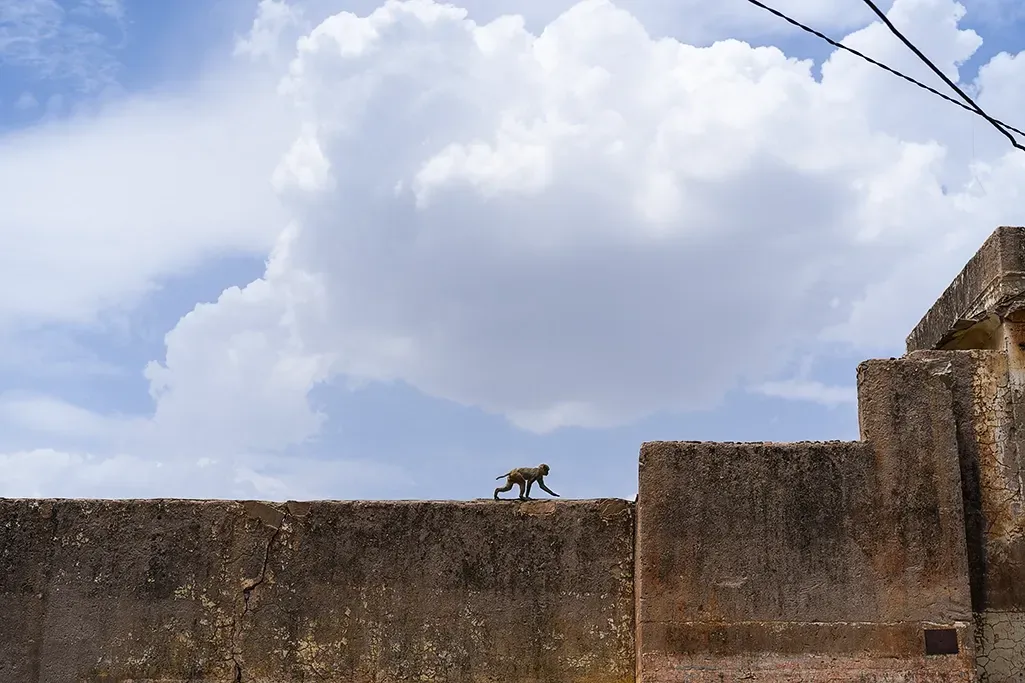
The trail into Galtaji starts at an old carved gateway wedged between two walls of rock, and the change in atmosphere is immediate. Street noise disappears. The path narrows and steepens. And above you, on every ledge and rooftop, the monkeys are already watching.
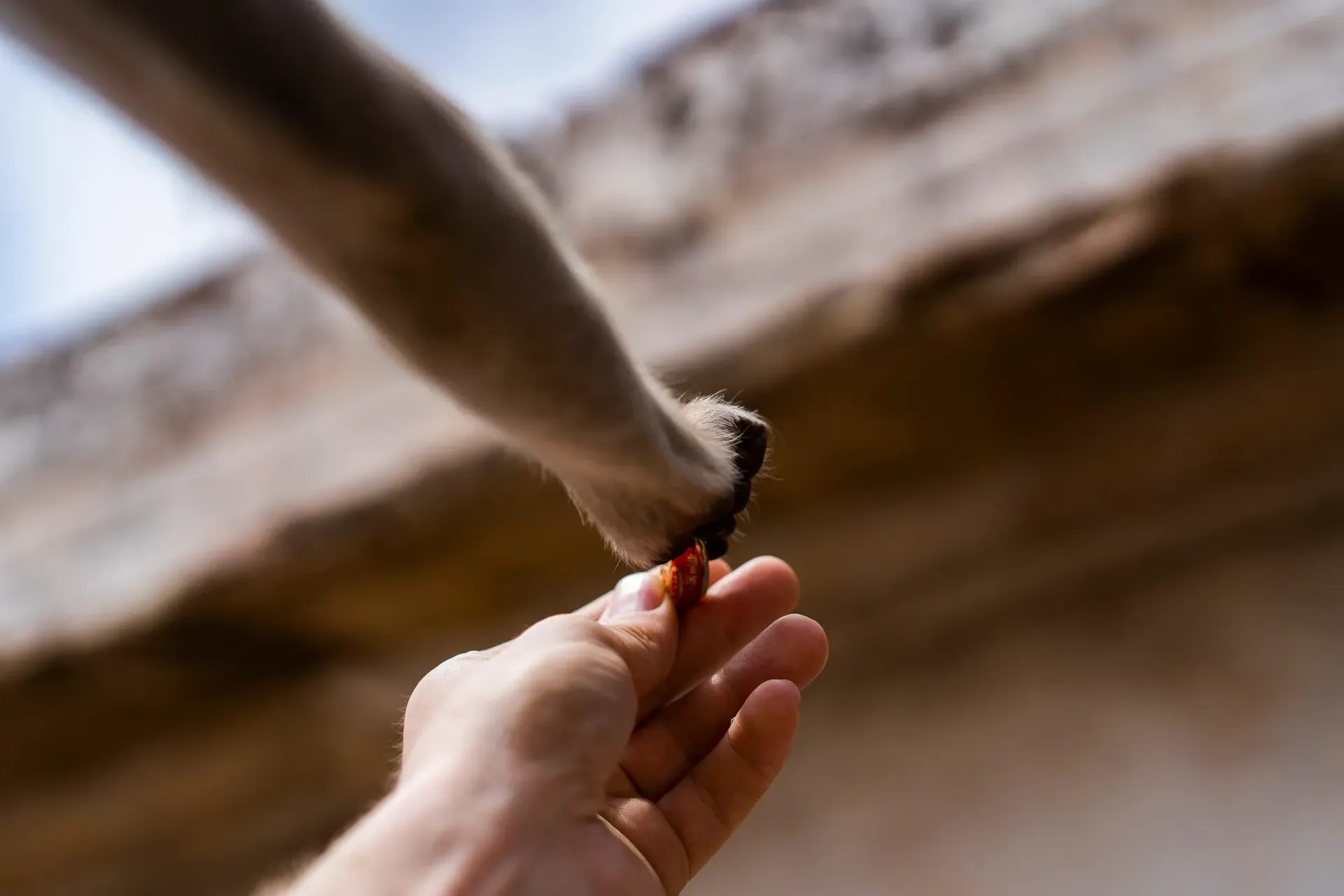
Unlike the shy wildlife you might expect at a temple, Galtaji's macaques are bold, curious, and completely unbothered by human visitors. They line the walls like spectators, groom each other on the staircases, and occasionally make a beeline for anyone carrying a rustling bag. It's part of what makes this hike feel less like a quiet temple visit and more like a genuine adventure: you never quite know what the next switchback will bring.
Sacred Kunds and a Sudden Ambush
Partway up the gorge, the trail opens onto a stepped tank of green water where pilgrims bathe fully clothed and priests move quietly between shrines. It's a striking contrast to the chaos outside: monkeys drink calmly at the water's edge, bells ring somewhere in the distance, and for a moment the whole place feels utterly serene.
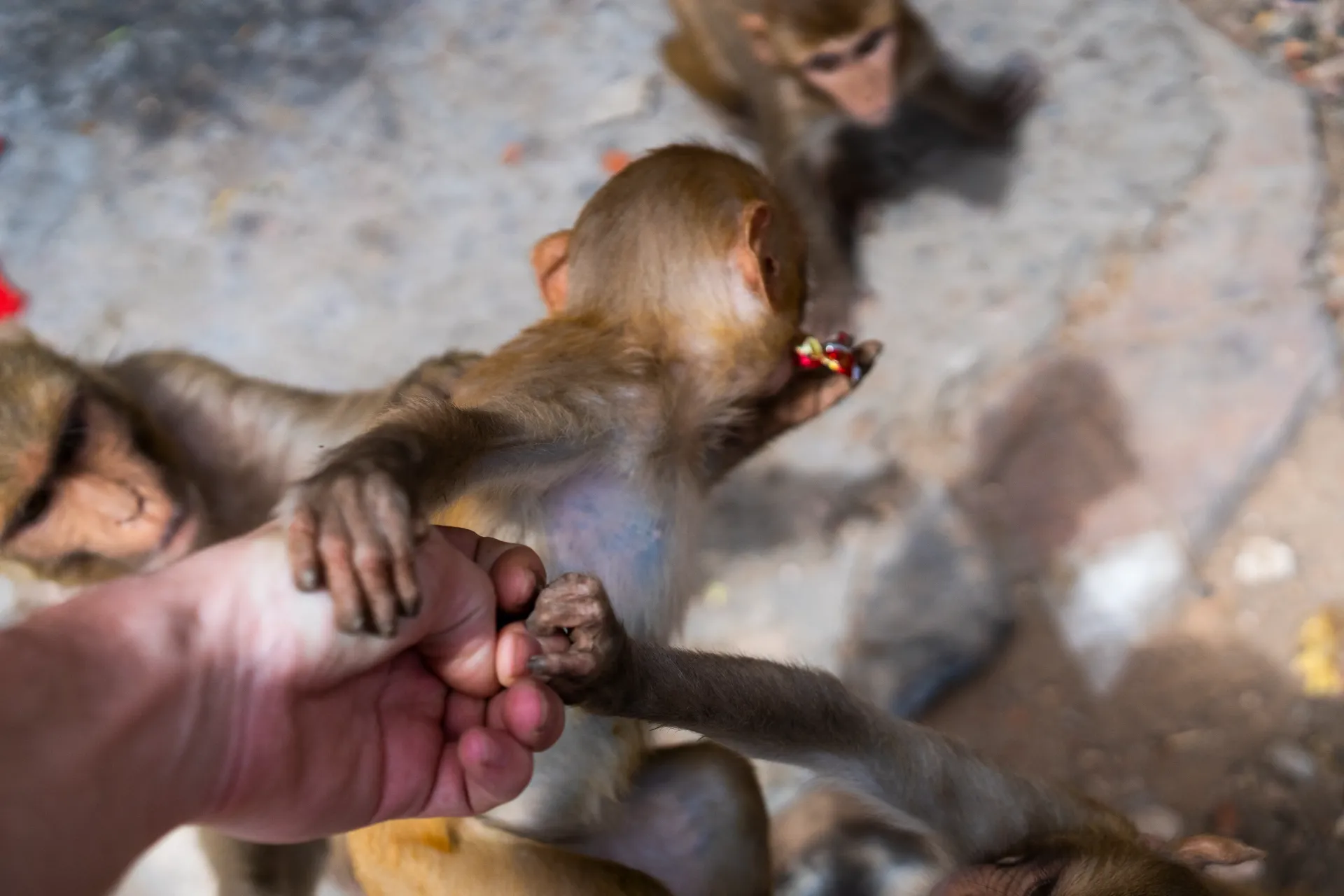
That calm can end fast. Galtaji's monkeys are notorious for snatching sunglasses, snack wrappers, and anything else that looks food-adjacent, and it happens quickly enough to catch almost every visitor off guard at least once. The encounters are almost always harmless, more startling than dangerous, but they're a real part of the Galtaji experience and worth being prepared for.
The Final Climb to Surya Mandir
Past the kunds, a steep staircase carved into bare rock leads up to the Surya Mandir, the Sun Temple, on the highest point of the ridge. It's the most physically demanding stretch of the visit, with roughly 50 to 150 uneven steps depending on the route, and there's little shade along the way.
The payoff at the top is one of the best views in Jaipur: the entire Pink City spread out below, rooftops catching the late light, hills fading into haze in every direction. Locals and photographers alike agree that sunset is the best time to be standing at the Surya Mandir, when the temple and the city below both turn gold.
Planning Your Visit to Galtaji Temple
Entry fee: Entry is free for Indian nationals; foreign visitors typically pay a nominal fee. Ignore anyone outside the complex claiming to collect entry fees informally — pay only at official counters.
Timings: Galtaji is generally open from early morning into the evening, though hours can vary by day and season. It's worth confirming current timings locally or with your hotel before you go.
Best time to visit: October through March offers the most comfortable temperatures for the climb. Within the day, late afternoon into evening (roughly 4 to 7 p.m.) is prime time, when the monkeys gather at the kunds for their evening bath and the light turns ideal for photography.
How to reach: Galtaji sits about 11 km from Jaipur Railway Station and 16 km from Jaipur International Airport. Auto-rickshaws, taxis, and ride-hailing apps are the easiest way to get there, since the temple sits outside the main city on Khania-Balaji Road.
What to wear: Footwear isn't allowed inside the temple areas, so wear shoes you can slip on and off easily. Comfortable, closed-toe shoes for the walk in are still worth it given the uneven stone paths.
Monkey safety tips:
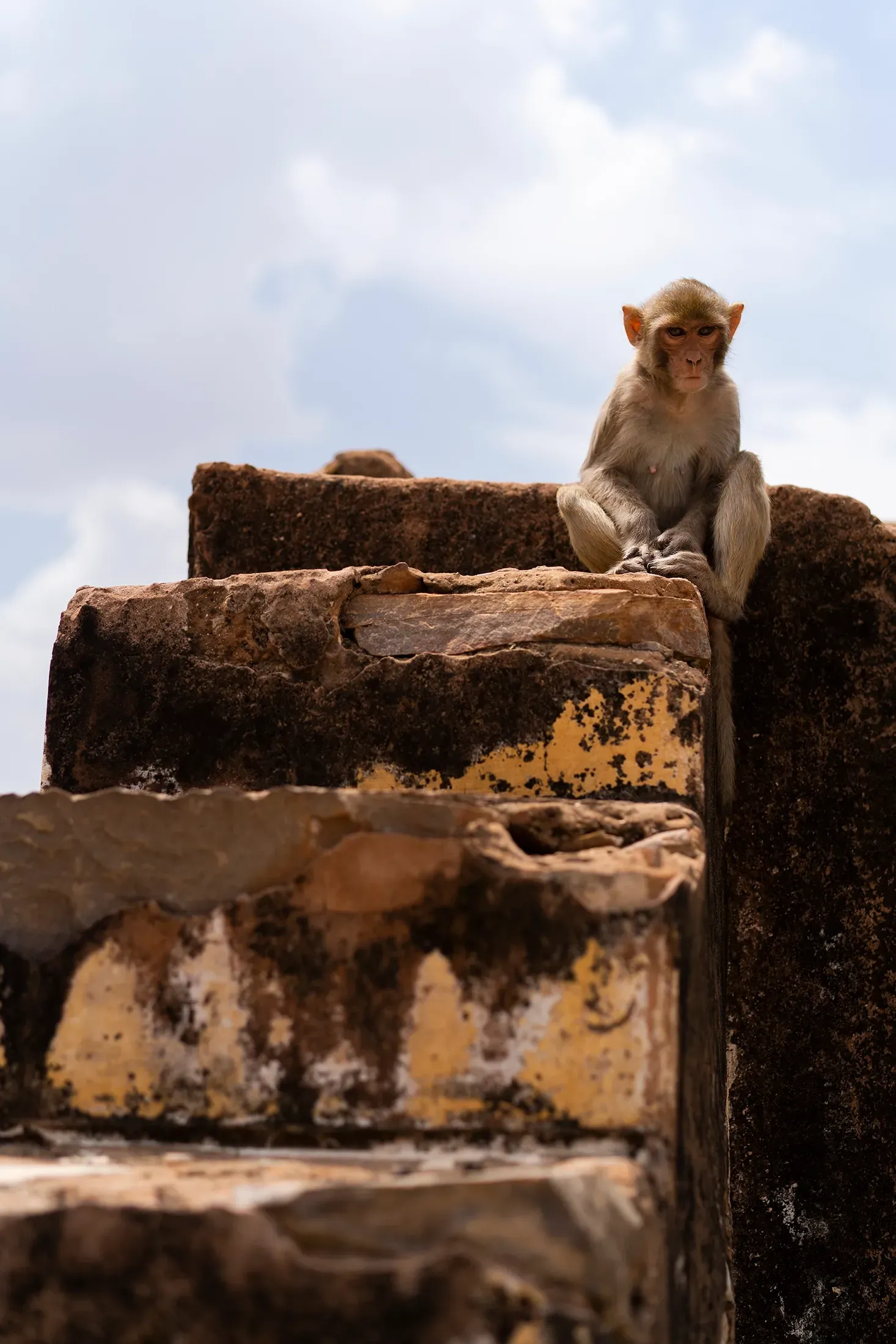
Keep food and anything crinkly, shiny, or bag-shaped zipped away and out of sight. Never make direct eye contact with a macaque or attempt to touch or feed one, no matter how relaxed it looks. If a monkey approaches, back away slowly rather than running, since sudden movement tends to escalate the situation rather than de-escalate it.
Fitness level: Plan for a moderate amount of stair climbing and uneven terrain. Most reasonably fit travelers can make the full climb to Surya Mandir without issue, but it's not a flat, easy stroll.
Why Galtaji Belongs on Your Jaipur Itinerary
Most visitors to Jaipur stick to the Amber Fort, City Palace, and Hawa Mahal, and while those are worth every minute, Galtaji offers something different: a genuine sense of unpredictability in a city that's otherwise well-mapped for tourists.
It rewards visitors who don't mind a little chaos with sacred water, wild monkeys, and one of the finest sunset views over the Pink City you'll find anywhere.
If you're building out a Jaipur day trip, pair a Galtaji hike with an early morning at Amber Fort and save Galtaji itself for late afternoon, so your climb to Surya Mandir lines up with sunset.
Looking for more Rajasthan adventure guides and trip-planning tips?
Explore more stories at Traveling Portrait Stories.