Tomorrowland Music Festival: The Complete 2026 Guide
Tomorrowland is one of the world’s most celebrated electronic dance music festivals, held every July in Boom, Belgium, and it genuinely earns that reputation. With around 400,000 attendees) spread across two weekends, a Mainstage that’s widely considered the largest and most elaborate of any festival on the planet, and a community that calls itself the “People of Tomorrow,” this isn’t your average EDM weekend. It’s an experience that people plan years in advance, save up for, and talk about for the rest of their lives.
Here’s what you need to know right away:
- Location: De Schorre provincial recreational park, Boom, Antwerp Province, Belgium
- Dates: Final two weekends of july each year
- Attendance: 400,000 per edition), with a capacity of 200,000 per weekend
- Music genres: Electronic, EDM, pop, hip hop, and dance
- Age requirement: 18+ minimum, no upper age limit
- Organizer: We Are One World
- Global editions: Tomorrowland Brasil (São Paulo state) and Tomorrowland Thailand (Pattaya, since 2026)
- Tickets: Sold via the official Tomorrowland website in a competitive main sale; Global Journey travel packages also available
Whether you’re a first-timer trying to figure out where Tomorrowland is held or a seasoned attendee hunting for the latest lineup details, this guide covers everything from the festival’s origins to what to pack in your fanny pack.
How the Tomorrowland music festival grew from a small Belgian event to a global phenomenon
The story of Tomorrowland starts in 2004, when brothers Manu and Michiel Beers came up with the concept. The first edition took place on August 15, 2005, organized by Manu Beers, Michiel Beers, and ID&T. That debut lineup featured artists like Armin van Buuren, Push (M.I.K.E.), Yves Deruyter, and Coone, playing to a crowd that had no idea they were witnessing the birth of something massive.
1. 2005–2009: The early years
The festival started modestly, but word spread fast through the European electronic music scene. Each year brought a bigger crowd, a more elaborate Mainstage design, and a growing sense that Tomorrowland was doing something different. The “Book of Wisdom” became an iconic recurring Mainstage concept during this period, setting the tone for the fantasy-world storytelling that would define the festival’s identity.
2. 2010–2014: Going global
By 2010, Tomorrowland had outgrown its regional roots and was drawing international attention. Ticket demand exploded, and the festival began selling out within minutes of going on sale. The economic impact was becoming impossible to ignore: Tomorrowland 2013 brought €70 million) to the Belgian economy, with €19 million spent by people traveling from outside Belgium. In 2013, organizers partnered with SFX Entertainment to launch TomorrowWorld near Atlanta, Georgia, a short-lived American spin-off that ran through 2015.
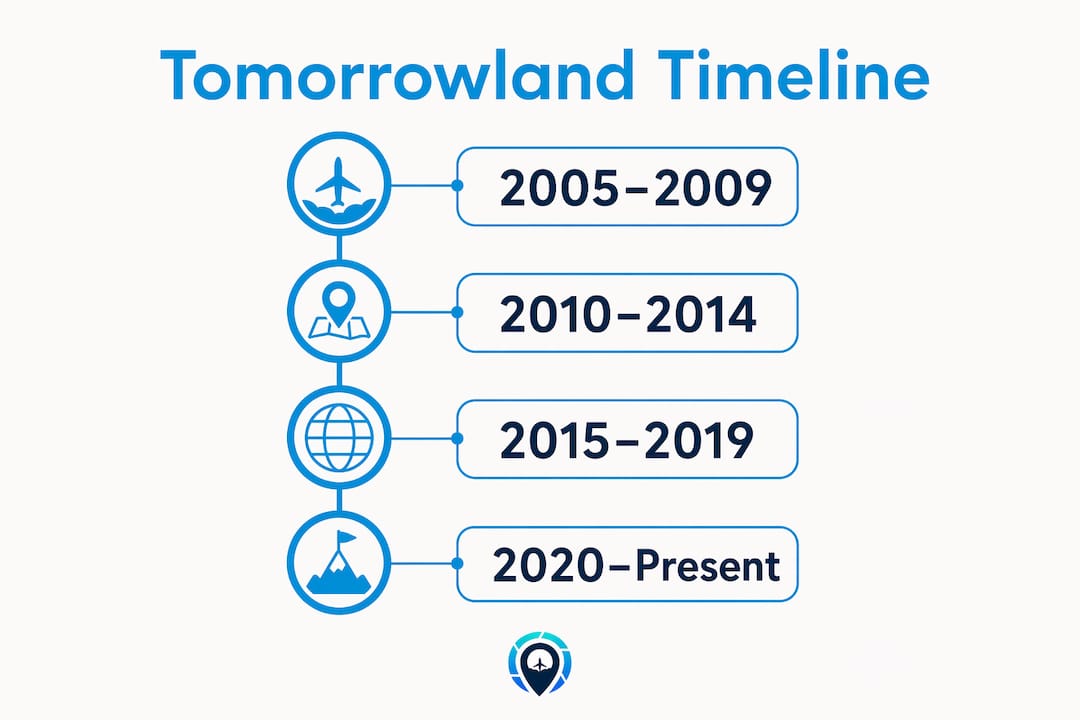
3. 2015–2019: Maturity and spin-offs
Tomorrowland Brasil launched in 2015 in Itu, São Paulo, with tickets selling out very quickly after going on sale. Back in Belgium, the festival’s economic footprint kept growing: the 2016 edition brought €100 million) to the Belgian economy and employed 700 people full-time before and during the event, plus 12,000 during the festival itself. By 2019, that crew had grown to 15,000 staff members. In March 2018, Tomorrowland announced Tomorrowland Winter, a separate edition held annually at the ski resort of Alpe d’Huez in the French Alps.
4. 2020–present: Pandemic, recovery, and Asia
The 2020 and 2021 editions were canceled due to the COVID-19 pandemic, a gut punch for the global community that had built its social calendar around the festival. Tomorrowland returned in 2022 and came back stronger. Tomorrowland Brasil resumed recently. And in 2026, the festival made its biggest geographic leap yet, announcing Tomorrowland Thailand at Wisdom Valley in Pattaya, marking the brand’s first-ever Asian edition.
“Tomorrowland has won numerous accolades and awards, including being voted five times in a row as ‘best musical event of the year’ at the International Dance Music Awards. It employs 80 people year-round for the organisation and 15,000 people during the event.” — Wikipedia on Tomorrowland)
Where is Tomorrowland held, and what makes De Schorre special?
Tomorrowland takes place in De Schorre, a public recreational park in Boom, Belgium, about 16 km (roughly 10 miles) south of Antwerp and 32 km (about 20 miles) north of Brussels. The park was built around a series of disused clay pits, which gives the terrain a uniquely varied, almost otherworldly character. When the festival isn’t happening, De Schorre functions as a normal green space for local residents.
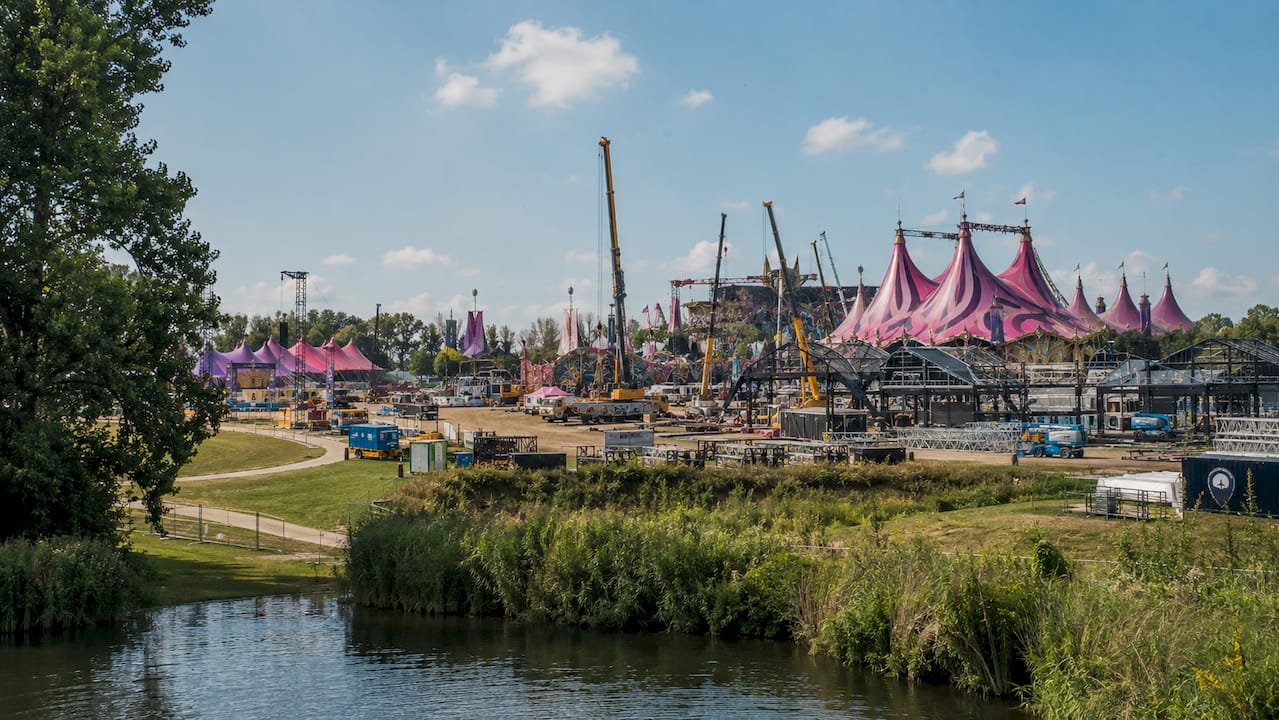
The transformation that happens every july is genuinely staggering. Festival crews spend months converting the park into an immersive fantasy world, with themed stages, elaborate decorations, food villages, camping zones, and infrastructure for hundreds of thousands of people. The clay pit landscape actually works in the festival’s favor, creating natural amphitheater-like areas and visual depth that flat fairgrounds simply can’t replicate.
| Feature | Details |
|---|---|
| Park name | De Schorre provincial recreational park |
| City | Boom, Antwerp Province, Belgium |
| Distance from Antwerp | ~16 km (10 miles) south |
| Distance from Brussels | ~32 km (20 miles) north |
| Terrain | Clay pits, varied elevation, grassy areas |
| Festival capacity | 200,000 per weekend |
| Weather | Variable; can be muddy or dusty depending on conditions |
| Transportation | Shuttle buses, trains to Boom station, official parking zones |
Getting there from Brussels or Antwerp is straightforward by train or shuttle bus. The festival organizes official transportation packages, and the surrounding road network can get congested on peak arrival days, so building in extra travel time is genuinely worth it.
What are the main stages at Tomorrowland, and what can you expect from each?
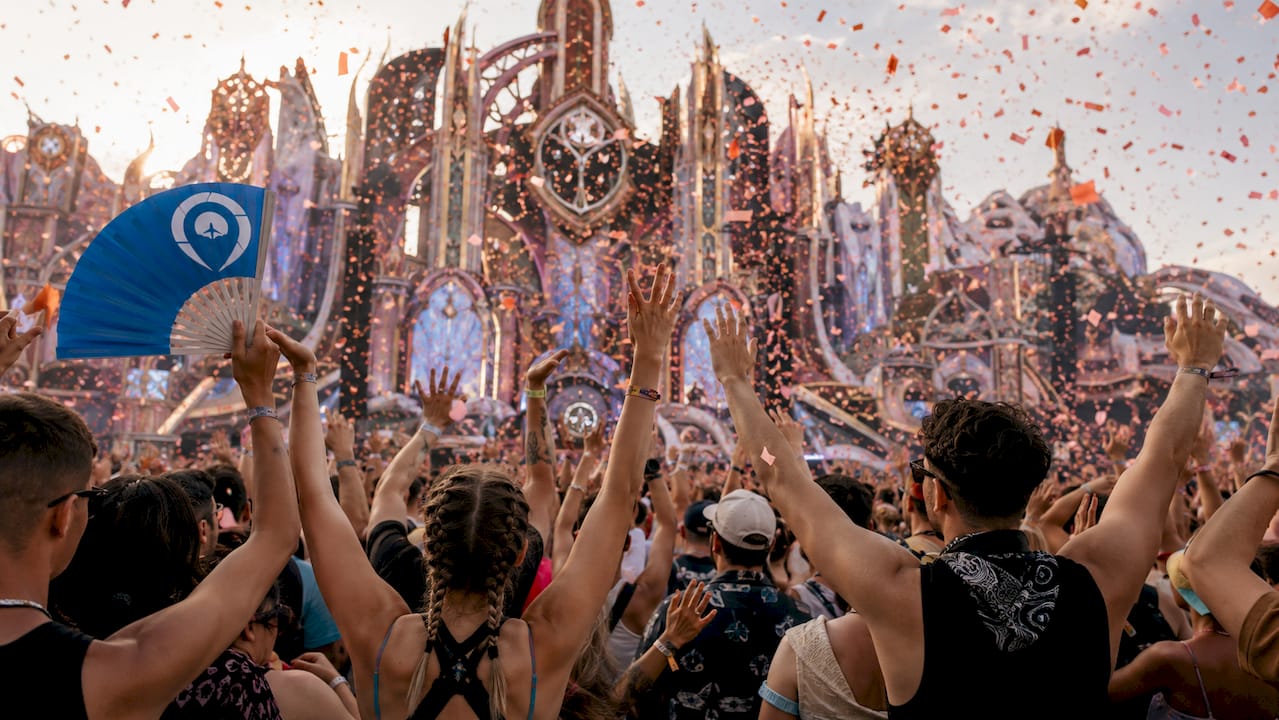
The stages are where Tomorrowland really separates itself from every other festival. Each one has its own identity, its own crowd, and its own visual language. The Mainstage is the centerpiece), and it’s been described as the largest and most elaborate stage of any festival in the world. But the supporting stages are far from an afterthought.
- Mainstage: The iconic heart of the festival, featuring a new architectural theme each year. It hosts the biggest headliners and the most spectacular production, with pyrotechnics, LED walls, and set pieces that can take months to build.
- Atmosphere: A more intimate stage focused on deeper electronic sounds, often featuring progressive house and trance artists. The crowd here tends to be more devoted to the music than the spectacle.
- Cage: Known for its harder, darker sounds, the Cage draws the techno and hard dance crowd. The industrial aesthetic matches the music perfectly.
- Casa Corona: A sponsored stage with a more relaxed, festival-within-a-festival vibe. Think open-air bar energy with quality DJ sets.
- Core: One of the newer additions to the stage lineup, Core has built a reputation for cutting-edge electronic music and a futuristic design concept.
The 2026 festival theme is “Consciencia,” which transforms the entire festival grounds into a fantastical world built around that concept. Every stage, decoration, and visual element ties back to the theme, which is part of what makes Tomorrowland feel like a fully realized alternate universe rather than just a music event.
| Stage | Music style | Vibe |
|---|---|---|
| Mainstage | EDM, big room, pop crossover | Spectacular, high-energy, massive crowds |
| Atmosphere | Progressive house, trance | Emotional, melodic, devoted crowd |
| Cage | Techno, hard dance | Dark, industrial, intense |
| Casa Corona | House, tech house | Relaxed, social, open-air bar feel |
| Core | Experimental electronic | Forward-thinking, futuristic |
Food and drinks are available throughout the festival grounds, with dedicated food villages offering everything from Belgian waffles to international street food. The cashless payment system, managed through your festival wristband, handles all transactions on-site.
Tomorrowland’s global reach and what it means for US attendees
There is no official Tomorrowland festival currently held in the USA). TomorrowWorld, the American spin-off held near Atlanta from 2013 to 2015, no longer operates. So if you’re an American fan, getting to the real thing means booking a trip to Belgium, Brazil, or now Thailand.
The good news is that Tomorrowland has built its entire international ticketing and travel infrastructure around exactly this kind of attendee. The Global Journey travel packages bundle festival tickets with flights, accommodation, and ground transportation, making the logistics significantly less stressful for people flying in from the US. These packages tend to sell out later than individual tickets, but they carry a premium price. If budget is a concern, booking your own flights and accommodation separately and securing a standalone ticket during the main sale is the more affordable route, though it requires faster reflexes on sale day.
Frequently asked questions from US attendees:
Can anyone attend Tomorrowland? Yes, the festival is open to international attendees. The minimum age is 18, and there is no upper age limit.
Do I need a visa to attend in Belgium? US citizens can travel to Belgium visa-free for stays up to 90 days under the Schengen Agreement, but always check current entry requirements before booking.
What about Tomorrowland Thailand? The 2026 edition at Wisdom Valley in Pattaya runs from december 11–13, 2026, making it a genuinely exciting option for US travelers who want a shorter flight from the West Coast or who are already planning an Asia trip. Traveling Portrait has a dedicated Asia destinations guide if you’re thinking about combining the festival with broader regional travel.
Is Tomorrowland Brasil worth considering? Tomorrowland Brasil resumed in 2023 in São Paulo state and offers a South American alternative for fans in the eastern US who want a shorter flight than Belgium.
The “People of Tomorrow” community ethos is genuinely felt on the ground. You’ll meet people from dozens of countries camped next to each other, sharing food, swapping stories, and losing their minds together when a favorite track drops. That cross-cultural energy is something you don’t get at most domestic festivals.
What it’s actually like to be there: firsthand festival insights and photography tips
Walking into Tomorrowland for the first time is genuinely disorienting in the best possible way. The scale of the Mainstage hits you before you even get close to it. The decorations are extravagant in a way that photos don’t fully capture, and the crowd energy is unlike anything at a standard concert or club night.
Here are the practical things that make a real difference on the ground:
- Download the official Tomorrowland Festival App before you arrive. It’s the only reliable source for real-time schedule changes, interactive maps, and managing your cashless wristband payments. Cell service can be spotty in crowded areas, so download the offline map version.
- Pack versatile footwear. De Schorre’s terrain ranges from grassy slopes to compacted dirt paths, and if it rains, the clay pits area can get genuinely muddy. Waterproof boots or sturdy sneakers you don’t mind getting dirty are the right call.
- Bring a portable charger. Your phone will be working overtime between the app, photos, and messaging camp mates. A high-capacity power bank is non-negotiable.
- Get to the Mainstage early for headliners. The crowd builds fast, and if you want a decent spot, you need to be there 30–45 minutes before the set starts.
- Use the lockers. They’re available on-site and worth every euro. Carrying a heavy bag through a crowd for six hours is miserable.
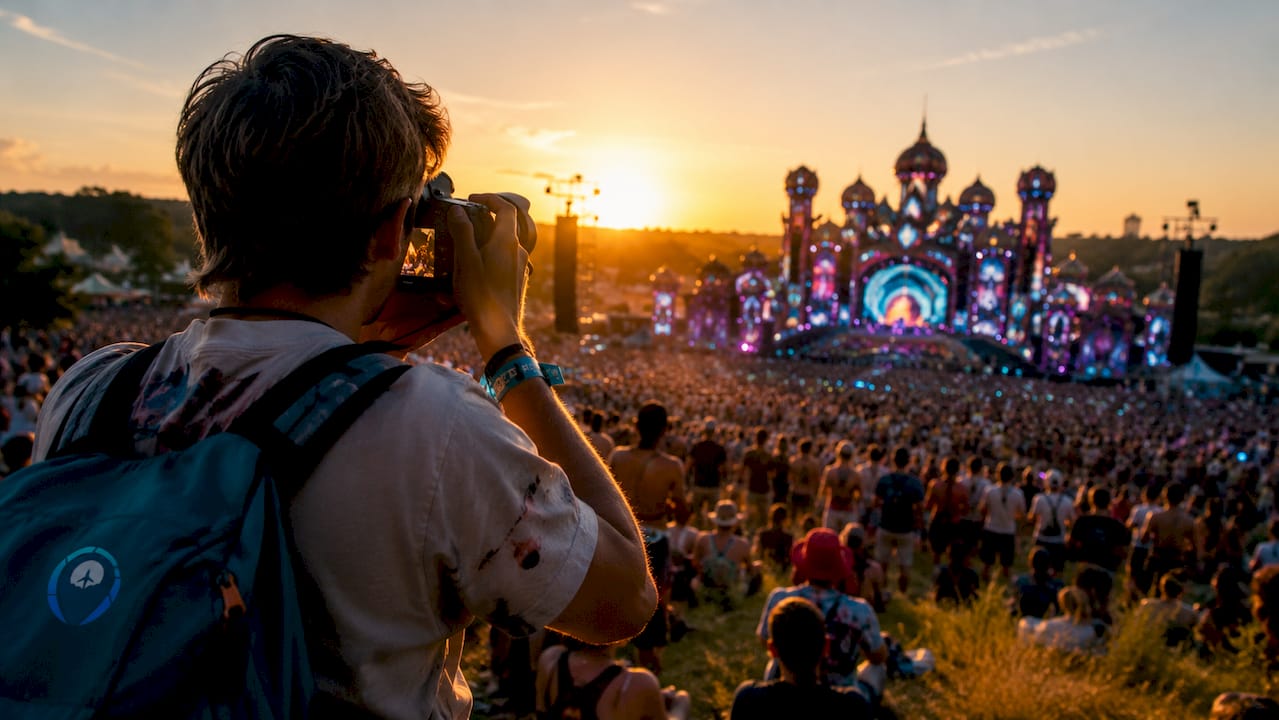
Pro Tip: For photography, the golden hour before sunset is when the Mainstage looks most dramatic. The natural light mixes with the LED production in a way that’s genuinely stunning. A wide-angle lens captures the scale; a longer focal length pulls in the crowd energy. Check out Traveling Portrait’s Tomorrowland photography guide for specific gear recommendations and shooting angles.
The social connections you make at Tomorrowland tend to stick. There’s something about spending a weekend in a shared fantasy world with strangers that accelerates friendship in a way that’s hard to explain until you’ve experienced it. If you’re going solo, don’t stress. You won’t be alone for long.
For a full firsthand account of booking and attending via the Global Journey package, Traveling Portrait’s journey to Tomorrowland story covers the whole experience from ticket purchase to the final set.
Where to stay: accommodation options for Tomorrowland attendees
Accommodation at and around Tomorrowland breaks down into three main categories, and the right choice depends entirely on your budget and how deep into the festival experience you want to go.
DreamVille (on-site camping): This is the official Tomorrowland camping village, located directly adjacent to the festival grounds. DreamVille has its own stages, bars, food stalls, and entertainment that runs even when the main festival is quiet. Staying here means you’re never more than a short walk from the action, and the camp atmosphere is a huge part of the overall experience. Tent packages range from basic to fully furnished “comfort” setups, and the price reflects that range considerably.
Hotels in Antwerp or Brussels: Both cities are within easy commuting distance by shuttle or train. Antwerp is closer at about 16 km away, and its hotel scene is strong across all price points. This option suits attendees who want a proper bed, a hot shower, and a quieter place to decompress between festival days. Book early, because rooms within a reasonable radius fill up months in advance.
Global Journey packages: As mentioned in the global presence section, these bundles include accommodation alongside transport and tickets. They’re convenient and stress-free, but the premium pricing is real. If you’re coming from the US and want everything handled in one booking, this is the path of least resistance.
One thing worth knowing: Airbnb and short-term rental options in Boom itself are limited, since it’s a small town. The surrounding Antwerp Province has more options, but transport logistics become your responsibility. Whatever you book, confirm your checkout dates carefully. The festival runs across two separate weekends, and some attendees attend both, which requires either a longer accommodation booking or a mid-week departure and return.
What does a typical day at Tomorrowland actually look like?
The festival gates generally open in the late morning, around 10:00 AM or 11:00 AM, though DreamVille campers have access to their camping area around the clock. The main stage programming typically kicks off in the early afternoon and runs until midnight or later, depending on the day and local noise ordinances.
A realistic daily timeline looks something like this:
Morning: If you’re camping in DreamVille, mornings are slow and social. Grab breakfast from one of the food stalls, charge your devices, and check the app for the day’s schedule. This is when you plan your stage-hopping strategy and figure out which sets you absolutely cannot miss.
Afternoon (12:00 PM–6:00 PM): Smaller stages and early-slot artists set the tone. This is a great time to explore the festival grounds, discover stages you haven’t visited yet, and grab food without fighting massive queues. The Mainstage crowd is manageable in the early afternoon, which makes it a good window to scout your position for the evening headliners.
Evening (6:00 PM–midnight): This is when the energy peaks. Headliners take the Mainstage, the production goes into full spectacle mode, and the crowd reaches its maximum intensity. Navigating between stages gets harder as the night progresses, so pick your priorities and commit to them.
Late night: Some stages run past midnight, and DreamVille has its own programming that continues after the main festival closes. If you have the energy, the late-night sets at smaller stages often feature the most adventurous programming of the whole day.
Pacing yourself across multiple days is genuinely important. The combination of heat, walking, and sensory overload catches a lot of first-timers off guard by day two.
Staying safe and healthy at Tomorrowland
Tomorrowland takes safety seriously, and the festival’s infrastructure reflects that. Medical stations are positioned throughout the grounds, staffed by trained personnel. The festival also operates a harm reduction program that provides information and support related to substance use, which is a pragmatic and responsible approach given the festival’s scale.
A few things to keep in mind:
Stay hydrated. Free water points are available throughout the festival grounds. In july, temperatures in Belgium can climb into the high 20s Celsius (low 80s Fahrenheit), and dancing in a crowd amplifies that heat considerably. Drink water consistently, not just when you feel thirsty.
Know where the medical tents are. Check the app map when you arrive and note the two or three medical stations closest to the stages you plan to spend the most time at. If you or a camp mate needs help, knowing the nearest location saves critical time.
Protect your hearing. The production at Tomorrowland is loud, especially near the front of the Mainstage. High-fidelity earplugs, the kind that reduce volume without distorting sound quality, are worth bringing. Brands like Eargasm and Loop make festival-specific options that are genuinely good.
Keep your valuables secure. Pickpocketing happens at large festivals. A fanny pack worn at the front of your body is the most practical solution. Leave anything irreplaceable at your accommodation or in a locker.
Check the official Tomorrowland website for current health guidelines before you travel, as requirements can change between editions. The festival has historically communicated any entry requirements clearly through its official channels and the app.
Key Takeaways
Tomorrowland is the world’s most elaborately produced electronic dance music festival, drawing 400,000 attendees to Boom, Belgium each july with immersive stage design, a global community, and spin-off editions now reaching South America and Asia.
| Point | Details |
|---|---|
| Location and scale | Held at De Schorre park in Boom, Belgium; 400,000 attendees per edition (200,000 per weekend). |
| Global editions | Tomorrowland Brasil (São Paulo) and Tomorrowland Thailand (Pattaya, since 2026) are the two active international editions. |
| No US festival | There is currently no official Tomorrowland festival in the USA; TomorrowWorld ended in 2015. |
| Ticketing options | Individual tickets sell out fast in the main sale; Global Journey packages bundle transport and accommodation at a premium. |
| On-site essentials | The official Tomorrowland Festival App manages schedules, maps, and cashless payments; versatile footwear is a must for De Schorre’s terrain. |
Recommended
Other Posts You Might Like