

Aurora Alaska: The Northern Lights Experience That Will Change You Forever
By Traveling Portrait · travelingportrait.co
There are moments in travel that you carry with you for the rest of your life. Not the hotel, not the flight, not the itinerary — the moment. The one that arrives without warning and leaves you standing there, completely still, completely speechless, completely certain that you are witnessing something the world doesn't hand out every day.
Seeing the aurora in Alaska is one of those moments.
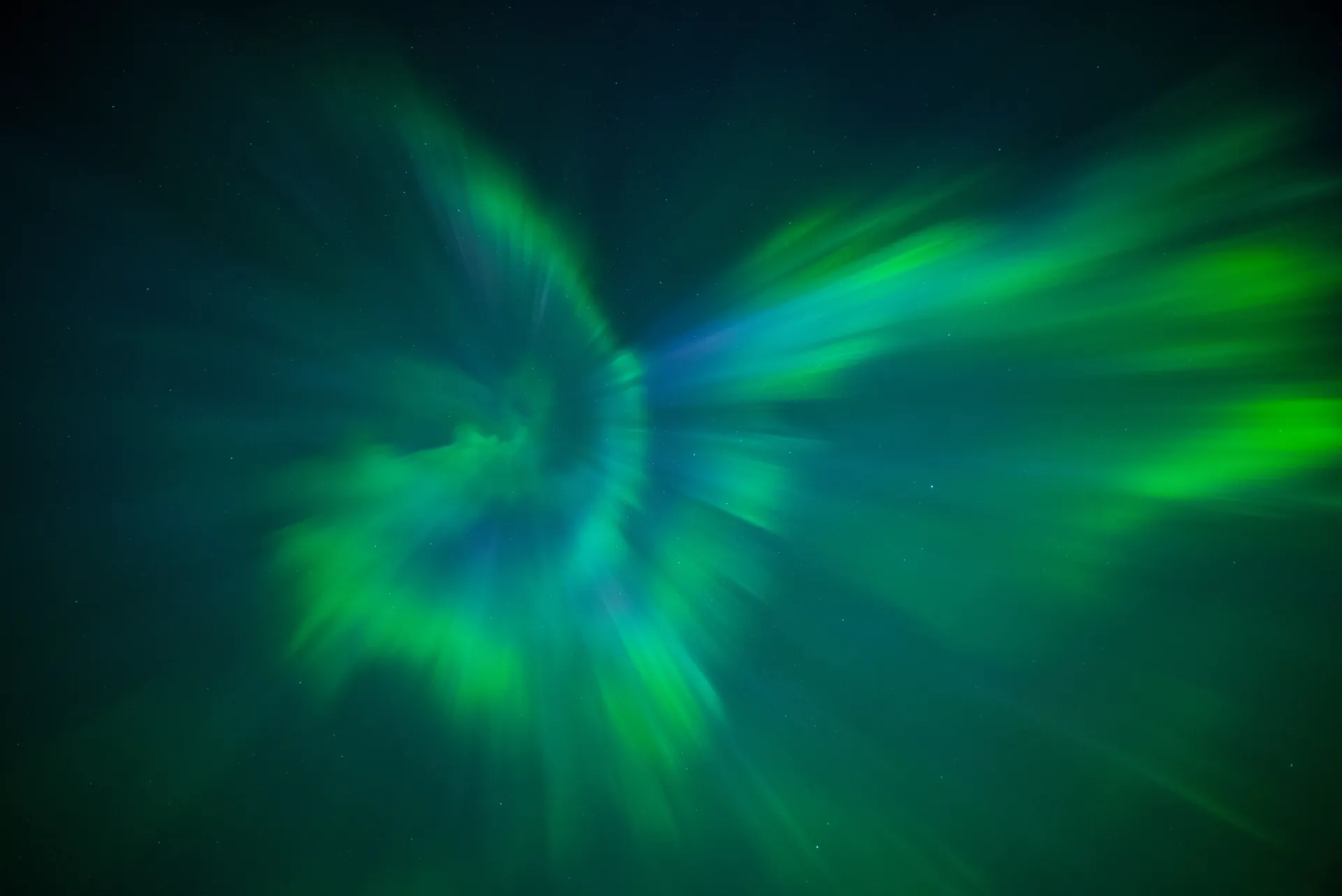
Green light — vivid, electric, almost impossibly alive — begins to pulse across a sky so dark and so vast it makes you feel small in the best possible way. Then purple bleeds into the green. Then red. The lights move.
They curl and ripple and dance with a fluid, organic grace that no screen, no photograph, and no travel article has ever fully captured. Your mouth falls open. Your eyes well up. And then, somewhere in the silence of the Alaskan wilderness, it hits you: this is real, this is happening, and I am here for it.
Welcome to the aurora in Alaska — the most spectacular natural light show on earth, and one of the greatest bucket list experiences your life will ever offer you.
What Is the Aurora Borealis, and Why Does Alaska Have the Best Views?
Before you pack your bags and book your flights, it helps to understand exactly what you're chasing — because the aurora is more than just pretty lights. It's physics at its most poetic.
The aurora borealis is a luminous glow caused by collisions between electrically charged particles streaming from outer space that enter Earth's atmosphere and collide with molecules and atoms of gas — primarily oxygen and nitrogen.
When those electrons and protons from the sun collide with atmospheric particles, the particles gain energy, and to return to their normal state, they release that energy in the form of light.
The dancing colors you see — greens, purples, pinks, reds — are each produced by different gases at different altitudes. It's essentially the universe putting on a show using the Earth's own atmosphere as its canvas.
Alaska has a front-row seat.
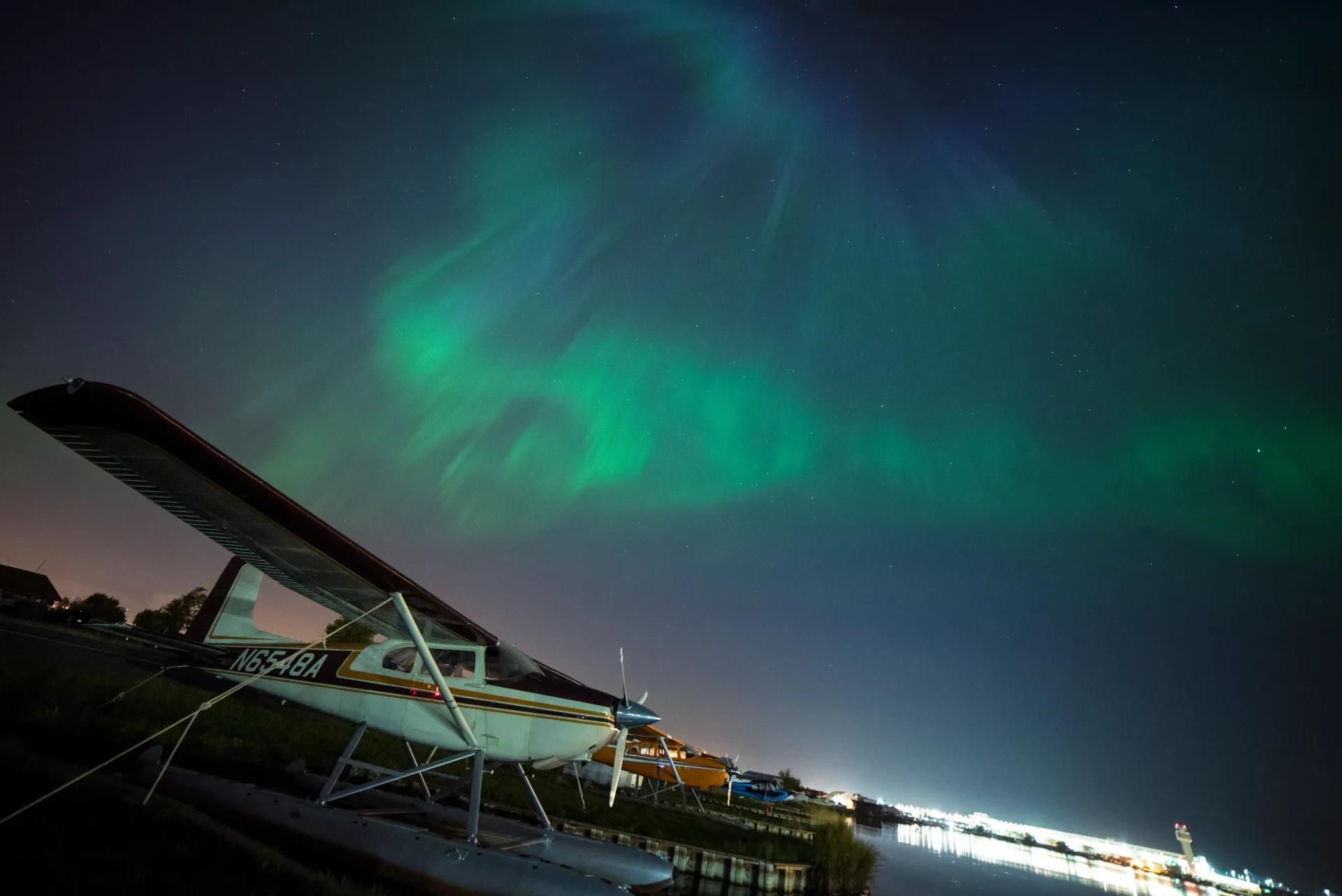
Alaska sits directly under the "Auroral Oval" — a ring-shaped zone around the magnetic poles where aurora activity is strongest. Cities like Fairbanks and areas north of Anchorage consistently rank as some of the best places in the world to watch the lights.
This isn't marketing language. This is geography. Alaska is positioned so precisely within the auroral oval that Fairbanks is often called the aurora capital of the United States, with viewing opportunities on roughly 200 nights per year.
No other destination in North America comes close to that number — and critically, you can book nonstop flights to Anchorage year-round from major U.S. hubs like Chicago, Denver, Los Angeles, Minneapolis, Seattle, and Portland, with no passport required.
The aurora in Alaska isn't a lucky break. It's a destination.
When Is the Best Time to See the Aurora in Alaska?
Timing your trip correctly is the single most important factor in your aurora Alaska experience.
Get it right, and you will see something extraordinary. Get it wrong, and you'll be staring at a bright summer sky at midnight wondering where the lights went.
The best time to see the northern lights in Alaska is from late August to mid-April, when the nights are long and dark.
While the aurora can be seen any time the sky is dark, they are most often visible between 10:00 p.m. and 2:00 a.m. — which means late nights, sleeping in, and the kind of schedule that only a true adventure demands.
September & October: The Sweet Spot
September is one of the most popular months for aurora viewing. The equinox often increases geomagnetic activity, giving better chances of strong shows. Fall colors peak in early to mid-September, so you can enjoy daytime hikes and evening aurora hunts.
The temperatures are still manageable, the landscape is draped in gold and amber, and the nights are long enough to give the aurora room to perform. This is Traveling Portrait's favorite window — the one where you get Alaska in full color by day and fire in the sky by night.
December to March: Maximum Darkness, Maximum Drama
The period between December and March is particularly promising due to the long, dark nights.
These are the months when Fairbanks tilts deepest into Arctic winter, when darkness arrives by mid-afternoon and doesn't leave until mid-morning, and when the aurora has the longest possible stage on which to perform. Temperatures drop significantly — think layers upon layers — but the payoff on a clear night is extraordinary.
NASA reported that the peak of the solar maximum occurred in the 2024-25 season, making it one of the best years to view the northern lights in over a decade. However, the 2025-2026 season remains an excellent time to see the aurora, as the sun's cycle follows a gradual arc meaning aurora activity doesn't drop off immediately after the peak.
February & March: The Photographer's Window
Many travelers prefer February and March because temperatures are slightly milder than mid-winter and daylight is still limited enough for prime viewing. For photographers especially, this window is golden — literally.
The low Arctic sun produces extraordinary golden hour light during the day, and the nights still stretch long enough for hours of aurora shooting. Pair that with snow-covered landscapes reflecting the lights, and you have conditions that produce images people don't believe until they see the RAW files.
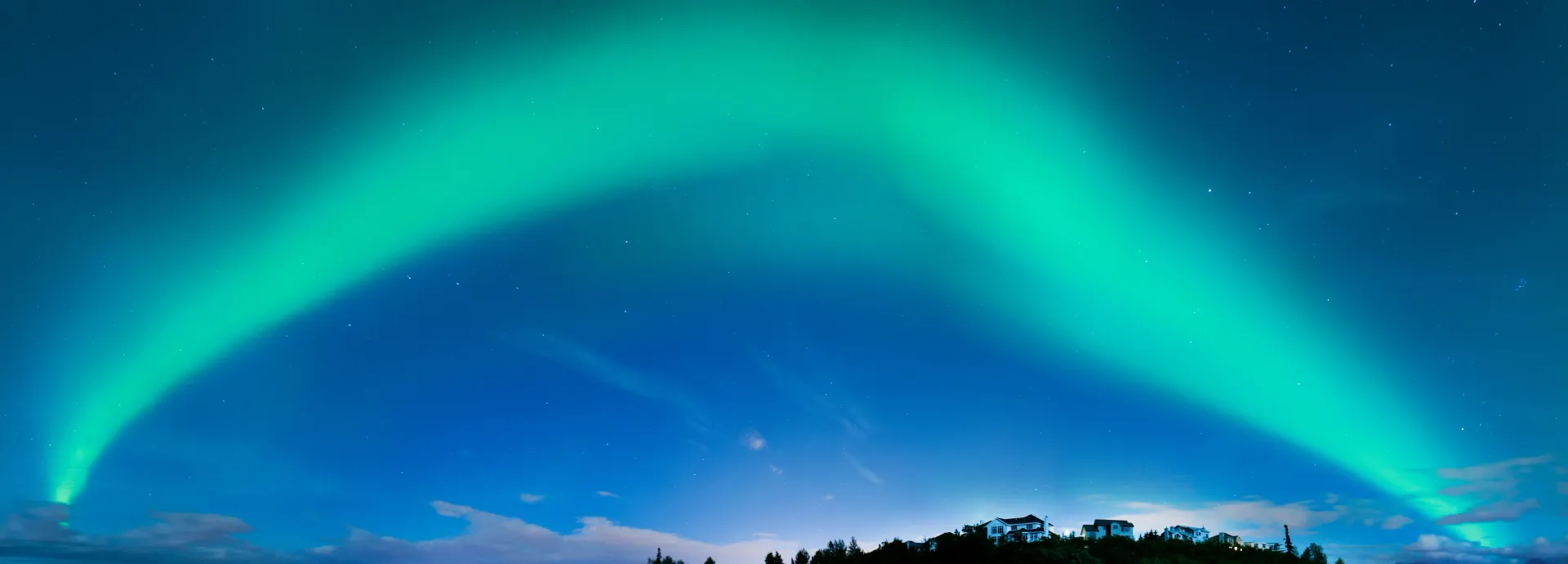
Where to Go: The Best Aurora Viewing Locations in Alaska
Fairbanks: The Aurora Capital of America
Sitting directly under the auroral oval, Fairbanks, Alaska offers some of the best northern lights viewing in the world. High aurora activity, minimal light pollution, and clear dark winter skies create the perfect canvas for viewing.
This is ground zero for aurora Alaska — the city that has built an entire culture around the lights, with dedicated viewing lodges, photography tours, aurora trackers, and wake-up call services for when the lights appear at 1 a.m. Kukucampers
Some of the best spots in and around Fairbanks include Chena Hot Springs Resort — where you can soak in geothermal waters while the aurora ignites the sky overhead (yes, that is as extraordinary as it sounds) — and Clearly Summit, a popular destination for aurora viewing about 20 miles north along the Steese Highway, along with Murphy Dome about 25 miles northwest of town.
Visitors to Alaska who spend three nights looking for the lights from Fairbanks have a 90% chance of spotting them. That's not a guarantee, but in the world of aurora chasing, 90% is about as close to a sure thing as nature gets.
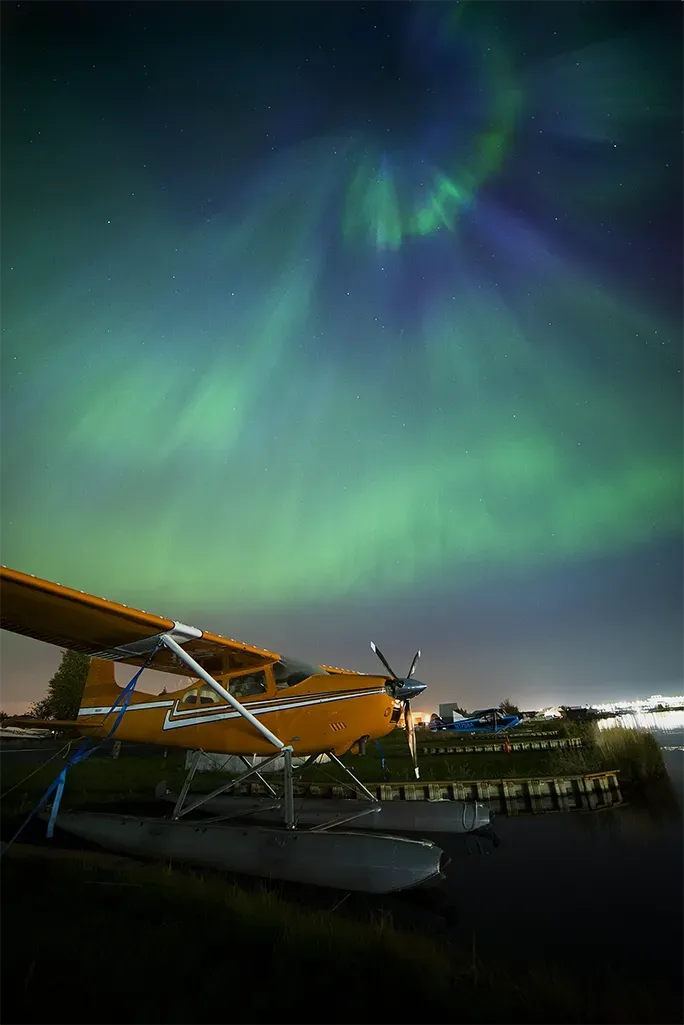
Denali National Park: Aurora Over the Highest Peak in North America
Thanks to the lack of light pollution and lots of panoramic mountain scenery, Denali National Park is an especially scenic spot for aurora viewing in Alaska. Imagine Denali — the tallest mountain in North America at 20,310 feet — silhouetted against a sky rolling with green aurora light. This is the kind of photograph that wins awards. This is the kind of memory that redefines what travel means to you.
Hatcher Pass: Alaska's Hidden Aurora Gem
Hatcher Pass is renowned for its stunning landscapes and excellent visibility for the northern lights. Located in the heart of Alaska, this spot offers a unique vantage point away from city lights, increasing your chances of witnessing the aurora borealis. For travelers based in Anchorage, Hatcher Pass is one of the most accessible world-class aurora viewing destinations in the entire state — and it's strikingly beautiful in winter, with snow-covered alpine terrain that gives the whole experience a remote, epic quality.
*NOTE* - Be sure to check the direction of the solar wind during an aurora storm. If it's slowing South, you'll have a great chance of seeing the lights above the mountains in Hatcher's Pass - if they're flowing North, good chance that the mountains will be in the way of the aurora display.
Beyond the Arctic Circle: Coldfoot and Wiseman
For the true adventurers — the ones who want to tell a story no one else is telling — the small communities of Coldfoot and Wiseman, located on the Dalton Highway above the Arctic Circle approximately 250 miles north of Fairbanks, are excellent bases for northern lights viewing thanks to their location under the auroral oval, lack of city lights, and probability of clear skies.
This is deep Alaska. The kind of place that makes you feel genuinely remote from the world. And the aurora here, away from every trace of artificial light, is something altogether different.
How to Photograph the Aurora Alaska — Tips From the Field
Stay at Least Five to Seven Nights
Duration recommendations suggest planning a minimum 5–7 night stay for reliable aurora viewing opportunities. Weather variability and aurora activity fluctuations mean shorter trips risk disappointment, while longer stays provide multiple viewing chances and opportunities to experience different aurora intensities and displays.
The aurora is a natural phenomenon — it doesn't perform on demand. Give yourself enough nights to be patient, flexible, and ready when the sky opens up.
Track the Forecast
Keep an eye on the University of Fairbanks Geophysical Institute's Aurora Forecast and Explore Fairbanks' Aurora Tracker for the most specific data on your chances of seeing the northern lights on a particular night. These tools are free, accurate, and genuinely indispensable for aurora planning. Lava Car Rental
Book Early
Prime viewing lodges and tour operators often book months in advance, particularly for peak viewing periods around winter solstice and spring equinox. Aurora Alaska has become one of the world's most sought-after travel experiences. The best spots go fast — don't leave your booking to the last minute. Happy Campers
Go Dark
The single most controllable variable in aurora viewing is light pollution. The further you get from city lights, the more the aurora reveals itself — including the subtle purples and reds that city-adjacent viewing washes out entirely. Get remote. It's always worth it.
Why Alaska Beats Every Other Aurora Destination
Norway, Iceland, Canada, Sweden — all legitimate aurora destinations, all spectacular in their own right. But here's what sets aurora Alaska apart from every other option on the planet.
You can book nonstop flights to Anchorage year-round from major U.S. hubs — no passport required. From mid-November through March, you can check into a lodge and look for the lights each night while trying activities like ice fishing or dogsledding. And if you're on an aurora quest from mid-August to mid-September, there's still time to enjoy summer activities like visiting Denali National Park or taking a glacier cruise. Iceland Review
Alaska gives you the aurora and everything else. The wilderness is extraordinary by day — moose in the river valleys, Dall sheep on the ridgelines, the silence of a boreal forest that feels prehistoric. The culture is warm and deeply rooted. The food is outstanding.
And then night falls, and the sky does something that makes the whole world feel different.
This is the trip that changes people. Not just the way they think about travel — the way they think about life. About scale, and beauty, and what it means to be alive on a planet that still has moments like this to offer.
Come Chase the Aurora With Traveling Portrait
At Traveling Portrait, we exist for exactly this kind of adventure — the ones that stay with you, that you tell stories about for decades, that make everyone listening wish they'd been there too. Aurora Alaska is the experience we come back to again and again, because it genuinely never gets old.
Whether you're a photographer chasing that once-in-a-lifetime image, a traveler adding the aurora to your bucket list, or someone who just wants to stand in the Alaskan wilderness and let the universe put on a show — we want to help you get there.
The lights are waiting. Alaska is calling. The only question is whether you'll answer.
Explore more adventures and destinations at travelingportrait.co — and if the aurora in Iceland is also on your radar, don't miss our aerial photography experience with Flightseeing.is at travelingportrait.co/black-sands-and-riverbeds-airplane-tour-in-iceland.
The best aurora of your life is out there.
Let's go find it.