What Is a Religious Pilgrimage Festival?
A religious pilgrimage festival is defined as a sacred journey to a holy site combined with collective religious celebrations involving rituals, cultural performances, and communal participation. These events are living heritage where faith, culture, and tourism converge in ways that reshape both the traveler and the destination. The Hajj draws over 3 million participants annually, while Christian festivals like Christmas and Easter involve approximately 2 billion people worldwide. That scale tells you something important: pilgrimage festivals aren’t niche curiosities. They’re among the most powerful expressions of shared human belief on the planet. If you’ve ever wondered what actually happens at one of these events, and whether you could attend, this guide breaks it all down.
What is a religious pilgrimage festival, and what defines it?
A religious pilgrimage festival combines two distinct traditions: the physical journey to a sacred site and the time-specific communal celebration that happens there. The term used by scholars is “pilgrimage festival,” and it covers everything from Judaism’s ancient harvest gatherings in Jerusalem to Islam’s Hajj in Mecca to Hindu processions at the Kumbh Mela. What makes these events different from ordinary religious festivals is the journey itself. Traveling to the sacred site is part of the spiritual act, not just a means of getting there.
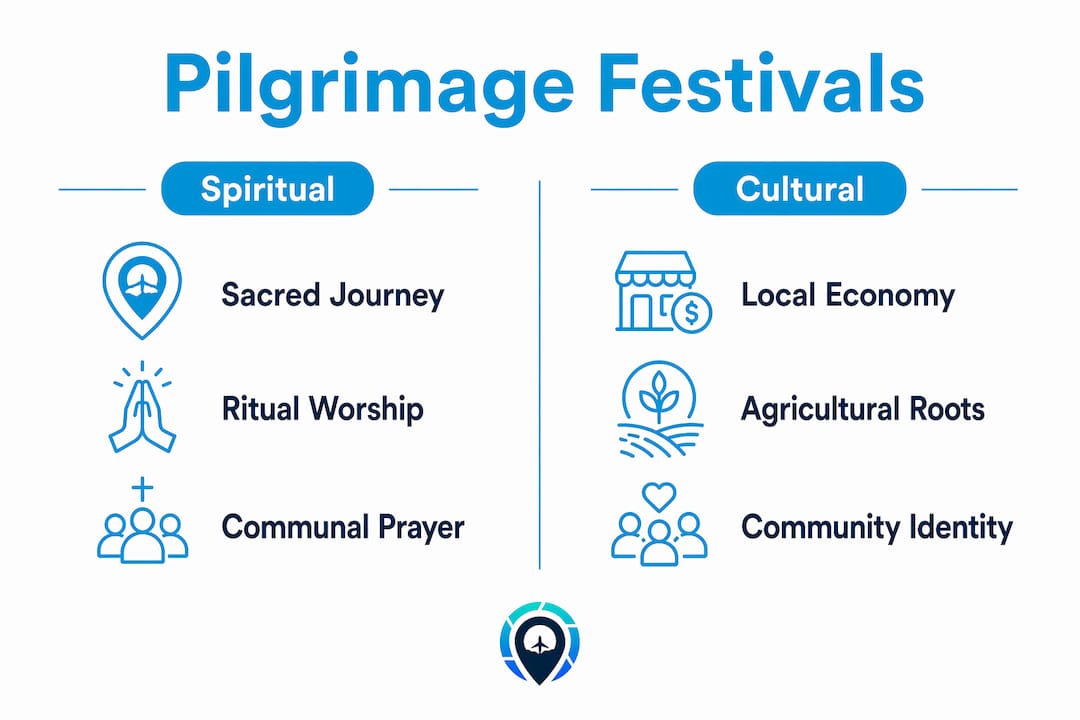
These events function as cultural catalysts, boosting local economies and reinforcing community identity across generations. The combination of ritual, movement, and collective worship creates an experience that no single church service or cultural performance can replicate. Scholars describe pilgrimage festivals as “living heritage” because they’re continuously reshaped by the people who practice them. Tradition and modernity negotiate space at every event, every year.
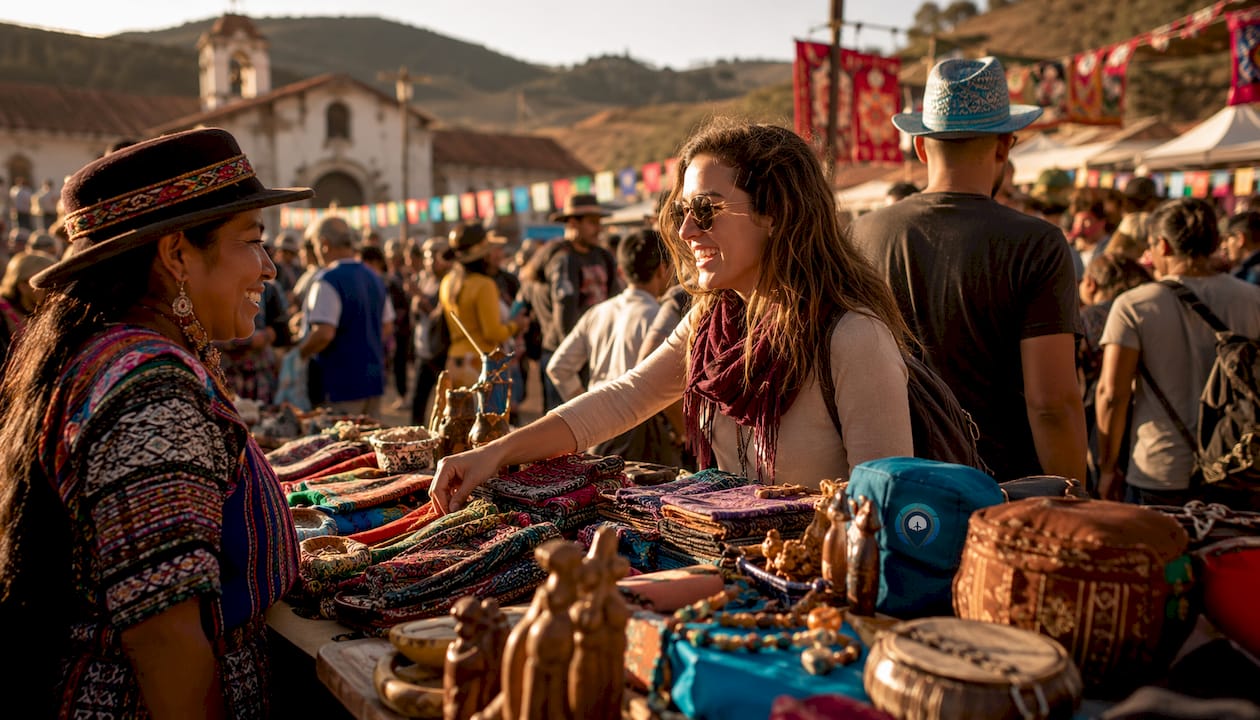
The significance of pilgrimage festivals also extends well beyond the spiritual. They carry agricultural roots, political histories, and diaspora connections that give them layers most tourists never see. Understanding those layers is what separates a meaningful visit from a superficial one.
What are the key characteristics of pilgrimage festivals?
Pilgrimage festivals share a recognizable set of features regardless of faith tradition. Knowing these helps you understand what you’re walking into, whether you’re a devotee or a curious cultural traveler.
- Ritual worship: Prayers, offerings, fasting, and sacrifices form the spiritual core. These aren’t optional extras. They’re the reason the festival exists.
- Performative arts: Music, drumming, dance, and processions carry religious meaning. They’re not entertainment. They communicate devotion and community identity.
- Communal gathering: The act of being physically present with thousands or millions of fellow believers reinforces social bonds that persist long after the festival ends.
- Economic impact: Festivals significantly increase local social capital and tourism-driven economic growth. Host cities and regions depend on this annual surge.
- Cultural transmission: Younger generations learn rituals, songs, and stories by participating. The festival is the classroom.
Pro Tip: If you want to understand a pilgrimage festival’s true character, watch what happens in the early morning before the main events start. That’s when the most sincere, uncurated devotion takes place.
The economic and social dimensions of these festivals are inseparable from the spiritual ones. A festival that draws millions of pilgrims also feeds thousands of local vendors, fills hotels, and funds infrastructure. That interdependence shapes how festivals are organized, promoted, and sometimes compromised. Knowing this helps you appreciate the complexity behind what might look like a simple religious gathering.
Which major pilgrimage festivals should you know about?
Religious pilgrimage festivals exist across virtually every major faith tradition. The examples below represent the most significant ones by scale, historical depth, and global recognition.
| Festival | Faith | Core significance |
|---|---|---|
| Hajj | Islam | One of the Five Pillars; obligatory once in a lifetime for able Muslims |
| Passover, Shavuot, Sukkot | Judaism | Three Pilgrimage Festivals tied to harvest cycles and Jerusalem |
| Camino de Santiago | Christianity | Spiritual journey to the tomb of Saint James in Spain |
| Kumbh Mela | Hinduism | Largest human gathering on Earth; ritual bathing for spiritual liberation |
| World Sàngó Cultural Festival | Yoruba religion | Ritual, diaspora identity, and cultural diplomacy |
Judaism’s Three Pilgrimage Festivals are Passover, Shavuot, and Sukkot. These three events are linked to agricultural harvest cycles, with Passover aligning with the barley harvest, Shavuot with wheat, and Sukkot with fruit. Historically, Jewish law required pilgrimage to Jerusalem for each. Today, these festivals remain central to Jewish religious life even without the physical journey to the Temple.
Islam’s Hajj is the most logistically intense pilgrimage festival in the world. Over 3 million Muslims gather in Mecca each year for a series of rituals spanning several days. Hajj is one of the Five Pillars of Islam, making it a religious obligation for every Muslim who is physically and financially able to complete it. The spiritual weight of this obligation shapes the entire experience.
Christian pilgrimages to Jerusalem, Rome, and the Camino de Santiago each carry distinct spiritual focus. The Camino de Santiago in Spain draws hundreds of thousands of walkers annually, many of whom complete the final symbolic leg on foot regardless of how they traveled earlier. That final walk is the ritual. It’s the part that counts.
The World Sàngó Cultural Festival in Nigeria blends Yoruba religious ritual with modern heritage tourism. It features intense drumming, sacred rituals, and strong diaspora involvement from Yoruba communities worldwide. The festival reflects both the power of globalization and the challenge of maintaining sacred meaning when an event becomes a cultural export.
You can find a broader look at how festivals differ by region if you want to understand the geographic and cultural forces that shape these events.
How do pilgrims and visitors experience these festivals?
The experience of attending a pilgrimage festival is multi-layered. Spiritual devotion, sensory intensity, and communal energy all operate at once. For a devoted pilgrim, the experience is primarily internal: a fulfillment of religious duty or a deepening of personal faith. For a cultural traveler, the experience is observational but no less powerful if approached with genuine respect.
Experts warn that pilgrimage festivals are not spectacles. They’re vital to the social fabric and spiritual life of local communities. Treating them as photo opportunities misses the point entirely and can cause real offense. The distinction between pilgrim and tourist matters, and the most meaningful visits happen when travelers close that gap as much as possible.
Here’s what shapes the experience on the ground:
- Sensory immersion: Incense, chanting, drumming, and crowds create an atmosphere unlike anything in ordinary travel. Your senses are fully engaged from the moment you arrive.
- Communal identity: You’re witnessing a community affirm who they are. That’s a privilege, not a given.
- Liminal space: Scholars describe pilgrimage festivals as creating a liminal space where normal social rules are suspended and transformation becomes possible. That feeling is real, and it’s available to respectful visitors too.
- Infrastructure pressure: Crowds at major festivals are extreme. Water, food, restrooms, and transport all operate under enormous strain.
Pro Tip: Seek out fringe rituals and community events beyond the main staged program. These uncommodified moments reveal the festival’s authentic spiritual character far better than any headlining ceremony.
The role of the observer matters. Attending a pilgrimage festival as a curious traveler is entirely valid, but it requires a different posture than attending a music festival. You’re a guest in someone else’s sacred space. Act accordingly.
What practical advice should travelers know before attending?
Planning for a major pilgrimage festival requires more lead time than almost any other type of travel. Here’s what actually works:
- Book 6–12 months in advance. Hospitality and transport operate at 200–300% capacity during peak pilgrimage periods. Waiting until a few weeks out means you won’t find accommodation within a reasonable distance of the festival site.
- Research dress codes before you pack. Most pilgrimage sites require modest clothing. Arriving in shorts and a tank top at a sacred site signals disrespect immediately. Check the specific requirements for each site and pack accordingly.
- Learn the arrival protocols. Modern pilgrimage often involves transport for most of the journey, with the final symbolic leg completed on foot. Respecting that ritual structure, even as an observer, matters. Driving to the final gate and skipping the walk is noticed.
- Attend community events, not just headline ceremonies. The most authentic experiences happen in smaller rituals, neighborhood processions, and community meals. These are where real cultural exchange occurs.
- Prepare for physical demands. Heat, crowds, long walks, and limited facilities are standard. Pack a refillable water bottle, comfortable footwear, and a small first-aid kit. Check out Traveling Portrait’s travel gear recommendations before you finalize your packing list.
- Respect photography boundaries. Ask before photographing rituals or worshippers. Many sacred moments are not meant to be documented by outsiders.
The authenticity of religious festivals is negotiated between traditional custodians and tourism interests. Understanding that tension deepens your appreciation and helps preserve the heritage you came to witness.
Key Takeaways
Religious pilgrimage festivals are living heritage events where spiritual obligation, communal identity, and cultural tradition operate simultaneously, requiring respectful preparation from every visitor.
| Point | Details |
|---|---|
| Core definition | A pilgrimage festival combines a sacred journey with collective religious celebration at a holy site. |
| Scale of participation | Hajj draws over 3 million pilgrims annually; Christian festivals involve approximately 2 billion people worldwide. |
| Authenticity matters | Fringe rituals reveal genuine spiritual expression more clearly than staged main events. |
| Plan well ahead | Book accommodation 6–12 months in advance, as capacity runs at 200–300% during major festivals. |
| Respect is non-negotiable | Dress codes, arrival protocols, and photography boundaries define respectful participation at every site. |
Why these festivals changed how I think about travel
I’ve stood in the middle of a religious procession in a country where I didn’t speak the language, didn’t share the faith, and had no idea what the chanting meant. And it was one of the most affecting experiences I’ve had on the road. Not because I understood it, but because I could feel how much it mattered to the people around me.
What I’ve learned is that most travelers approach pilgrimage festivals the wrong way. They treat them as bucket-list checkboxes or Instagram backdrops. That approach guarantees a shallow experience and, honestly, it’s a little disrespectful. The real value of attending a pilgrimage festival is what it does to your assumptions. You watch millions of people organize their entire year around a single act of faith, and it forces you to ask what you organize your year around.
The tension between tradition and tourism is real at every major festival. I’ve seen sacred rituals performed for cameras, and I’ve seen the same rituals performed at 5:00 AM with no tourists in sight. The 5:00 AM version is always more powerful. That’s not a coincidence. Seek the lesser-known festival moments that don’t make it onto the official program. That’s where the real thing lives.
Approach these events with humility. You’re not there to consume an experience. You’re there to witness something that has existed for centuries and will continue long after you’ve gone home and posted your photos.
— Justin Frazier
Traveling Portrait and cultural festival travel
Traveling Portrait covers the kind of travel that changes how you see the world, and religious pilgrimage festivals sit squarely in that category. Whether you’re planning your first visit to a major sacred site or looking to understand the cultural traditions behind a festival you’ve always been curious about, good preparation makes all the difference. Traveling Portrait’s adventure travel guide covers the mindset and logistics you need before attending any large-scale cultural event. You’ll also find destination-specific resources across the site to help you plan with confidence and cultural awareness. Start there, and you’ll arrive ready.
FAQ
What is the difference between a pilgrimage and a pilgrimage festival?
A pilgrimage is the sacred journey itself, while a pilgrimage festival adds a communal celebration, rituals, and cultural events at the destination. The festival element makes the experience collective rather than purely individual.
What happens during a pilgrimage festival?
Participants engage in ritual worship, communal prayers, processions, music, and cultural performances. The specific activities vary by faith tradition but always center on spiritual devotion and community identity.
What are the most popular pilgrimage sites in the world?
Mecca, Jerusalem, the Camino de Santiago, and the Kumbh Mela sites in India rank among the most visited. Each draws millions of pilgrims annually for distinct religious reasons.
Can non-religious travelers attend pilgrimage festivals?
Non-religious visitors can attend many pilgrimage festivals as respectful observers, though some sites like Mecca restrict access to Muslims only. Researching entry rules and cultural expectations before attending is required.
How far in advance should you plan for a major pilgrimage festival?
Book accommodation and transport 6–12 months in advance. Hospitality infrastructure operates at 200–300% capacity during peak pilgrimage periods, making last-minute planning extremely difficult.
Recommended
Other Posts You Might Like