
Linktr.ee Alternatives for Travel Photographers
For adventure travelers and photographers who need more than a plain link list, the top picks are Carrd (full design control, full-bleed visuals), Beacons (native commerce for selling presets and guides), Campsite (clean layouts with real UTM tracking), and Lnk.Bio (one-time payment, no recurring fees). Linktree remains the easiest starting point, and it’s genuinely good for getting something live in five minutes. But once you want a gallery embed, a custom domain, or actual per-link attribution, you’ll feel its limits pretty fast.
Here’s a quick shortlist for visual storytellers:
- Carrd — best for full-bleed hero images and a branded one-page portfolio; pairs perfectly with a travel photography portfolio you already have
- Beacons — best for selling presets, ebooks, or booking sessions directly from your bio
- Campsite — best for clean design plus UTM tracking without a heavy storefront
- Lnk.Bio — best if you hate subscriptions; lifetime plans start at an affordable one-time payment
- ConvertKit — best for turning bio clicks into email subscribers with automated funnels
- Later (Linkin.bio) — best if you already schedule Instagram posts with Later
Linktree is the incumbent baseline every tool on this list is measured against: polished, trusted, and free to start. Where it falls short is attribution and design freedom, which is exactly where these alternatives shine.
Pro Tip: Before you switch, check whether your current tool charges transaction fees on its free plan. Some platforms take roughly 9%–12% on sales made through a free bio page, which adds up fast if you’re selling presets or digital guides.
Table of Contents
Which Linktr.ee Alternative Is Right for You?

Recommendation snippets by goal
Want full design control? Carrd is the call. It’s technically a one-page site builder, not a bio tool, which is exactly why it wins on visuals. You get real CSS control, full-bleed hero images, embedded galleries, and a custom domain for as little as $19 a year. The catch: no native per-link analytics, so you’ll need UTM parameters on every link if attribution matters.
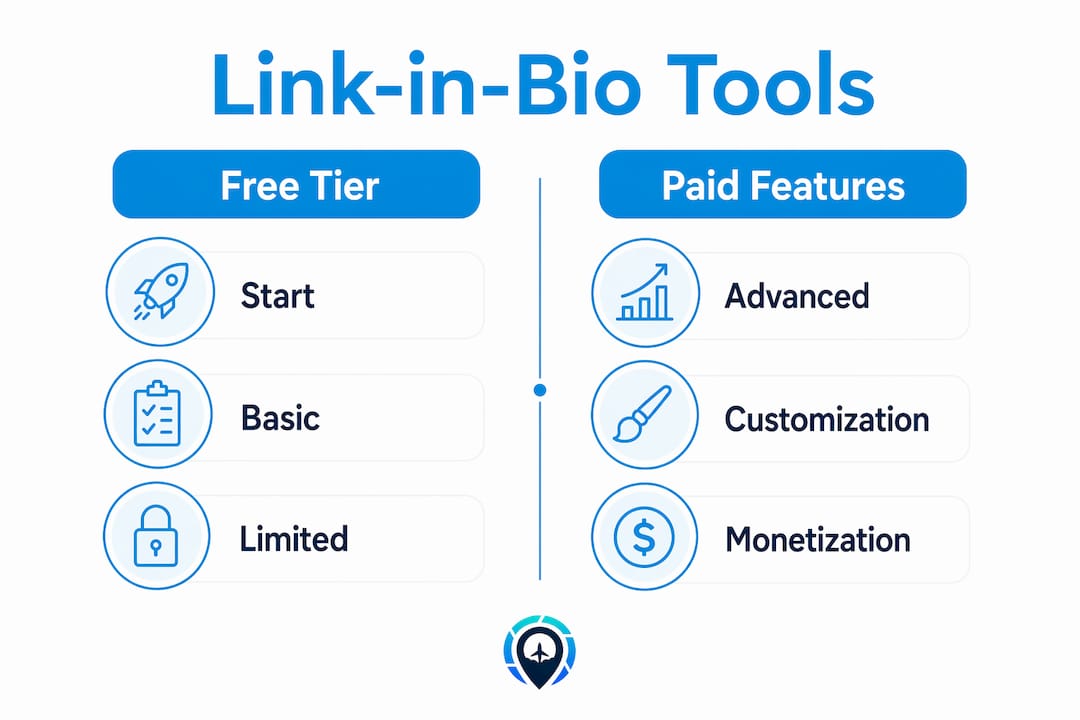
Want to sell directly from your bio? Beacons ships a native storefront, tipping, email capture, and a media kit for brand deals, all inside the bio surface. If your model involves selling Lightroom presets or booking adventure workshops, Beacons has more commerce tooling than almost anything else here. Just know that analytics are aggregate rather than per-link, and there’s no EU data residency commitment.
Want scheduling and bio in one place? Later’s Linkin.bio is genuinely clever if you already use Later to schedule Instagram posts. It ties each post’s link directly to your scheduled content, so your bio page updates as your feed does. If you don’t use Later for scheduling, though, it’s a weaker standalone option.
Want analytics without the complexity? Campsite hits a sweet spot: clean layouts, UTM support, and per-link click data without the full storefront overhead. For a travel photographer running paid campaigns or tracking which destination guide drives the most clicks, that UTM support is a real practical advantage.
Hate recurring fees? Lnk.Bio offers lifetime plans at $9.99 (Mini) and $24.99 (Unique), which is genuinely unusual in this space. Features are basic, but if you just need a tidy link page without a monthly bill, it’s hard to argue with.
Pro Tip: Shortener-backed bio pages, where your bio tiles run on the same redirect engine as your campaign links, give you consistent per-link attribution with no analytics seam. Worth considering if you run any paid social or affiliate campaigns.
How to Build an Immersive Visual Bio Page
The fastest path to a live, visual bio page is: pick a design-first tool, prepare your hero image and three to five priority links, then publish on a custom domain. Here’s how to do it properly.
- Pick your platform based on your primary goal. Design control? Carrd. Commerce? Beacons. Analytics? Campsite. Email growth? ConvertKit. Don’t pick based on popularity alone.
- Prepare your visual assets first. A full-bleed hero image (at least 1920px wide), a short bio, and your top five CTAs. Check out how to document your travels for practical tips on selecting the right shots.
- Set up your layout with a clear hierarchy. Hero image at the top, then your most important CTA (portfolio, preset shop, or workshop booking), then secondary links. Keep it to seven links maximum or visitors won’t click anything.
- Add commerce or booking if relevant. Beacons handles this natively. On Carrd, embed a Gumroad or Stripe button. On ConvertKit, connect your email sequence directly to a paid product.
- Set up UTM parameters on every link. Even if your platform doesn’t offer native analytics, UTMs let Google Analytics or Plausible tell you exactly which bio link drove a sale or signup.
- Test on mobile before you go live. Most of your traffic arrives on a phone. Check load speed, tap target sizes, and whether your hero image crops well on a 390px screen.
- Connect your custom domain. Every platform on this list supports it on a paid tier. A custom domain keeps your brand consistent and avoids the “linktr.ee/yourname” look that signals a beginner setup.
Visual layout checklist for photographers and travelers
- Full-bleed hero image or short video loop at the top
- One-line bio with your niche (“Adventure travel photographer | Iceland + Patagonia”)
- Primary CTA button: portfolio, workshop, or preset shop
- Secondary links: latest blog post, gear guide, email signup
- Social icons below the fold, not above it
Integration note: Most tools connect to Mailchimp, ConvertKit, or Kit via Zapier. If CRM syncing matters to you, turning social followers into leads through automatic email capture is one of the highest-leverage things a bio page can do. On SEO: bio pages on third-party domains (linktr.ee, beacons.ai) carry almost no SEO value for your own site. A custom domain helps, but a bio page is not a substitute for a real content strategy.
Cost to switch: Free tiers get you live in under an hour. Paid tiers typically run $5–$19/month, or a one-time fee with Lnk.Bio. The main hidden cost is transaction fees on free plans, which often fall between 9% and 12% on digital sales, so upgrade before you start selling.
Pro Tip: If data ownership matters to you, self-hosted tools like LinkStack give you full control over audience data and analytics with no third-party sampling. The trade-off is real technical overhead, so it suits developers more than casual creators.
Traveling Portrait Is a Shortcut for Busy Visual Storytellers
All these tools are genuinely good, but setting one up well takes time you might not have between trips. Traveling Portrait’s travel photography workshop is built for creators who want a stronger visual presence without spending a weekend configuring bio pages. You get hands-on guidance on building a storytelling-first portfolio, selecting the right CTAs for your audience, and presenting your work in a way that actually converts followers into clients or workshop attendees. If you’d rather spend that time shooting in Iceland or Arizona, that’s exactly the kind of trade-off Traveling Portrait is designed for. Check out the adventure travel planning guide as a next step, or head straight to the workshop page to see what’s available.
Key Takeaways
For visual storytellers, the right link-in-bio tool depends entirely on whether your priority is design control, direct sales, or attribution, and no single platform wins all three.
| Point | Details |
|---|---|
| Design-first pick | Carrd gives the most visual control (full-bleed, CSS, embeds) for just $19/year. |
| Commerce-first pick | Beacons has the strongest native storefront and tipping tools for selling presets or bookings. |
| Analytics-first pick | Campsite offers UTM support and per-link data without heavy storefront overhead. |
| Watch transaction fees | Free plans on some tools charge between 9% and 12% on digital sales, so upgrade before selling. |
| Traveling Portrait | The travel photography workshop offers hands-on help building a storytelling-first visual presence. |
Recommended
Other Posts You Might Like