Insider Tips for Major World Festivals: Your 2026 Guide
The quickest way to upgrade any major festival trip is to plan three to five anchor experiences, then deliberately leave space for the unexpected. That’s it. Whether you’re heading to Rio Carnival, Diwali in Jaipur, or Mardi Gras in New Orleans, the travelers who walk away with the best stories aren’t the ones who crammed every headline act into their schedule. They’re the ones who picked anchor sets, wandered into a side street workshop, and ended up sharing food with locals at midnight.
Here are six instant tips you can apply to any festival trip right now:
- Book accommodation first, tickets second. Flights and tickets sell out fast, but a bad base location will ruin your whole trip.
- Pick a few anchor experiences per day and protect the gaps between them for spontaneous discovery.
- Set a physical meeting point before you lose cell service in the crowd — a statue, a gate, a food stall.
- Don’t tighten your wristband until you’re at the gate. Many festivals use one-way locking clasps that can’t be undone, and premature tightening means a stressful trip to customer service.
- Pack a 20,000mAh+ power bank. Your phone is your map, your ticket, and your camera.
- Bring a poncho, not an umbrella. Umbrellas in dense crowds block everyone’s view and get destroyed.
Quick festival shortlist — inspiration at a glance:
| Festival | Why it’s iconic |
|---|---|
| Diwali, India | A city-wide explosion of light, fireworks, and sweets in October/November |
| Día de los Muertos, Mexico | Deeply moving altars and marigold processions in late October/early November |
| Songkran, Thailand | The world’s biggest water fight, every April |
| Holi, India | A riot of color powder in March that you’ll be washing out for days |
| Rio Carnival, Brazil | The largest carnival on earth, February/March, with samba schools competing in the Sambadrome |
| Oktoberfest, Germany | Beer, pretzels, and lederhosen in Munich every September/October |
| Mardi Gras, New Orleans | Beads, brass bands, and king cake every February/March |
| Venice Carnival, Italy | Elaborate masks and canal-side pageantry in February |
| La Tomatina, Spain | A tomato-throwing free-for-all in Buñol every August |
| Québec Winter Carnival, Canada | Ice sculptures and night parades in February |
| Obon, Japan | A beautiful, lantern-lit Buddhist festival honoring ancestors in August |
| Semana Santa, Guatemala | Intricate sawdust carpets and solemn processions in Holy Week |
Table of Contents
- Which major world festivals should you actually attend?
- How do you plan and book a major festival trip without stress?
- How do you experience a festival authentically without being a tourist trap?
- What safety and health precautions should you take at major festivals?
- What should you pack for a festival, and how do you photograph it well?
- What does a festival trip actually cost, and how far out should you book?
- Your pre-trip and day-of festival checklist
- Key Takeaways
- What most festival guides get wrong
- Traveling Portrait can help you shoot festivals better
- Useful sources and official pages
Which major world festivals should you actually attend?
These twelve celebrations are the ones that come up again and again when seasoned travelers swap stories. Each entry covers what it is, when it happens, and one insider tip that most first-timers don’t figure out until it’s too late.
Diwali (India) — October/November
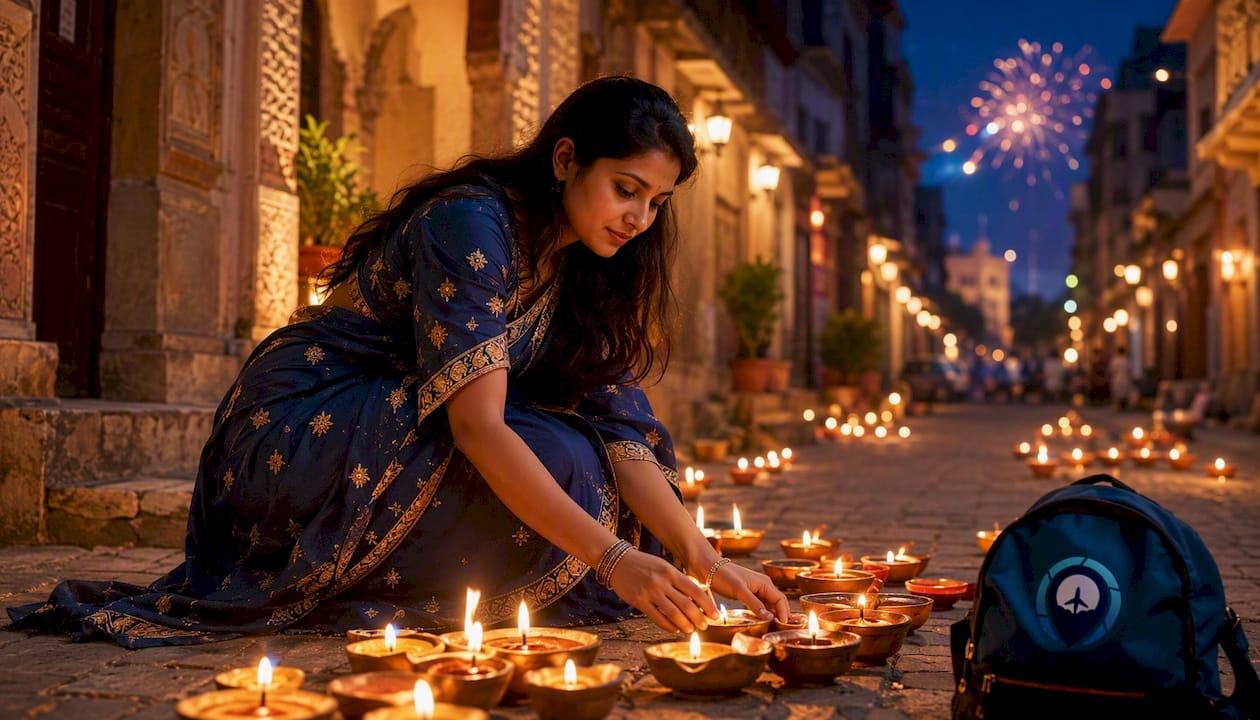
The Festival of Lights transforms entire cities, especially Jaipur and Varanasi, into glowing spectacles of diyas, fireworks, and rangoli. It typically falls in October or November based on the Hindu lunar calendar. Insider tip: Skip the main tourist ghats on the peak night and walk into residential neighborhoods instead. The family celebrations there are far more intimate and photogenic than the crowded riverbanks.
Día de los Muertos (Mexico) — October 31–November 2
This is not Halloween. It’s a deeply spiritual Mexican tradition where families build elaborate ofrendas (altars) to welcome the spirits of deceased loved ones, decorated with marigolds, photos, and favorite foods. Oaxaca and Mexico City’s Mixquic neighborhood are the most atmospheric spots. Insider tip: Visit a local cemetery after midnight on November 1st. That’s when families gather quietly around graves with candles, and the atmosphere is unlike anything you’ll experience in a tourist zone.
Songkran (Thailand) — April 13–15
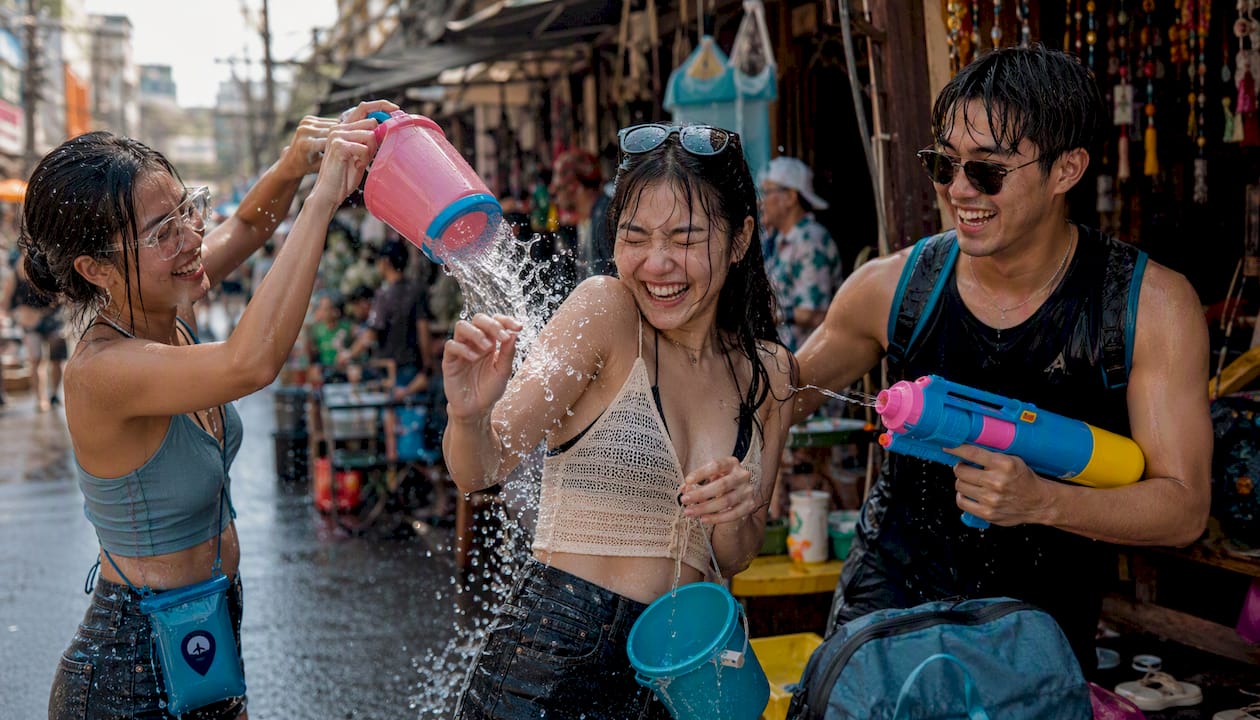
Thailand’s New Year water festival is a full-city water fight that runs for three days every April. Chiang Mai’s moat area is ground zero for the most intense action. Insider tip: Seal your phone in a waterproof case the night before, not the morning of. You will get soaked before you even reach the main street.
Holi (India) — March
The Festival of Colors is celebrated across India, but Mathura and Vrindavan (the birthplace of Krishna) offer the most traditional version. Expect clouds of colored powder, water balloons, and dancing in the streets. Insider tip: Wear old white clothes you’re happy to throw away, apply coconut oil to your skin and hair before you go out, and bring goggles. The oil makes the color wash off far more easily.
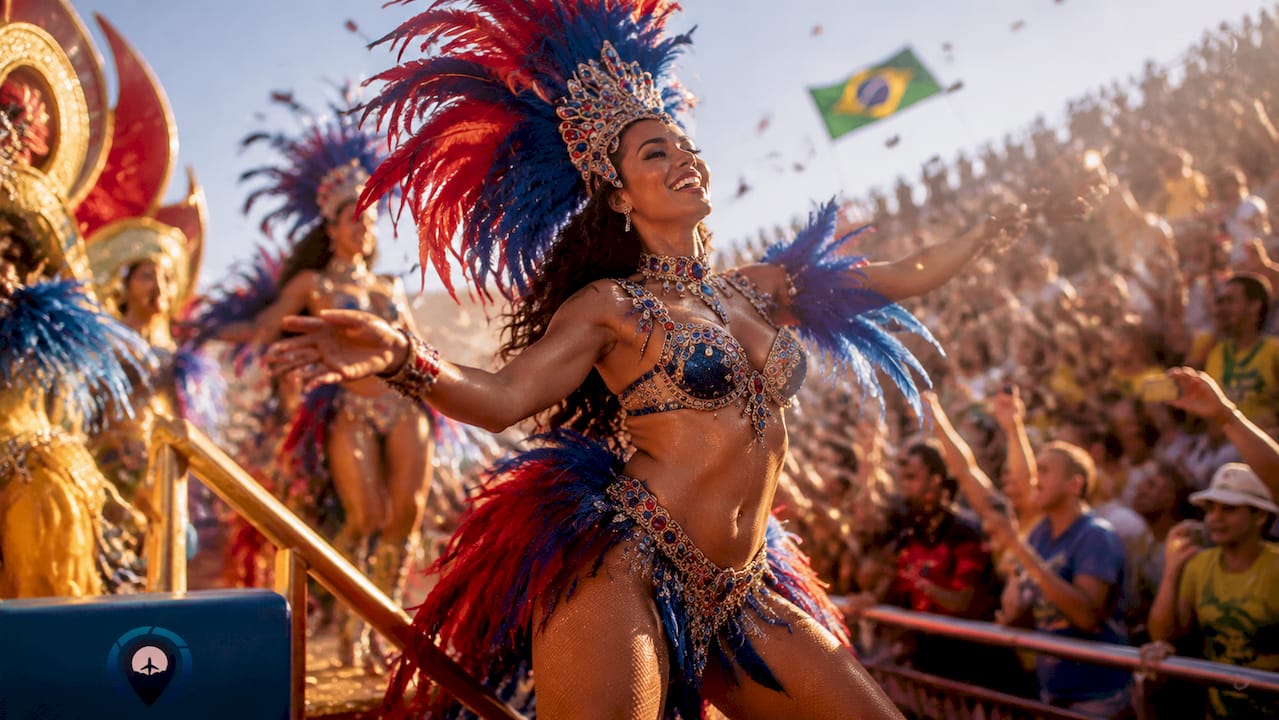
Rio Carnival (Brazil) — February/March
The world’s largest carnival draws millions to Rio de Janeiro for five days of samba parades, street parties called blocos , and the iconic Sambadrome competition. Insider tip: The Sambadrome grandstand tickets are worth every cent for the spectacle, but the blocos street parties in Santa Teresa and Lapa neighborhoods are free and often more fun. Book Sambadrome tickets at least six months out.
Oktoberfest (Germany) — Late September/October
Munich’s Oktoberfest runs for roughly 16–18 days, ending on the first Sunday in October. The big beer tents fill up by 10 AM on weekends. Insider tip: Go on a weekday, arrive by 9 AM, and sit in the Augustiner tent rather than the tourist-heavy Hofbräu. Locals know the difference.
La Tomatina (Spain) — Last Wednesday of August
Held in the small town of Buñol near Valencia, La Tomatina is exactly what it sounds like: a one-hour tomato fight involving tens of thousands of people and roughly 150,000 kilograms of tomatoes. Tickets are required and sell out months in advance. Insider tip: Wear goggles and closed shoes you don’t care about. The tomato pulp gets into everything, and the streets get slippery fast.
Pro Tip: At La Tomatina, don’t tighten your wristband until you’re through the gate. The clasps are one-way locks, and a premature tightening can mean a long, frustrating wait at the replacement desk.
Venice Carnival (Italy) — February
Venice Carnival runs for about two weeks before Ash Wednesday, filling the city’s campi and canals with masked revelers in elaborate historical costumes. Insider tip: The free public events in Campo San Polo and St. Mark’s Square are genuinely spectacular. You don’t need to pay for a private masked ball to get great photos and a magical atmosphere.
Mardi Gras (New Orleans, USA) — February/March
Mardi Gras in New Orleans is a multi-week celebration culminating on Fat Tuesday, the day before Ash Wednesday. The parades roll through the Garden District and the French Quarter, and the throws (beads, doubloons, cups) are a core part of the experience. Insider tip: The Uptown parades on the St. Charles Avenue route are far less crowded than the French Quarter and have better family-friendly viewing spots with actual room to breathe.
Québec Winter Carnival (Canada) — February
The world’s largest winter carnival runs for about 17 days in Québec City every February, featuring ice sculptures, night parades, and the iconic Bonhomme mascot. Insider tip: The ice canoe race on the St. Lawrence River is one of the most dramatic sporting events you’ll ever watch, and almost nobody outside Canada knows about it.
Obon (Japan) — August
Obon is a Buddhist festival honoring the spirits of ancestors, observed across Japan in mid-August with bon odori (traditional dances), lantern floating ceremonies, and family gatherings. Kyoto’s Daimonji bonfire and Nagasaki’s lantern floating are particularly moving. Insider tip: Attend a bon odori dance in a smaller town rather than a major city. The community feel is completely different, and locals genuinely welcome visitors who join the circle.
Semana Santa (Guatemala/Latin America) — Holy Week (March/April)
Antigua, Guatemala hosts what many consider the most visually stunning Semana Santa processions in the world. Volunteers spend days creating intricate alfombras (carpets) made from colored sawdust, flowers, and pine needles, which are then walked over by solemn processions. Insider tip: Wake up at 4 AM on Good Friday. The pre-dawn processions through candlelit streets, with the alfombras still intact, are breathtaking and far less crowded than the midday events.
For a deeper look at lesser-known global festivals beyond this shortlist, Traveling Portrait has a dedicated guide worth bookmarking.
How do you plan and book a major festival trip without stress?
The single biggest mistake first-timers make is booking in the wrong order. Here’s the sequence that actually works:
The booking timeline
- 12+ months out: Research your target festival’s ticket release calendar. Mega-productions like Tomorrowland and Rio Carnival’s Sambadrome sell out in hours during presale windows. Sign up for official newsletters immediately.
- 9–12 months out: Lock in accommodation. For festivals in smaller towns (Buñol for La Tomatina, Antigua for Semana Santa), you’ll need to base yourself in a nearby city like Valencia or Guatemala City and arrange day-trip transport.
- 6–9 months out: Book flights. Prices spike sharply once a festival date is publicly confirmed.
- 3–6 months out: Arrange visas if required, purchase travel insurance, and research local transport options.
- 6–8 weeks out: Download the official festival app, confirm ticket delivery method, and set up cashless payment accounts if the event uses them. Tomorrowland, for example, runs a cashless payment system called Pearls that requires pre-loading funds.
- 2 weeks out: Print or screenshot backup copies of all tickets and IDs. Share your itinerary with someone at home.
How long should you stay?
For a city-based festival like Mardi Gras or Diwali, three to four days gives you enough time to see the peak events without burning out. Multi-day camping festivals like Glastonbury or Tomorrowland reward a full run — arriving a day early to get oriented pays off massively. Planning travel around festival dates is a skill in itself, and building in a buffer day after the festival ends is one of the most underrated moves. Post-festival transit is chaotic, and you don’t want to miss a flight because 200,000 people are all leaving at once.
Where to base yourself
- Camp on-site when the festival offers it (Tomorrowland’s DreamVille, Glastonbury): you save transit time and get the full immersive experience.
- Stay in a nearby town for smaller festivals in rural areas: cheaper, quieter, and you can escape the crowds at night.
- City-center hotels work best for urban parades and multi-day city festivals where you want flexibility.
Pro Tip: For festivals in smaller towns, book a place with a kitchen. After two days of festival food prices, being able to cook breakfast yourself feels like a genuine luxury.
Festivals that connect venue infrastructure to the surrounding city’s public spaces tend to create better experiences overall. Gensler’s research on mega-events found that fan experiences improve significantly when stadiums and festival districts are integrated with public plazas and transit, so choosing a base that puts you close to public transport rather than just close to the venue entrance is often the smarter call.
How do you experience a festival authentically without being a tourist trap?
Respecting local culture isn’t just the right thing to do. It’s also how you get access to the parts of a festival that most visitors never see.
Etiquette basics that matter
- Ask before photographing people, especially during rituals. At Obon, Semana Santa, and Diwali, you’re often witnessing genuine acts of devotion. A nod and a smile go a long way; a camera shoved in someone’s face does not.
- Dress appropriately for religious festivals. Semana Santa processions and Obon ceremonies are not costume parties. Cover your shoulders and knees, and follow the lead of locals around you.
- Don’t touch offerings or altars. At Día de los Muertos, the ofrendas are personal and sacred. Looking is welcome; touching is not.
- Learn three words in the local language. “Thank you,” “excuse me,” and “may I?” open more doors than any amount of money.
How to find the real experience
The most memorable festival moments come from workshops, small stages, and informal interactions rather than headline acts alone. At most major festivals, there’s a secondary program running parallel to the main events: cooking workshops, craft demonstrations, local music on smaller stages, and community gatherings that don’t appear on the main schedule.
- Volunteer. Many festivals offer free or discounted entry in exchange for a few hours of work. You’ll meet locals, get behind-the-scenes access, and understand the event from the inside.
- Eat where locals eat. Street food stalls a few blocks from the main festival zone are almost always better and cheaper than the tourist-facing stands. For a practical guide to enjoying local food experiences at festivals, the Wild Foodz team has put together genuinely useful advice on finding authentic vendors safely.
- Attend a workshop. At events like the Rainforest World Music Festival, pre-festival workshops with performers are often the highlight of the whole trip.
- Support local vendors. Buy souvenirs from artisan markets rather than mass-produced stalls near the main entrance.
For religious pilgrimage festivals specifically, Traveling Portrait’s guide on attending religious festivals respectfully covers the nuances in more depth.
What safety and health precautions should you take at major festivals?
Crowds are exciting right up until they’re not. A little preparation here goes a long way.
Crowd logistics
- Set a physical meeting point before you enter. Pick something unmissable: a specific gate, a large sculpture, a named food stall. Cell service in dense crowds is unreliable, and “I’ll text you” is not a plan.
- Identify the crush zones. The area directly in front of a main stage, narrow entry corridors, and bottleneck exits are where crowd pressure builds. If you feel the crowd compressing and you can’t move your arms, work toward the edges, not forward.
- Know the venue layout before you arrive. Download the map the night before and identify at least two exit routes from your main viewing area.
- Use venue landmarks, not GPS pins. In a crowd, “meet me at the big red arch” works better than a dropped pin that’s 30 meters off.
Wristband and ticket care
Many festivals use one-way locking wristband clasps. Tightening or tampering with them before you’re instructed to at the gate can void your entry entirely, and customer-service replacements are time-consuming and sometimes costly. Keep your wristband loose until a staff member tells you to tighten it.
Health preparations
- Hydration: Drink water consistently throughout the day, not just when you feel thirsty. At outdoor summer festivals, aim for at least 500ml per hour in direct sun.
- Sun and cold protection: Sunscreen, a hat, and UV-protective layers for summer festivals; thermal base layers, waterproof boots, and hand warmers for Québec Winter Carnival or cold-weather events.
- Vaccinations: Check the CDC’s travel health recommendations for your destination at least 6–8 weeks before departure. Some festivals in Southeast Asia or Latin America may require or recommend specific vaccinations.
- Medications: Carry any prescription medications in their original labeled containers, with a copy of the prescription.
Emergency checklist
- Save the local emergency number in your phone (not just 911, which doesn’t work internationally).
- Note the nearest hospital or medical tent location on your festival map.
- Keep a photo of your passport, visa, and travel insurance card in your phone’s camera roll and in a cloud backup.
- Know your country’s embassy or consulate address and phone number for the destination country.
Pro Tip: Write your emergency contact number and your base accommodation address on a small card and keep it in your pocket, separate from your phone. If your phone dies or gets lost, you still have the information you need.
What should you pack for a festival, and how do you photograph it well?
Packing for a festival is about ruthless prioritization. Here’s what actually matters, broken down by festival type.
Packing by festival type
Urban parade festivals (Mardi Gras, Diwali, Semana Santa): Comfortable walking shoes, a small crossbody bag or fanny pack, a portable phone charger, a light rain layer, and a reusable water bottle. Leave the big backpack at the hotel.
Wet or muddy field festivals (Glastonbury, outdoor music events): Wellington boots, gaiters to prevent boot-suction in deep mud, a tarp to place under your tent for moisture protection, a 20,000mAh+ power bank, and triple-layered Ziploc bags for electronics. An umbrella is useless in a crowd; a poncho is not.
Cold-weather festivals (Québec Winter Carnival): Thermal base layers, waterproof outer layers, insulated boots, hand warmers, and a face covering. Frostbite is a real risk at outdoor night events in February.
Color and water festivals (Holi, Songkran): Old clothes you’ll discard, goggles, a fully waterproof phone case (not just water-resistant), and a dry bag for your camera gear.
Photography gear for festivals
For a full breakdown of travel photography gear recommendations, Traveling Portrait’s gear guide covers lens choices, bag setups, and protective cases in detail.
Camera settings for common festival scenarios:
- Low-light parade floats (Mardi Gras, Venice Carnival night events): ISO 1600–3200, shutter speed 1/125s minimum to freeze movement, wide aperture (f/1.8–f/2.8). Enable your camera’s subject-tracking autofocus.
- Daytime color festivals (Holi, La Tomatina): Shutter priority at 1/500s or faster to freeze powder clouds and water. Protect your lens with a UV filter and a rain sleeve. Seal your camera body with a plastic bag and a rubber band around the lens mount if you don’t have a weather-sealed body.
- Snow and ice reflections (Québec Winter Carnival): Dial in +1 to +1.5 stops of exposure compensation. Your camera’s meter will underexpose snow, making it look gray.
- Candlelit ceremonies (Obon, Semana Santa pre-dawn): ISO 3200–6400, the widest aperture you have, and a steady hand or a small gorilla-pod tripod. Avoid flash entirely. It disrupts the atmosphere and the people around you.
What not to bring: Monopods and full-size tripods in dense crowds are a hazard to other people and will get you removed from most venues. Leave the drone at home unless you have explicit written permission from the festival organizers.
Pro Tip: Blend in with your gear. A mirrorless camera with a small prime lens reads as “enthusiast.” A full-frame DSLR with a 70–200mm zoom reads as “press.” The former gets you closer to real moments; the latter gets you kept at a distance.
For photography styles suited to different festival contexts, Traveling Portrait’s photography styles guide is a useful reference before you travel.
What does a festival trip actually cost, and how far out should you book?
Costs vary enormously depending on the festival type, your travel origin, and how early you book. Here’s a realistic breakdown.
Cost ranges by festival style
Ranges are illustrative estimates covering flights from the US, accommodation, tickets, food, and transport. Actual costs depend on your departure city and booking timing.
For Tomorrowland specifically, first-timer budgets typically run roughly €600–1,500 depending on accommodation choice and travel distance.
Recommended lead times
- Mega-festivals (Tomorrowland, Rio Carnival Sambadrome): Book 9–12 months out. Tickets sell in presale windows that open 6–9 months before the event.
- City festivals (Mardi Gras, Oktoberfest, Venice Carnival): 4–6 months for accommodation; flights 3–5 months out.
- Cultural/pilgrimage festivals (Semana Santa, Obon): 3–4 months is usually sufficient, but accommodation in Antigua during Holy Week books out fast.
Money-saving tips
- Eat at local markets and street stalls rather than festival-zone restaurants. The price difference is significant, and the food is usually better.
- If the festival uses a cashless system, load only what you plan to spend per day. Unused balances can be tricky to recover.
- Timing your festival travel correctly — arriving a day before peak crowds and leaving a day after — can cut accommodation costs noticeably.
- Consider festival package deals for mega-events. They often bundle accommodation, transport, and tickets at a lower combined cost than booking each separately.
Your pre-trip and day-of festival checklist
Pre-trip checklist (complete 1–2 weeks before departure)
- [ ] Passport valid for at least 6 months beyond your return date
- [ ] Visa obtained or confirmed not required for your destination
- [ ] Travel insurance purchased and policy number saved
- [ ] Vaccination records checked against CDC recommendations for destination
- [ ] Festival tickets downloaded, printed, and backed up in cloud storage
- [ ] Festival app downloaded and account created
- [ ] Festival map studied: main stages, medical tents, exits, meeting point identified
- [ ] Local SIM card or international data plan arranged
- [ ] Local currency obtained or card set up for local ATM use
- [ ] Emergency contacts saved: local emergency number, embassy/consulate, travel insurance hotline
- [ ] Accommodation address written on a physical card
- [ ] Packing list completed (see packing section above)
Day-of checklist
- [ ] Meeting point confirmed with your group (physical location, not just a phone plan)
- [ ] Phone fully charged, power bank fully charged
- [ ] Small amount of local cash in a separate pocket from your main wallet
- [ ] Sunscreen applied (or thermal layers on for cold events)
- [ ] Ear protection packed (foam earplugs weigh nothing and save your hearing)
- [ ] Wristband on but NOT tightened until instructed at the gate
- [ ] Ticket ID and accommodation address on your physical card in your pocket
- [ ] Water bottle filled
Pro Tip: Create a simple “festival card” — a small piece of paper or laminated card with your meeting point, emergency contact number, ticket ID, and base accommodation address. Keep it in your front pocket all day. It takes five minutes to make and has saved more than a few festival trips from turning into disasters.
For a printable gear checklist that pairs with this, Traveling Portrait’s photography gear checklist covers the camera-specific items in a format you can take straight to your packing session.
Key Takeaways
The single most effective approach to any major world festival is to plan a handful of anchor experiences, protect time for spontaneous discovery, and prepare your logistics (accommodation, tickets, meeting points) well before the crowds arrive.
| Point | Details |
|---|---|
| Book in the right order | Secure accommodation first, then tickets, then flights — not the other way around. |
| Anchor your schedule | Pick a few must-see experiences per day and leave gaps for unplanned moments. |
| Wristband discipline | Never tighten a one-way locking wristband until festival staff instruct you to at the gate. |
| Physical meeting point | Agree on a named landmark before you lose cell service — a text plan is not a backup plan. |
| Traveling Portrait workshops | Traveling Portrait’s travel photography workshops teach festival-specific shooting techniques in small-group field settings. |
What most festival guides get wrong
There’s a version of festival advice that treats every celebration the same way: show up, follow the crowd, hit the headline acts, go home. That advice produces a perfectly average experience. The festivals on this list — Semana Santa, Obon, Diwali, Día de los Muertos — aren’t designed for passive consumption. They’re living cultural events, and the difference between a tourist who watches and a traveler who participates is almost entirely about preparation and attitude.
The photography angle matters here too, and it’s one that gets glossed over in most planning guides. Showing up to Obon with a 70–200mm zoom and firing away at the lantern ceremony from 50 meters is technically legal and practically disrespectful. Getting close, asking permission, putting the camera down for a few minutes, and actually being present in the moment — that’s when you get the photograph that means something. The best festival images aren’t the ones with the most dramatic light or the sharpest focus. They’re the ones where the subject trusted you enough to let you in.
One practical thing worth saying: the Traveling Portrait photography workshops specifically address this balance between capturing and participating. It’s a skill that takes practice, and having a framework before you arrive at a major festival makes a real difference.
Traveling Portrait can help you shoot festivals better
Most festival photography advice focuses on gear. Traveling Portrait’s approach is different. The travel photography workshops are small-group, field-based sessions that teach you how to read light, work with crowds, and photograph cultural events in a way that’s both technically strong and genuinely respectful of the people and places you’re documenting.
What participants gain is practical: camera settings for real festival conditions, crowd-navigation techniques that keep you in the right position without blocking anyone, and the confidence to approach local subjects and ask for a portrait. These are skills that apply directly to every festival on this list, from the pre-dawn processions of Semana Santa to the lantern-lit dances of Obon.
If you’re planning a festival trip and want to come home with images you’re actually proud of, explore the Traveling Portrait workshops and see which upcoming sessions fit your travel calendar.
Useful sources and official pages
These are the primary sources worth bookmarking for schedules, safety updates, and ticketing information:
- Mardi Gras — Wikipedia: Background on history, parade routes, and cultural context for New Orleans Mardi Gras.
- Obon — Wikipedia: Overview of Obon traditions, regional variations, and timing across Japan.
- Tomorrowland 2026 — EVENTFAQS: Detailed coverage of Tomorrowland’s festival design, cashless systems, and sustainability activations.
- La Tomatina travel tips — This Way Travels: Practical first-timer advice including wristband mechanics and packing for the tomato fight.
- Glastonbury survival guide — The Mosh Manual: Mud prep, gear lists, and site logistics for wet-field festivals.
- Rainforest World Music Festival review — The Island Drum: On-the-ground review covering workshops, smaller stages, and authentic cultural access.
- Tomorrowland first-timer’s guide — FestivalMates: Pacing advice, DreamVille tips, and budget estimates for first-time attendees.
- Gensler Voice of the Fan research: Research on how mega-event infrastructure and city integration affect fan experiences.
Always check official festival websites and local tourism board pages for real-time schedule updates, last-minute rule changes, and safety notices. Festival apps (where available) are the fastest source of day-of information, including stage time changes, medical tent locations, and weather alerts. For international travel safety, the U.S. Department of State’s travel advisories at travel.state.gov are the most reliable source for entry requirements and current conditions.
Recommended
Other Posts You Might Like