How to Visit All Seven Natural Wonders of the World
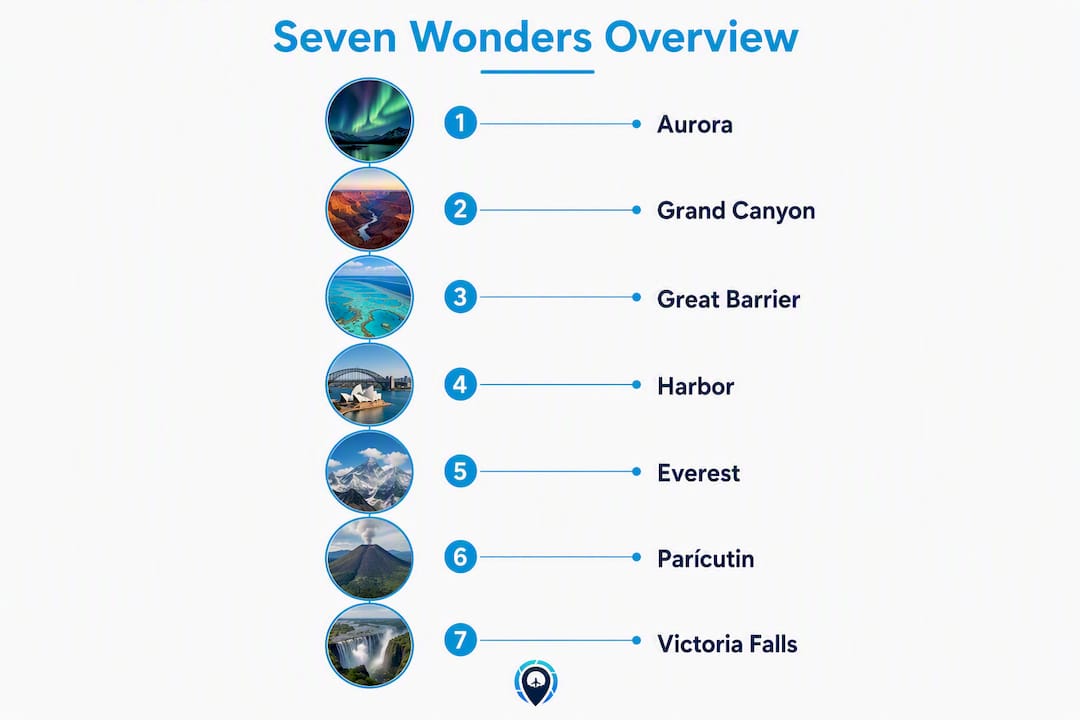
Yes, you can visit all seven natural wonders — and plenty of determined travelers do. The canonical list) (Aurora Borealis, Grand Canyon, Great Barrier Reef, Harbor of Rio de Janeiro, Mount Everest, Parícutin Volcano, and Victoria Falls) spans six continents and wildly different climates, so the smartest approach is to treat this as a multi-year project, not a single mega-trip. Most U.S. travelers complete all seven over multiple years by clustering wonders geographically and timing each trip to seasonal windows.
The TL;DR: Budget a substantial total from the U.S. depending on travel style, and plan for multiple separate trips. That sounds like a lot, but broken across a few years it’s very manageable.
Here’s how to start right now:
- Choose your travel style. Fast multi-stop trips (maximize wonders per year) vs. slow, immersive visits (more photography time, deeper cultural experience). Both work; pick one and commit.
- Pick your first region. North America is the obvious entry point for U.S. travelers: the Grand Canyon is a domestic flight away, and Parícutin is a short hop into Mexico.
- Lock seasonal windows first, then book flights. Aurora season runs roughly September through March in Alaska. The Grand Canyon’s shoulder seasons (April–May and September–October) are ideal. Every other wonder has a similar sweet spot — and missing it can mean a wasted trip.
Table of Contents
- How do the seven natural wonders compare at a glance?
- Your complete visiting guide for each of the seven wonders
- How do you plan to see all seven without losing your mind?
- What gear and photography tips do you actually need at each site?
- Why I think most people plan these trips in the wrong order
- How do you visit these places without damaging them?
- Key Takeaways
- Authoritative sources to bookmark before you book
How do the seven natural wonders compare at a glance?
A few clarifications worth flagging:
- Victoria Falls — requires entry to both Zambia and Zimbabwe for the full experience; a KAZA Uni-Visa covers both for most nationalities.
Your complete visiting guide for each of the seven wonders
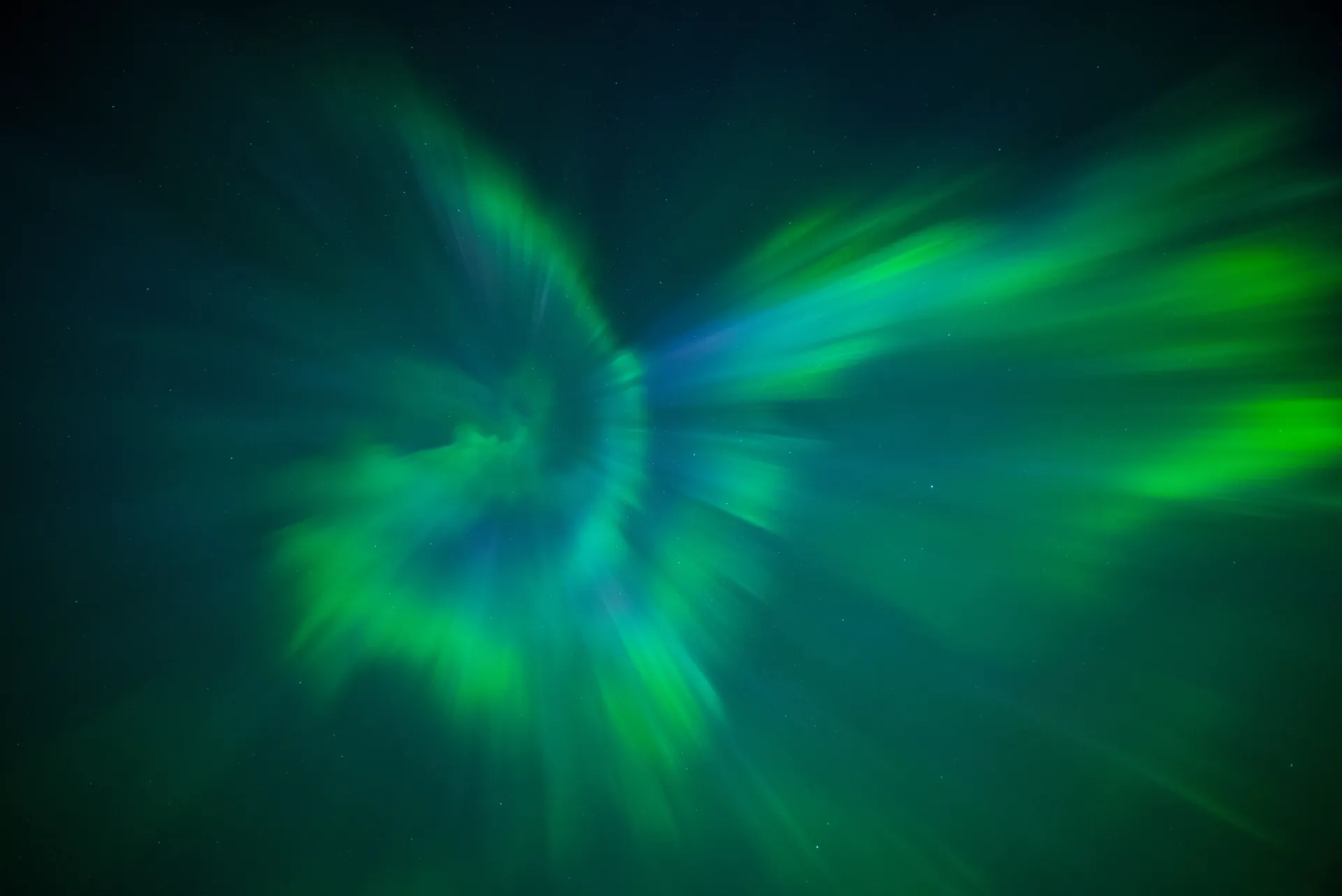
Aurora Borealis — Fairbanks, Alaska
The Northern Lights are the only wonder on this list that you can reach without a passport. Fairbanks sits directly under the auroral oval, making it the most reliable U.S. access point. Fly into Fairbanks International Airport (FAI) from Seattle, Los Angeles, or Anchorage.
- Best months: September through March, with December–February offering the longest dark windows.
- Top experiences: Dark-sky viewing from Cleary Summit or Chena Hot Springs; aurora photography from open fields away from city lights; multi-night stays in glass-roofed cabins.
- On-site time: Plan 3–5 nights minimum. The Geophysical Institute at the University of Alaska Fairbanks publishes real-time auroral forecasts — check them nightly and stay flexible.
- Cost range: $1,500–$3,500 (round-trip domestic flights + lodging + aurora tours).
- Accommodation: Budget motels in Fairbanks from ~$80/night; mid-range hotels $120–$200; glass-cabin aurora lodges $300–$600/night.
- Booking tip: Reserve aurora lodges 3–6 months ahead for peak winter dates.
Pro Tip: Don’t book a single-night aurora excursion and call it done. Cloud cover and low KP activity can wipe out an entire evening. Three to five nights dramatically improves your odds of a clear, active display.
Conservation note: Alaska’s aurora zones overlap with protected wilderness — stay on designated viewing areas and avoid driving off-road.
Grand Canyon — Arizona, USA
The Grand Canyon is a UNESCO World Heritage Site that stretches roughly 277 miles, with widths ranging from 4 to 18 miles and a depth of about one mile. It’s one of the most geologically dramatic places on Earth, and it’s a domestic road trip for most Americans.
- Nearest airport: Flagstaff Pulliam Airport (FLG) or Phoenix Sky Harbor (PHX), then a 2–4 hour drive.
- Best months: April–May and September–October. Summer is brutally hot at the canyon floor; winter brings ice on trails.
- Top experiences: South Rim viewpoints (Mather Point, Desert View); Bright Angel Trail day hike; Colorado River rafting (book 6–12 months ahead); ranger-led programs.
- On-site time: 2–4 days for a meaningful visit.
- Cost range: $500–$2,500 (gas or flights + park entry + lodging + optional river trip).
- Accommodation: Campgrounds inside the park from ~$18/night; Bright Angel Lodge mid-range; El Tovar Hotel for upscale stays (book 6+ months ahead).
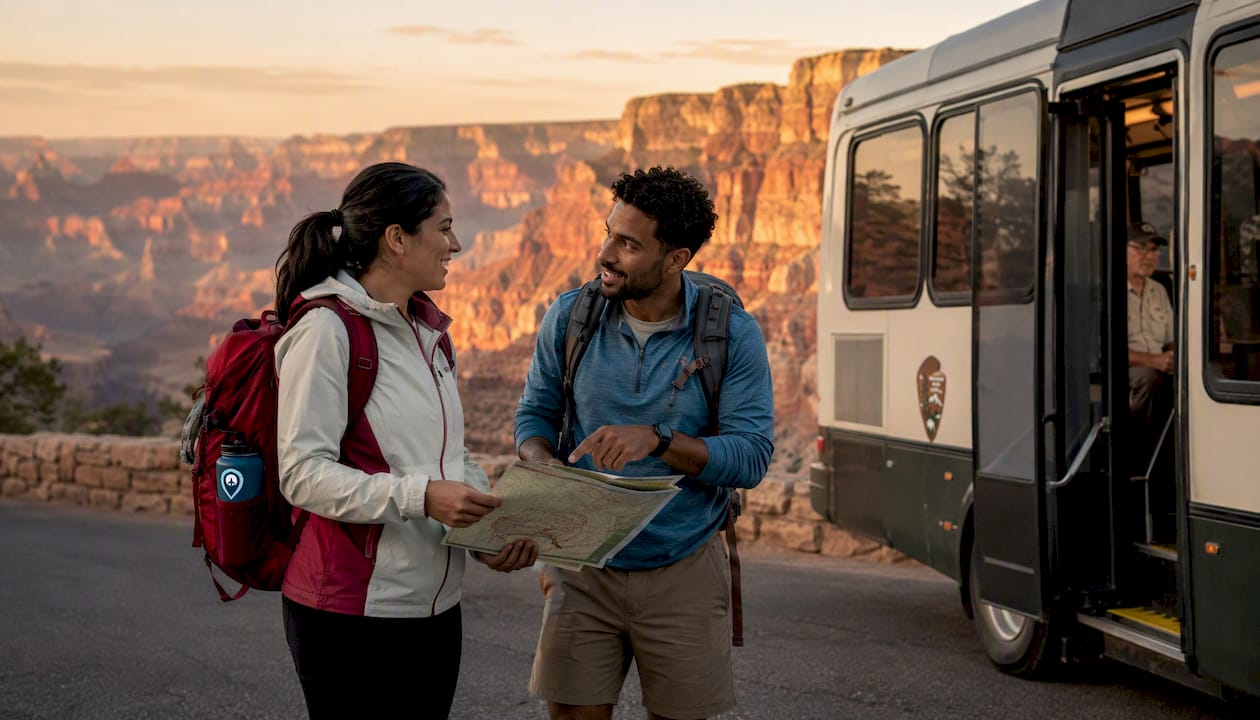
The National Park Service recommends using park shuttles during peak season to avoid parking gridlock — the shuttle system connects all major South Rim viewpoints and trailheads efficiently.
Conservation note: Stay on marked trails; the canyon’s fragile cryptobiotic soil crust takes decades to recover from a single footstep off-path.
Great Barrier Reef — Queensland, Australia
The Great Barrier Reef covers approximately 133,000 square miles and contains more than 2,900 separate reefs and 900 islands. You access it from Cairns or Port Douglas in Queensland, flying into Cairns Airport (CNS) from Los Angeles or Sydney.
- Best months: June–October (dry season, calmer seas, best visibility).
- Top experiences: Snorkeling day trips from Cairns; scuba diving liveaboards (2–3 nights on the outer reef); scenic helicopter flights over the reef.
- On-site time: 3–7 days, with at least one liveaboard night for serious divers.
- Cost range: $3,500–$8,000 (round-trip from U.S. + reef tours + accommodation).
- Accommodation: Cairns hostels from ~$25/night; mid-range hotels $100–$200; Lizard Island Resort for a splurge.
- Booking tip: Book certified operators through the Great Barrier Reef Marine Park Authority’s approved list.
Pro Tip: Bring your own underwater camera housing rated to at least 40 meters if you’re diving. Rental housings on liveaboards are often scratched and limit your shot quality significantly.
Conservation note: Use only reef-safe, mineral-based sunscreen. Chemical sunscreens containing oxybenzone are harmful to coral and banned in some reef zones.
Harbor of Rio de Janeiro — Rio de Janeiro, Brazil
Rio’s harbor is the only wonder on this list that’s defined by a cityscape rather than a wilderness. The combination of Sugarloaf Mountain, Corcovado, and Guanabara Bay creates one of the most photographed natural panoramas on the planet.
- Nearest airport: Galeão International Airport (GIG), with direct flights from Miami, New York, and Houston (roughly 9–11 hours).
- Best months: December–March for warm weather and carnival energy; May–September for cooler, drier conditions, and clearer views.
- Top experiences: Sugarloaf Mountain cable car; Corcovado rack railway to Christ the Redeemer; Guanabara Bay boat tour at sunset.
- On-site time: 2–3 days focused on the harbor and surrounding viewpoints.
- Cost range: $2,500–$6,000 (round-trip flights + hotel + tours).
- Accommodation: Budget guesthouses in Santa Teresa from ~$40/night; mid-range Ipanema hotels $100–$200; upscale Copacabana Palace for a treat.
- Safety note: Book guided tours for Corcovado and Sugarloaf rather than navigating independently; reputable operators know current safety conditions in the city.
Conservation note: The surrounding Atlantic Forest is a biodiversity hotspot — support tour operators who contribute to its protection.
Mount Everest — Sagarmatha, Nepal
At 29,029 feet, Everest is the world’s highest mountain, sitting on the Nepal/Tibet border. You don’t need to summit to experience it — the trek to Everest Base Camp (EBC) is one of the most rewarding multi-day hikes in the world, and scenic mountain flights from Kathmandu offer a stunning aerial view for those short on time.
- Nearest airport: Tribhuvan International Airport (KTM) in Kathmandu, then a short flight to Lukla (LUA) to start the EBC trek.
- Best months: March–May (pre-monsoon) and September–November (post-monsoon). Both offer stable weather and clear mountain views.
- Top experiences: Everest Base Camp trek (12–14 days round-trip from Lukla); Kala Patthar viewpoint (18,519 ft) for the classic Everest photo; 1-hour scenic mountain flight from Kathmandu.
- On-site time: 14–21 days for the full EBC trek including acclimatization days; 1 day for a scenic flight.
- Cost range: $4,000–$12,000 (international flights + guided trek + permits + gear).
- Permits: Sagarmatha National Park entry permit and TIMS card required; book through a licensed Nepali trekking agency.
- Accommodation: Teahouses along the EBC trail from ~$5–$20/night (meals extra); Kathmandu mid-range hotels $50–$150.
- Health note: Altitude sickness is a real risk above 8,000 feet. Budget at least two acclimatization days in the itinerary and carry acetazolamide (Diamox) as a precaution.
Conservation note: Pack out all waste from the trail; the Khumbu region has strict Leave No Trace rules enforced by Sagarmatha National Park.
Parícutin Volcano — Michoacán, Mexico
Parícutin is the youngest wonder on the list — it literally erupted out of a cornfield in 1943 and is one of the few places on Earth where humans witnessed the birth of a volcano. It’s in Michoacán, Mexico, reachable from Morelia or Uruapan.
- Nearest airport: General Francisco J. Mujica International Airport (MLM) in Morelia, or Uruapan Airport (UPN), then a 1.5–2 hour drive to the village of Angahuan.
- Best months: November–April (dry season). Rainy season (May–October) makes trails muddy and visibility poor.
- Top experiences: Horseback ride or hike the 12-mile circuit around the cone; visit the buried San Juan Parangaricutiro church, which still pokes above the lava field; summit hike to the crater rim with a local guide.
- On-site time: 1–2 days, with an overnight in Angahuan or Uruapan.
- Cost range: $800–$2,000 (flights from U.S. border cities + local transport + guide fees + lodging).
- Accommodation: Simple guesthouses in Angahuan from ~$20/night; mid-range hotels in Uruapan $50–$100.
- Booking tip: Hire a local guide from Angahuan — they know the safest routes across the lava field and add real historical context.
Conservation note: The lava field is fragile and disorienting; never attempt the circuit without a guide.
Victoria Falls — Zambia/Zimbabwe
Victoria Falls is the world’s largest sheet of falling water — roughly one mile wide and about 360 feet high. The Zambezi River plunges into a series of basalt gorges, and the mist rises high enough to see from miles away. Both Zambia and Zimbabwe offer distinct viewpoints, so crossing the border is worth it.
- Nearest airports: Harry Mwanga Nkumbula International Airport (LVI) in Livingstone, Zambia, or Victoria Falls Airport (VFA) in Zimbabwe. Both connect through Johannesburg (JNB).
- Best months: February–May for maximum water flow and the most dramatic mist; July–September for clearer views and better swimming in Devil’s Pool (on the Zambian side).
- Top experiences: Knife-edge viewpoint on the Zambian side; Main Falls viewpoint in Zimbabwe; helicopter “Flight of Angels”; Zambezi sunset boat cruise; wildlife drives in Mosi-oa-Tunya National Park.
- On-site time: 2–4 days to cover both sides and add a wildlife activity.
- Cost range: $3,000–$7,000 (round-trip from U.S. via Johannesburg + lodging + activities).
- Accommodation: Budget backpacker lodges from ~$30/night; mid-range hotels $100–$200; The Royal Livingstone Hotel for a luxury splurge right on the Zambezi.
- Visa tip: The KAZA Uni-Visa ($50) covers both Zambia and Zimbabwe and is available on arrival for U.S. passport holders.
Conservation note: The falls and surrounding parks are protected under UNESCO World Heritage status — stay on designated viewing paths and respect wildlife distances.
How do you plan to see all seven without losing your mind?
The secret is regional clustering. Trying to visit all seven in one continuous trip is expensive, exhausting, and almost impossible to time correctly given how different each wonder’s seasonal window is. Grouping by geography saves both money and sanity.
Suggested regional clusters:
- North America cluster: Grand Canyon (Arizona) + Parícutin (Mexico) — combine into one 7–10 day trip.
- Polar/Aurora cluster: Aurora Borealis (Fairbanks, Alaska) — a standalone winter trip, 5–7 days.
- Oceania cluster: Great Barrier Reef (Queensland, Australia) — standalone, 7–10 days.
- South America cluster: Harbor of Rio de Janeiro — standalone or combined with other South American travel, 5–7 days.
- Asia cluster: Mount Everest (Nepal) — a dedicated Himalayan trip, 18–24 days.
- Africa cluster: Victoria Falls — combine with other southern Africa travel (Botswana, South Africa), 7–14 days.
Three sample itineraries
Itinerary A: The 2-year paced plan
Year 1 trips include Grand Canyon and Parícutin, then Aurora Borealis in Fairbanks. Year 2 involves Great Barrier Reef, Rio de Janeiro, Mount Everest trek, and Victoria Falls over multiple trips totaling an estimated $13,300–$14,500.
Itinerary B: The 6–12 month fast-track
Quit your job (or take a sabbatical). Start in January with the aurora in Fairbanks, fly to Nepal in March for EBC, continue to Australia in June for the reef, swing through Rio in August, hit Victoria Falls in September, and finish with Grand Canyon + Parícutin in November. This works but requires serious logistical coordination and a higher budget for last-minute bookings. Estimated $14,500–$16,300.
Itinerary C: The photographer’s 3–4 trip plan
Built around golden-hour and peak-season windows. Trip 1 (February): Victoria Falls at peak flow for maximum mist and dramatic shots. Trip 2 (March–May): Everest EBC for pre-monsoon clarity + Rio for harbor sunsets. Trip 3 (June–August): Great Barrier Reef liveaboard for underwater work. Trip 4 (December–January): Aurora in Fairbanks + Grand Canyon in spring, with a Parícutin detour. Estimated $13,300–$16,300.
Budget ranges table
| Itinerary Type | Low Budget | Mid Budget | High Budget | Key Assumptions |
|---|---|---|---|---|
| 2-year paced (A) | $12,800 | $13,300 | $14,500 | Economy flights, budget/mid lodging, self-guided where possible |
| Fast-track 6–12 months (B) | $13,300 | $14,500 | $16,300 | Mix of economy and business class, guided tours, mid-range hotels |
| Photographer’s 3–4 trips © | $13,300 | $14,500 | $16,300 | Seasonal timing, liveaboard diving, aurora lodges, guided treks |
Visa and health checklist for U.S. travelers
- Nepal: U.S. citizens can get a tourist visa on arrival in Kathmandu ($30 for 15 days, $50 for 30 days). Hepatitis A, typhoid, and altitude sickness prevention (Diamox) recommended.
- Australia: Electronic Travel Authority (ETA) required; apply online before departure (~$20 AUD). No special vaccinations required.
- Brazil: U.S. citizens currently require a visa for Brazil; apply through the Brazilian consulate before travel. Yellow fever vaccination recommended.
- Zambia/Zimbabwe: KAZA Uni-Visa ($50) available on arrival. Yellow fever vaccination required if arriving from a yellow fever country.
- Mexico: No visa required for U.S. citizens. No special vaccinations required for Michoacán.
- Alaska: Domestic travel; no passport or visa needed.
What to book first
- International flights (book 3–6 months ahead for the best fares to Australia, Nepal, and Africa).
- Everest Base Camp trekking permits and licensed guide (book 3–4 months ahead; agencies fill up fast for spring season).
- Great Barrier Reef liveaboard (popular vessels sell out 2–3 months ahead).
- Aurora lodges in Fairbanks (glass cabins book out 3–6 months ahead for December–February).
- Grand Canyon lodging and river permits (South Rim lodges book 6+ months ahead; Colorado River permits are a lottery).
What gear and photography tips do you actually need at each site?
Visiting these wonders as a travel photographer means packing for six completely different environments. Here’s how to think about it by site:
Site-specific gear checklist:
- Grand Canyon: — Polarizing filter for midday canyon shots, hiking boots, hydration pack (3L minimum), neutral density filter for long-exposure waterfall shots on the Colorado.
- Victoria Falls: — Waterproof camera bag or dry bag (the mist soaks everything within 50 meters), polarizing filter to cut glare on the water.
Check out the Traveling Portrait gear guide for specific product recommendations across all these environments.
Pro Tip: For aurora photography, set your camera to ISO 1600–3200, aperture f/2.8 or wider, and a shutter speed of 5–15 seconds depending on how active the display is. Faster-moving auroras need shorter exposures to avoid blur.
Photography rules to know:
Justin Frazier and the Traveling Portrait team run travel photography workshops specifically designed for adventure locations like these, covering aurora technique, underwater composition, and high-altitude shooting in hands-on field settings.
Why I think most people plan these trips in the wrong order
Most travelers start with the wonders that feel the most “bucket list” — Everest, the reef, the aurora — and leave the “easier” ones for later. That’s actually backwards. Starting with the Grand Canyon and Parícutin (both relatively affordable and logistically simple) builds your travel confidence, sharpens your photography eye, and gives you a realistic sense of how long you actually spend at a natural wonder before you commit to a $10,000 Himalayan trek.
The other thing people consistently underestimate is the aurora. It’s not a fixed attraction you can schedule. You show up, you wait, and sometimes the sky does nothing for three nights. The travelers who come home gutted are almost always the ones who booked a single night and flew home the next morning. Flexible dates and multi-night stays aren’t optional for aurora success — they’re the whole strategy.
There’s also a photography lesson buried in the planning: the best images from these wonders rarely come from the most obvious viewpoint at the most obvious time. The buried church at Parícutin at dawn. The Grand Canyon’s North Rim in October when the crowds are gone. Devil’s Pool at Victoria Falls in September, when the water level drops just enough to swim right at the edge. Timing and patience beat gear every time.
If you want help building a photography-focused itinerary for any of these sites, the Traveling Portrait destination pages are a solid starting point, and the adventure travel guides cover the planning philosophy in depth.
How do you visit these places without damaging them?
The Seven Natural Wonders organization was founded specifically to protect and promote these sites — and the tension between those two goals is real. Heavy tourism has visibly stressed the Great Barrier Reef, the Everest trail, and Victoria Falls. Here’s how to visit responsibly:
Eight specific behaviors that make a difference:
- Stay on marked trails at every site, no exceptions. Off-trail footsteps at the Grand Canyon and Parícutin cause disproportionate damage.
- Use reef-safe, mineral-based sunscreen at the Great Barrier Reef. Oxybenzone-based products are toxic to coral larvae.
- Book only certified, licensed guides and operators. Certification means they’re accountable to local park authorities.
- Avoid single-use plastics. Carry a reusable water bottle and refuse plastic bags at every stop.
- Respect wildlife distances. At Victoria Falls and the Everest region, getting too close to wildlife stresses animals and can be dangerous.
- Pack out everything you carry in, especially on the Everest trail and at Parícutin.
- Support local economies directly: hire local guides, eat at locally owned restaurants, buy crafts from artisans rather than airport shops.
- Check current conservation advisories before you go. Reef closures, trail restrictions, and permit changes happen regularly.
Questions to ask any tour operator before booking:
- Do you hold a current operating permit from the relevant national park or marine authority?
- How do you manage waste on multi-day trips (liveaboards, treks)?
- Do you employ local guides and contribute to community programs?
- What is your policy on wildlife interaction and minimum approach distances?
- Are your vessels or vehicles certified for the protected area you operate in?
Key conservation authorities to follow:
- Great Barrier Reef Marine Park Authority (GBRMPA) for reef access rules and closures.
- Sagarmatha National Park (Nepal) for Everest trail regulations and permit requirements.
- UNESCO World Heritage Centre for Victoria Falls protection status and updates.
- U.S. National Park Service for Grand Canyon rules, shuttle schedules, and backcountry permits.
- NASA’s aurora resources for understanding the science behind the Northern Lights.
For a deeper look at traveling sustainably without blowing your budget, the Traveling Portrait guide on eco-adventure travel is worth a read before you start booking.
Key Takeaways
Visiting all seven natural wonders is genuinely achievable for U.S. travelers who cluster wonders by region, time each trip to seasonal windows, and spread the project across 2–5 years.
| Point | Details |
|---|---|
| Regional clustering saves money | Group North America, Oceania, Asia, Africa, and South America wonders into dedicated trips to cut backtracking costs. |
| Seasonal timing is non-negotiable | Aurora requires September–March; Everest needs March–May or September–November; reef visibility peaks June–October. |
| Budget realistically | Total costs from the U.S. typically range from about $13,300 (budget, 2-year plan) to $16,300+ (fast-track, guided), with most sample itineraries falling in this range. |
| Book permits and lodges first | Everest trekking permits, Grand Canyon river permits, and aurora lodges sell out months in advance. |
| Conservation is part of the plan | Reef-safe sunscreen, certified operators, and staying on marked trails protect sites for future visitors. |
Authoritative sources to bookmark before you book
Check these official sources immediately before finalizing any booking — rules, permits, and closures change regularly.
- Geophysical Institute, University of Alaska Fairbanks — Aurora Forecast: Real-time KP-index forecasts and aurora activity predictions for Alaska and high-latitude regions.
- NASA Space Place — Aurora: Clear explanation of aurora science and what drives activity levels, useful for understanding forecast data.
- Grand Canyon National Park — NPS: Official geology, trail conditions, shuttle schedules, and permit information for the South and North Rims.
- Grand Canyon — UNESCO World Heritage Centre: Heritage status, ecological significance, and conservation framework for the canyon.
- Mosi-oa-Tunya / Victoria Falls — UNESCO World Heritage Centre: Official protection status, boundary maps, and conservation updates for both the Zambian and Zimbabwean sides.
- Seven Natural Wonders — 7Wonders.org: The canonical list with brief descriptions of each wonder and the organization’s conservation mission.
- iExplore — Seven Natural Wonders: Practical travel overviews for each wonder including access notes and activity recommendations.
- Tripiceland: Local Iceland operator for day tours and shuttles — useful if you extend your aurora trip to Iceland for additional Northern Lights opportunities.
A quick start checklist for the next 30 days:
- Pick your first regional cluster and research its seasonal window.
- Set a realistic total budget using the ranges in this guide.
- Open a dedicated savings or travel fund for the project.
- Book your first international flight (or domestic flight to Fairbanks) as soon as dates are locked.
- Reserve any permits or guided treks that require advance booking (Everest, Grand Canyon river).
- Download the Traveling Portrait travel photography gear checklist and start building your site-specific kit.
The guided adventure tour benefits guide is also worth reading before you decide whether to go independent or book a specialist operator for the more remote wonders.
This article is general travel planning information, not professional legal, medical, or financial advice. Visa requirements, vaccination recommendations, permit rules, and entry fees change frequently — confirm current requirements with official government and park authority sources before finalizing any bookings.
Recommended
Other Posts You Might Like