How to Document Your Travel Journey: Real Tips That Work
Documenting your travel journey is the practice of capturing experiences through writing, photography, and storytelling in ways that preserve memory and create lasting meaning. Most travelers return home with hundreds of blurry photos and zero context for any of them. The better approach combines a few deliberate daily habits with smart post-trip curation, and it takes far less time than you’d think. Traveling Portrait has spent years refining this process across destinations from Iceland to Southeast Asia, and the methods below are the ones that actually stick.
What tools do you need to document your travels?
The right tools make or break your documentation habit. A bulky setup you hate carrying gets abandoned by day two. The goal is a kit that feels natural, not like homework.
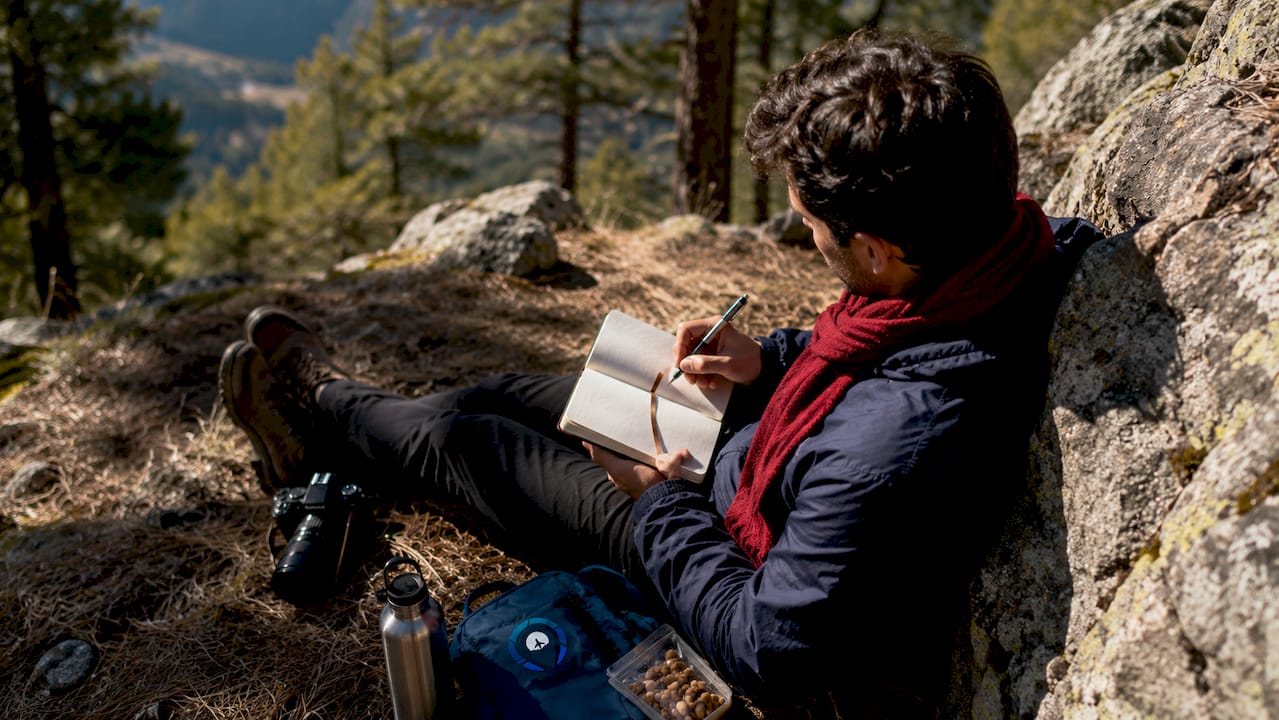
Physical journals offer a tactile, distraction-free experience. A slim, hardcover notebook like a Leuchtturm1917 or a basic Moleskine fits in most jacket pockets and survives a backpack toss. Pair it with a reliable ballpoint pen and you’re set for any environment, including rainy hikes or beach days where a phone screen becomes useless.
Digital tools add speed and searchability. Your smartphone handles photos, voice notes, and typed entries in one device. The real trick is cloud-based syncing combined with local device backups. That redundancy prevents the gut-punch of losing two weeks of photos to a stolen bag or a dead hard drive.
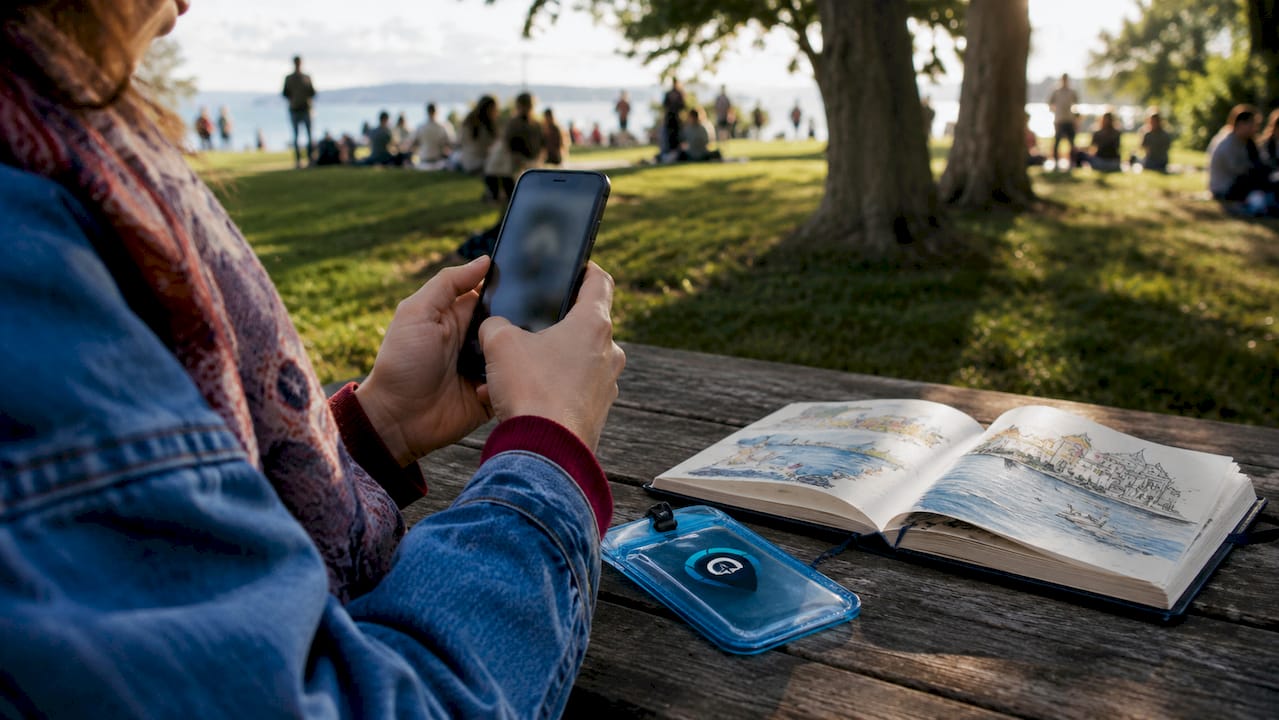
Pro Tip: Pack a small waterproof pouch for your journal and phone. It costs almost nothing and saves everything.
| Tool category | Best for | Drawback |
|---|---|---|
| Physical journal | Offline use, sketches, tactile feel | Bulky if large; no search function |
| Smartphone notes app | Speed, multimedia, always on hand | Battery dependency |
| Voice recorder or voice notes | Hands-free capture on the go | Requires transcription later |
| Cloud storage app | Backup and cross-device access | Needs internet connection |
The hybrid approach wins for most travelers. Write quick physical notes in the moment, then photograph those pages at the end of each day as a backup. You get the warmth of handwriting and the safety of digital storage without carrying extra gear.
How do you capture experiences day-to-day without burning out?
Burnout is the number one reason travel documentation fails. Travelers start strong on day one and abandon everything by day four. The fix is lowering the bar on purpose.
The Minimum Viable Journal entry is the most practical framework for this. Each entry captures exactly three things: one sensory detail (the smell of street food, the sound of a market), one emotional highlight (the moment you felt genuinely surprised or moved), and one fact you’d otherwise forget (a name, a price, a local phrase). These three anchors take under five minutes to write and act as memory triggers that let you rebuild the full story weeks later.
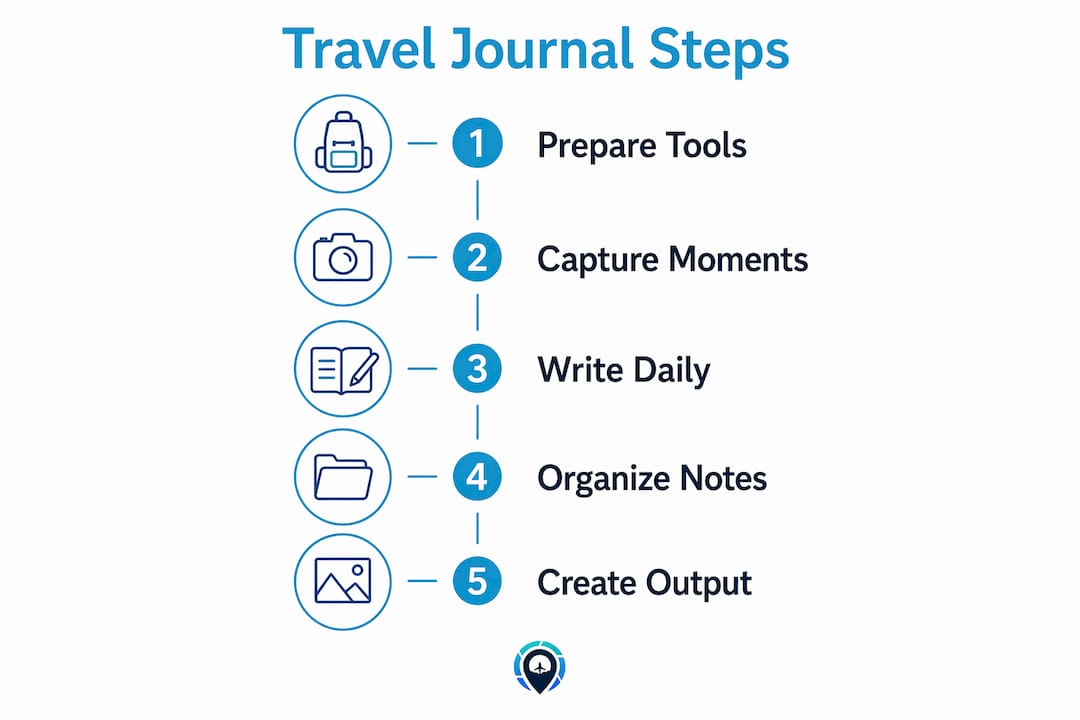
Journaling methods vary in time commitment. List-based entries take roughly 3–5 minutes. The Photo-First Method, where you review the day’s photos and write one sentence per image, takes 5–15 minutes. Stream-of-consciousness writing takes longer but produces the richest raw material for later storytelling.
Voice notes are underrated for real-time capture. Talking for 60 seconds while walking between sites preserves tone, energy, and detail that typed notes miss. Frictionless voice memos keep you present in the experience while still locking in the memory. You can transcribe them later with AI tools when you’re back at the hotel or home.
Here are daily documentation habits that actually work:
- Set a trigger, not a schedule. Write after dinner or right before bed, not “sometime today.”
- Use the Photo-First Method on heavy days. When you’re exhausted, just scroll your camera roll and write one line per photo.
- Record a 60-second voice note after every major experience. Describe what you saw, felt, and smelled before the next thing replaces it.
- Keep your journal on the nightstand, not in your bag. Visibility creates the habit.
- Skip days without guilt. Letting go of perfectionism is what keeps documentation sustainable long-term.
Pro Tip: If you miss a day, write a single sentence the next morning: “Yesterday I felt [emotion] because [event].” That one sentence is worth more than a blank page.
How do you organize your travel documentation after the trip?
Raw notes, voice memos, and 400 photos need a home. The two-week window after returning is critical. Committing to one final output within two weeks of getting home preserves narrative clarity before the memories fade and daily life takes over.
Start by sorting your photos into folders by day or location. Delete the obvious duplicates and blurry shots first. Then match your written notes or voice memos to the corresponding photos. This pairing creates a natural story structure without much effort.
AI transcription tools handle voice notes quickly and accurately. Once transcribed, you can use AI writing assistants to identify themes, group entries, and suggest narrative arcs. The key is using AI to organize and draft, not to generate entries from scratch. AI-assisted storytelling preserves your authentic voice while removing the tedious parts of post-trip editing.
Rick Steves makes a point that resonates with every experienced traveler: avoid the full chronological log. Curate stories based on emotional highlights and unique encounters instead. A blog post about the one conversation that changed your perspective on a place is far more readable than a day-by-day itinerary.
| Final output type | Time investment | Best for |
|---|---|---|
| Photo book | 2–4 hours | Gifts, shelf display, family memories |
| Travel blog post | 1–3 hours | Sharing online, building an audience |
| Video montage | 3–6 hours | Visual storytelling, social media |
| Printed journal or zine | 4–8 hours | Personal keepsake, creative projects |
Choose one output and finish it before starting another. Unfinished projects pile up fast and none of them get shared.
What are creative ways to record trips beyond writing?
Writing is just one tool in the kit. Some of the most vivid travel records come from formats that engage different senses and skills. The character of a place shows up better in a quick sketch of a rooftop than in three paragraphs describing it.
Documentary travel photography is one of the most powerful formats for capturing authentic moments. It focuses on real people, real light, and real situations rather than posed shots. A single strong documentary photo tells a story that would take 500 words to write.
Here are creative documentation ideas worth trying:
- Sketch one scene per day. You don’t need to be an artist. A rough sketch of a doorway or a market stall forces you to look closely at details you’d otherwise walk past.
- Record ambient sound. Two minutes of a busy souk, a mountain stream, or a train station creates an audio postcard that photographs can’t replicate.
- Collect one small, flat souvenir per destination. A metro ticket, a receipt, a flower petal. Tape them into your journal with a one-line note.
- Annotate a printed map. Mark where you ate, what surprised you, and what you’d skip next time. It becomes a personal guide no app can replicate.
- Shoot a 30-second video of one ordinary moment per day. Not the landmark. The café owner, the street corner, the light at 6 p.m. These clips age better than any tourist shot.
- Write one postcard to yourself. Mail it home. The delay between writing and receiving it creates a genuinely strange and wonderful time-capsule effect.
The goal with all of these is specificity over coverage. One deeply observed moment beats ten surface-level snapshots every time. Personalize your format to what you actually enjoy doing, and you’ll keep doing it.
Key Takeaways
Consistent, mindful travel documentation relies on low-friction daily habits, a redundant backup system, and one committed post-trip output within two weeks of returning home.
| Point | Details |
|---|---|
| Use the Minimum Viable Journal | Capture one sensory detail, one emotion, and one fact daily to prevent burnout. |
| Back up everything redundantly | Combine cloud syncing with local storage to protect photos and notes from loss. |
| Curate, don’t chronicle | Select emotional highlights over exhaustive logs to create stories worth reading. |
| Finish one output within two weeks | Committing to a photo book, blog, or video montage preserves memory and narrative clarity. |
| Match format to your personality | Sketches, voice notes, and maps work as well as writing for many travelers. |
What I’ve learned about documenting trips without ruining them
The biggest mistake I see travelers make is treating documentation like a second job. They pack a dedicated camera, a backup camera, three notebooks, and a rigid daily writing schedule. By day three, they’re more stressed about capturing the trip than actually taking it in.
The shift that changed everything for me was accepting that a messy, incomplete record is infinitely better than a perfect one that never gets made. I’ve come back from trips with nothing but a handful of voice memos and 200 photos, and those trips produced some of my best writing. The rawness of quick captures carries more emotional truth than polished daily entries written out of obligation.
Mindful travel journaling also changed how I experience places. When you’re looking for one sensory detail worth writing down, you pay attention differently. You notice the texture of a wall, the specific green of a rice paddy, the way a vendor laughs. That attention is the whole point of travel, and documentation becomes the tool that sharpens it rather than distracts from it.
My honest advice: pick one format you genuinely like, keep it small enough to carry everywhere, and give yourself full permission to skip days. The rhythm you build over a two-week trip will outlast any system you try to force. Check out the travel photography styles guide on Traveling Portrait if you want to find the visual format that fits how you naturally see the world.
— Justin Frazier
Traveling Portrait resources for better travel documentation
Capturing a trip well takes more than good intentions. It takes knowing which photography techniques actually work in the field, which gear is worth carrying, and how to turn raw captures into stories people want to read.
Traveling Portrait covers all of it, from adventure travel guides that show you how to plan trips worth documenting, to destination deep-dives across every continent. If you want to sharpen the photography side of your documentation, the travel photography workshop walks you through composition, light, and storytelling in a format built for travelers, not studio photographers. The best travel gear guide also covers the lightweight, durable tools that make daily documentation feel effortless rather than like a chore.
FAQ
What is the easiest way to start a travel journal?
Start with the Minimum Viable Journal method: write one sensory detail, one emotional highlight, and one fact you’d forget each day. This takes under five minutes and creates strong memory anchors for later storytelling.
How do you document travels without missing the experience?
Use frictionless capture techniques like 60-second voice notes and quick smartphone photos taken in the moment. Transcribe and organize them post-trip rather than trying to write full entries while you’re still out exploring.
How soon after a trip should you organize your documentation?
Commit to creating one final output, such as a photo book, blog post, or video montage, within two weeks of returning home. Narrative clarity fades quickly once daily life resumes.
What makes a travel journal worth reading later?
Travel journals focused on sensory details and emotional highlights create more meaningful keepsakes than exhaustive day-by-day logs. Rick Steves recommends capturing the character of a place rather than a chronological record of events.
Do you need expensive gear to document a trip well?
No. A smartphone, a slim notebook, and a reliable pen cover the essentials for most travelers. The most important factor is consistency of habit, not the quality of the equipment.
Recommended
Other Posts You Might Like