
How to Become a Travel Content Creator in 2026 | Traveling Portrait
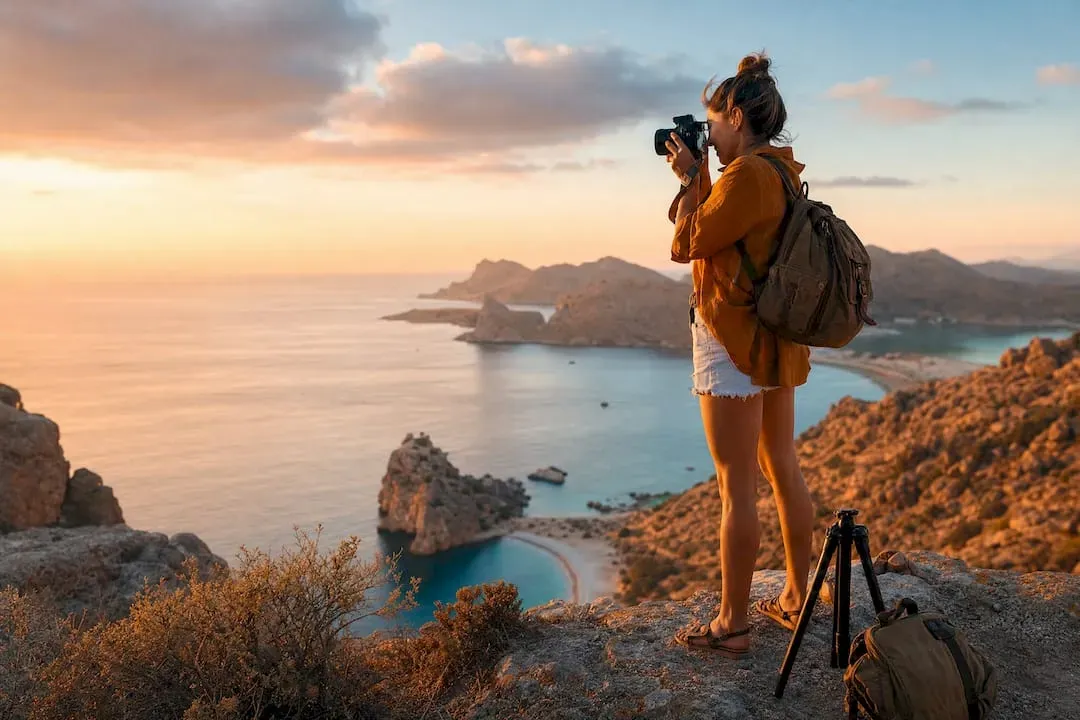
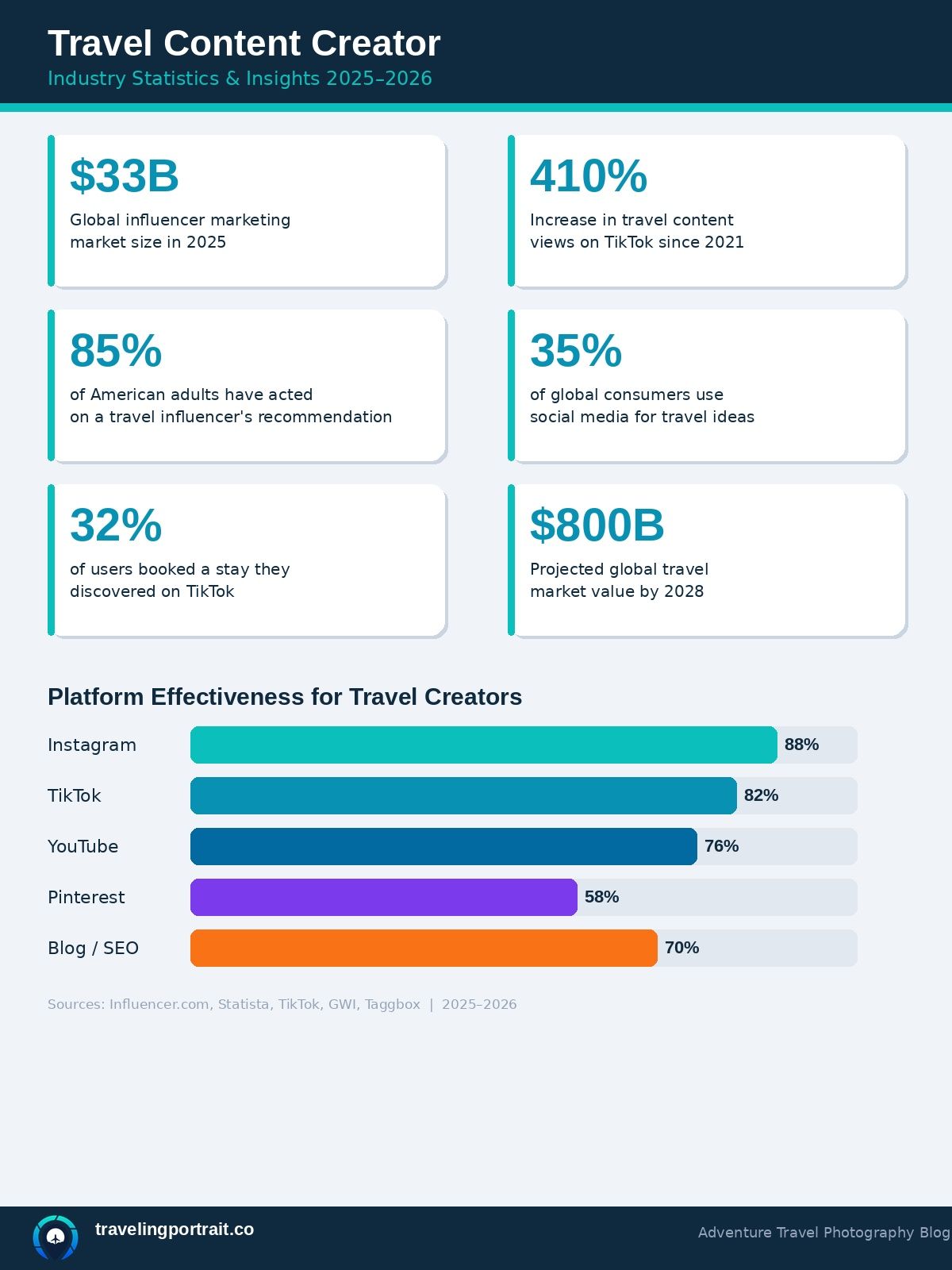
If you have ever scrolled through Instagram or TikTok and wondered how people manage to get paid to travel the world, you are looking at the work of a travel content creator. In 2026, the travel industry is experiencing unprecedented growth, and brands are increasingly relying on digital storytellers to inspire wanderlust and drive bookings. The global influencer marketing market reached $33 billion in 2025 [Statista], and travel remains one of the most engaged niches in the entire creator economy.
What Exactly Is a Travel Content Creator?
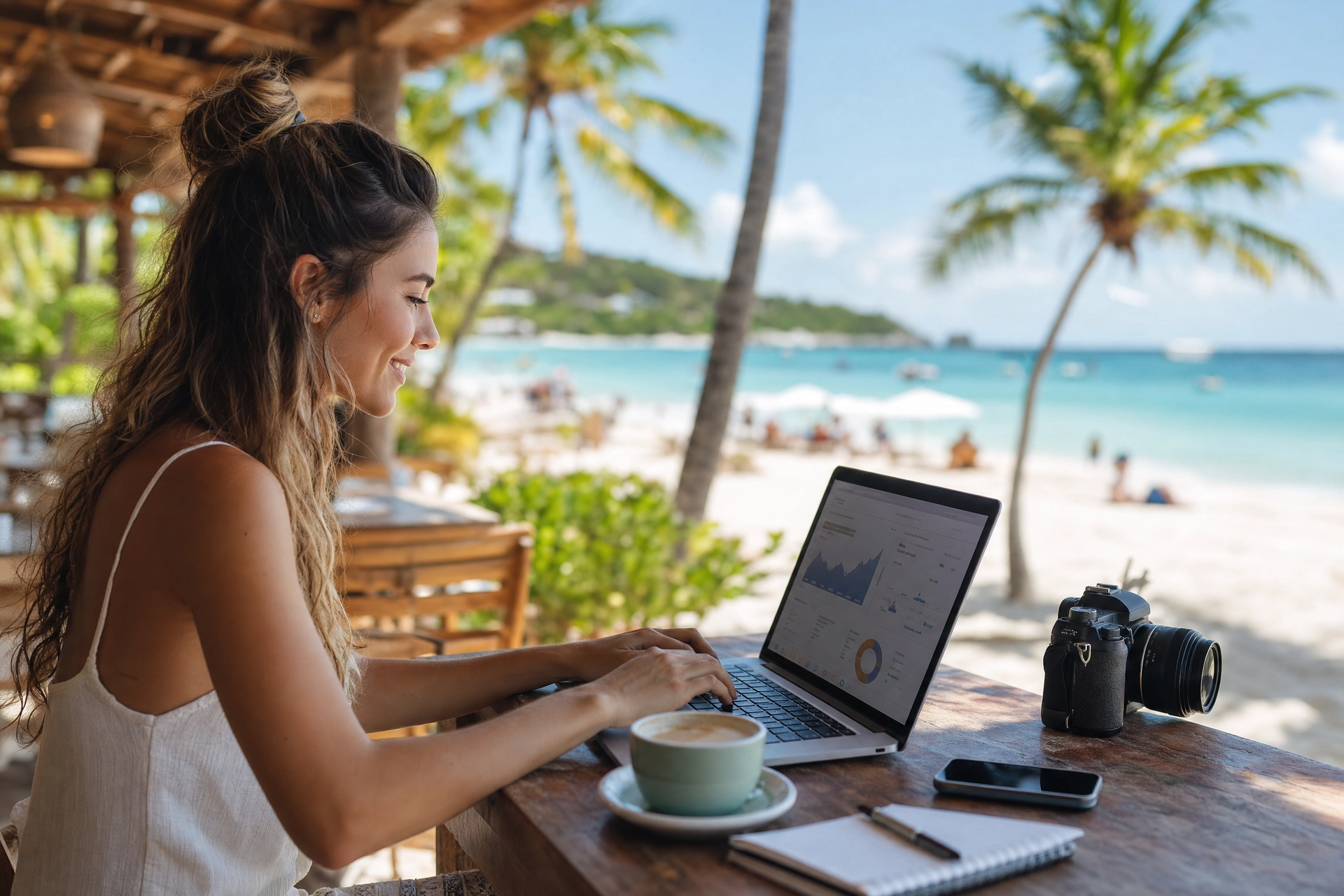
A travel content creator is a digital storyteller who produces engaging multimedia content centered around travel experiences. Unlike traditional travel journalists, creators publish directly to platforms like Instagram, TikTok, YouTube, and personal blogs, building a direct relationship with their audience. Their content spans aesthetic photography, cinematic vlogs, practical travel hacks, destination guides, and budget breakdowns.
The role is far more multifaceted than it appears from the outside. Travel content creators are simultaneously photographers, videographers, writers, editors, and marketers. They collaborate with tourism boards, hotel chains, and travel brands to authentically promote destinations and services. The goal is not just to share beautiful imagery — it is to inspire action, provide real value, and build a community that trusts their recommendations.
According to research, 85% of American adults have acted on a travel influencer's recommendation [Influencer.com], which explains why brands invest so heavily in this space.
Step 1: Define Your Unique Travel Niche

The travel content market is highly competitive, and the most effective way to stand out is by defining a clear, specific niche. Attempting to appeal to everyone almost always results in appealing to no one. By focusing on a particular angle, you attract a dedicated audience and position yourself as an authority in that space — which is exactly what brands are looking for when selecting partners.
Consider what makes your travel style genuinely unique. Are you passionate about luxury travel for couples, or do you thrive on solo budget backpacking? Perhaps you excel at uncovering the best street food in hidden alleys, or you are deeply committed to eco-conscious and sustainable tourism. Your niche could be as broad as adventure photography or as specific as accessible travel for people with disabilities. The key is that it reflects a real passion, because authenticity is the currency of the creator economy.
Once you have established your niche, build a consistent personal brand around it. Your visual aesthetic, tone of voice, and the types of stories you tell should all align with your chosen focus. This consistency builds recognition and trust — two qualities that convert casual followers into loyal community members and, eventually, into paying customers or engaged brand partners.
Pro Tip: Niching down does not mean staying small forever. It means building a strong foundation. Many of the most successful travel creators started with a hyper-specific focus and expanded organically as their audience grew.
Step 2: Invest in the Right Content Creator Gear
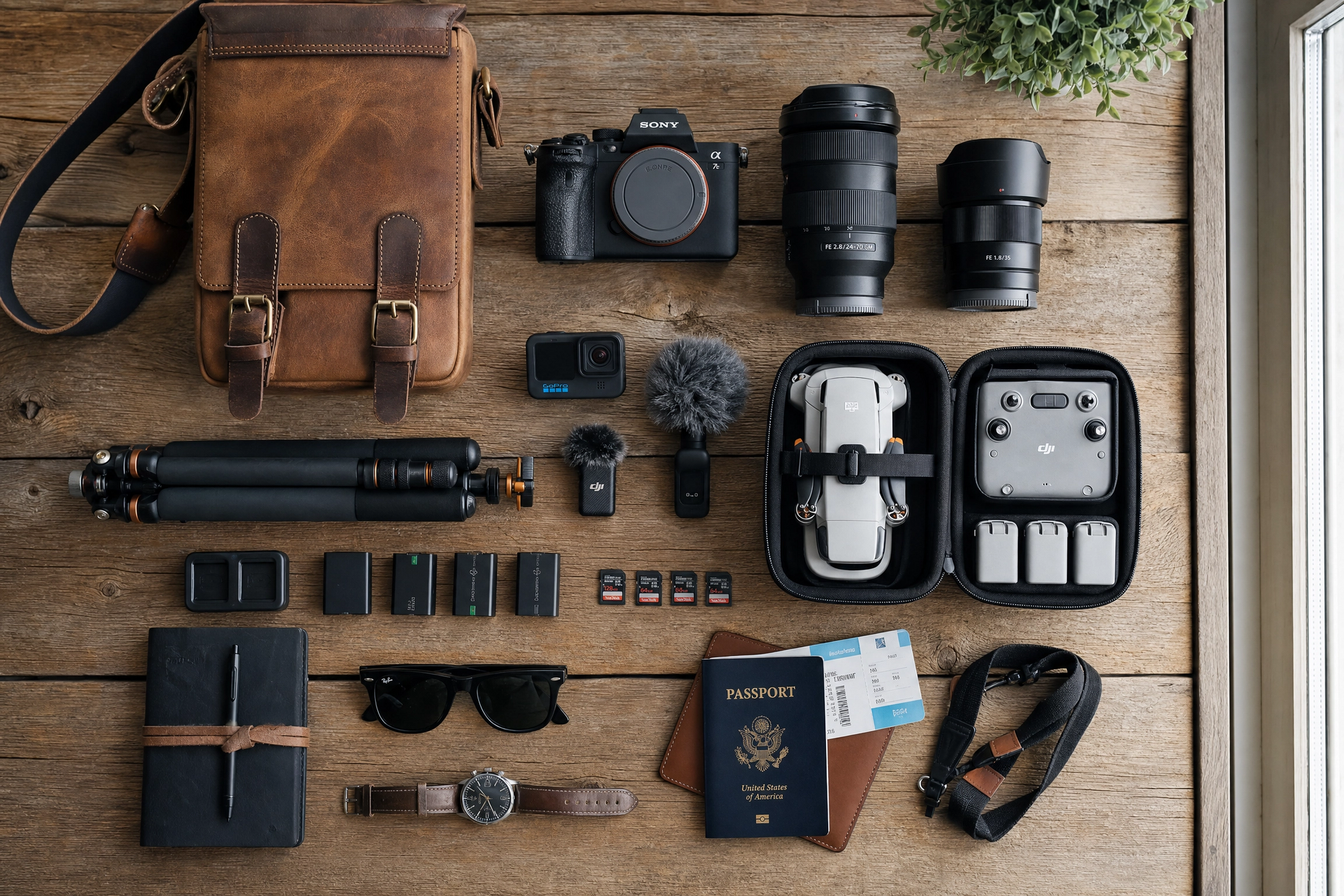
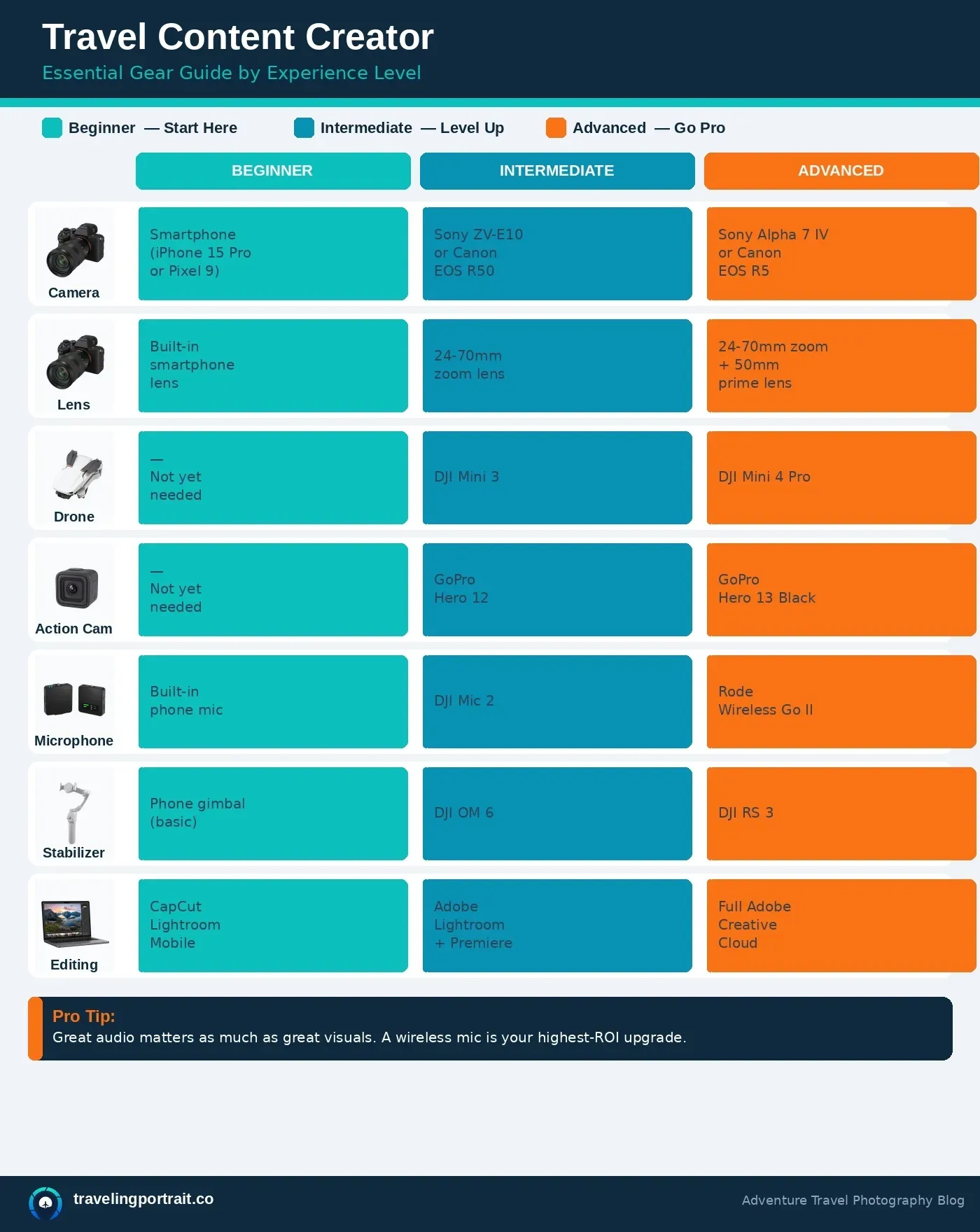
You do not need the most expensive equipment to start, but investing in reliable gear will significantly elevate the quality of your content. In 2026, audiences expect high-resolution visuals and crisp, clear audio. A smartphone with a quality camera is a perfectly valid starting point, but as you grow, expanding your toolkit becomes essential for competing at a professional level.
Do not underestimate the importance of audio. Viewers will tolerate imperfect lighting far longer than they will tolerate muddy, unclear sound. A quality external microphone is one of the highest-ROI investments you can make as a travel content creator.
Step 3: Choose Your Primary Platforms Strategically
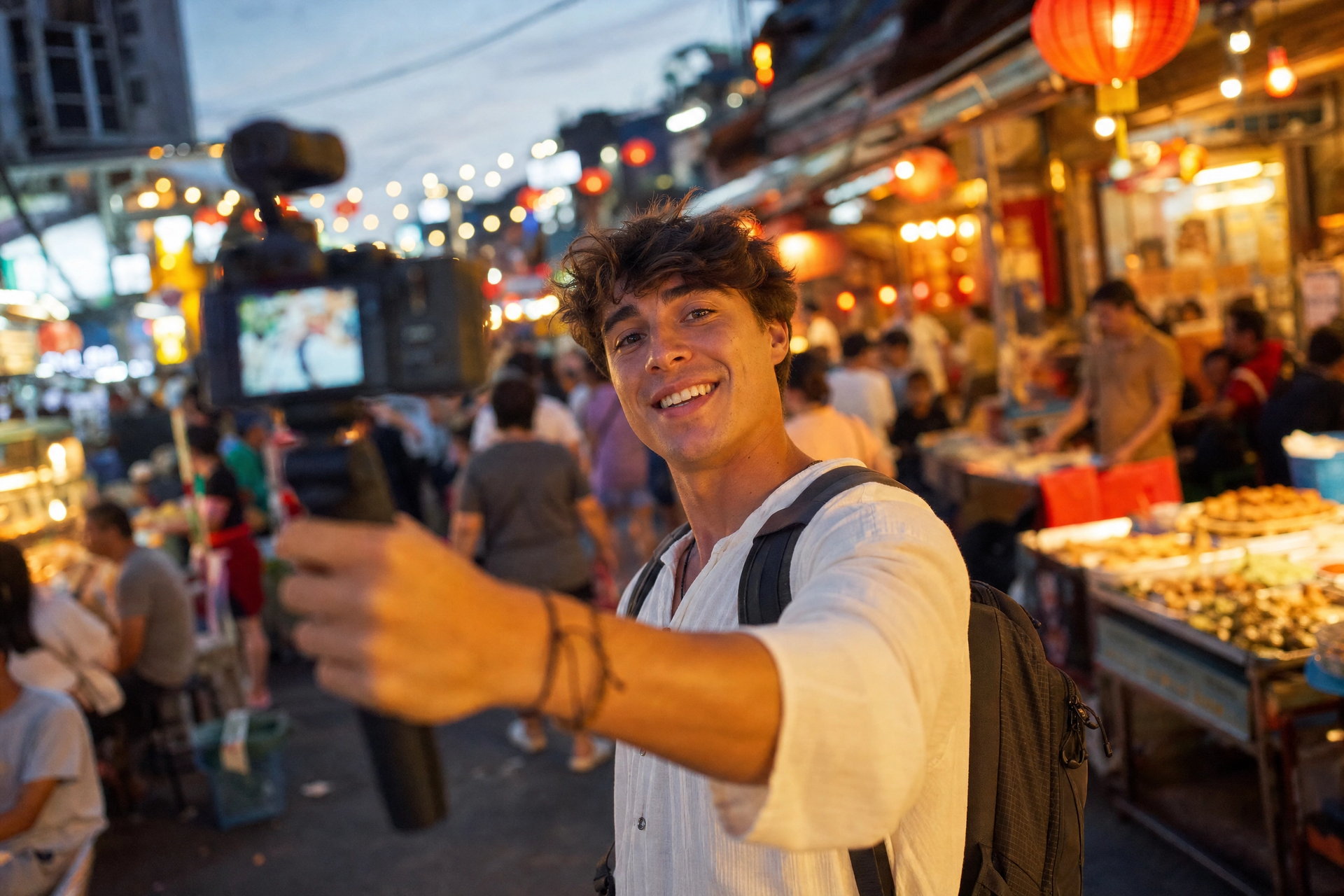
Different platforms serve different purposes, and spreading yourself too thin across all of them is a fast path to burnout. The smarter approach is to select one or two primary platforms that align with your content style and target audience, build a strong presence there, and then expand strategically.
Instagram remains the dominant platform for visual travel storytelling. It is the top choice for brand partnerships, community building through Stories and DMs, and showcasing high-quality photography and short-form Reels. Notably, 37% of Americans turn to Instagram as their top social platform for travel needs [Influencer.com].
TikTok offers unparalleled organic reach potential. Its algorithm rewards engaging, authentic content regardless of follower count, making it the best platform for new creators to grow quickly. Travel content views on TikTok have increased by 410% since 2021 [Influencer.com], and 32% of users have booked stays they discovered on the platform [Influencer.com].
YouTube is the premier destination for long-form storytelling — detailed vlogs, destination deep-dives, and gear reviews. Its search engine integration means well-optimized videos can continue attracting viewers for years after publication, creating a powerful source of evergreen traffic.
A personal blog is the platform you truly own. Unlike social media accounts that are subject to algorithm changes and potential bans, your blog and email list belong entirely to you. It is also the most effective channel for SEO-driven organic traffic and affiliate income.
Step 4: Master the Art of Storytelling and Editing
Creating beautiful visuals is only half the equation. The other half is compelling storytelling that makes your audience feel something. The travel creators who build lasting, loyal communities are not necessarily the ones with the best cameras — they are the ones who make their audience feel like they are right there alongside them, experiencing every moment.
Share the behind-the-scenes realities of travel alongside the picture-perfect highlights. The missed flights, the language barrier moments, the unexpected kindness of strangers — these are the stories that resonate. Authenticity is not just a buzzword; it is the primary reason people choose to follow one creator over another in a saturated market.
On the technical side, develop a consistent visual style through editing. Adobe Lightroom is the industry standard for photo editing, and creating a set of custom presets ensures your feed has a cohesive, recognizable look. For video, Adobe Premiere Pro or Final Cut Pro offer professional-grade capabilities, while CapCut and InShot are excellent for fast, polished edits on mobile. When writing captions, blog posts, or video scripts, write as if you are speaking directly to a friend — informative, warm, and genuine.
Step 5: Build Multiple Income Streams
Monetizing your travel content requires a diversified approach. Relying on a single income source is risky in a landscape where platform algorithms and brand budgets can shift overnight. The most financially resilient travel content creators stack multiple revenue streams, building a business that can weather those changes.
Affiliate Marketing
Affiliate marketing is typically the first and most accessible income stream for new creators. By partnering with platforms like Travelpayouts, Booking.com, or GetYourGuide, you earn a commission for every booking or purchase made through your unique referral links. Share these links in blog posts, YouTube descriptions, and Instagram Stories when recommending hotels, tours, or travel gear. This income is largely passive once set up, making it one of the most scalable options available.
Brand Partnerships and Sponsored Content
Collaborating with tourism boards, hotels, and travel brands is the income stream most people associate with travel content creation. These partnerships can range from sponsored social media posts and dedicated blog articles to creating user-generated content (UGC) that brands use across their own channels. You do not need a massive following to land brand deals — a highly engaged niche audience is often more valuable to a brand than a large but disengaged one. Micro-influencers with 10,000–50,000 followers regularly command $100–$800 per sponsored post [Zencastr].
Digital Products and Services
Creating and selling your own digital products allows you to monetize your expertise directly, without relying on third-party platforms. This could include detailed travel itineraries, Adobe Lightroom presets, e-books on travel hacking, or online courses teaching others how to build their own creator career. Offering consulting services or hosting curated group trips for your followers are also highly lucrative avenues for experienced creators.
Travel Content Creator Industry Stats at a Glance
Key Takeaways
Define Your Niche
Choose a specific travel angle that reflects your genuine passion and helps brands find you
Invest in Gear
Start with a quality mirrorless camera, external mic, and basic editing software
Choose Platforms
Pick 1–2 primary platforms and build a strong presence before expanding
Master Storytelling
Authenticity and consistent editing style build loyal, engaged communities
Diversify Income
Stack affiliate marketing, brand deals, and digital products for financial resilience
Conclusion: Start Your Journey Today
Becoming a travel content creator is a journey that demands creativity, consistency, and a genuine willingness to learn. The market is competitive, but there is always room for authentic voices and unique perspectives. The creators who break through are not necessarily the most technically skilled — they are the ones who show up consistently, serve their audience with real value, and treat their platform like a business from day one.
Start by defining your niche, investing in the right tools, and sharing your passion for travel with the world. Success will not happen overnight, but with persistence and a strategic approach, you can transform your love for exploration into a fulfilling and profitable career. Your unique adventure is waiting — begin documenting it today.
Ready to go deeper? Explore our guide to Types of Travel Photography Styles, discover what Adventure Travel really means, and browse our Destinations for your next story.
References
[1] Global Influencer Market Size 2025 — Statista
[2] The State of Influencer Marketing in Travel — Influencer.com
Other Posts You Might Like