

Bucket List Adventures Before 40: Top Trips to Take
Bucket list adventures before 40 are transformative, physically engaging experiences that combine adrenaline, cultural depth, and personal growth at the exact moment your body and curiosity are both firing on all cylinders. Your thirties are a sweet spot: you have more money than your twenties, more energy than your forties, and enough self-awareness to know what actually excites you. The travel bucket list you build now should reflect that. This guide covers the top adventures worth prioritizing, why timing matters, and how to plan so “someday” actually happens.
What makes a bucket list adventure ideal before 40?
The best must-do experiences before 40 share three traits: they demand physical effort, they reward you with something you can’t get from a screen, and they get harder to pull off as life gets busier. Logistical challenges grow with age and commitments, making spontaneous adventure travel harder after 40. That’s not a scare tactic. It’s just true.
The right adventure for this life stage hits at least one of these categories:
- Physically demanding: High-altitude treks, multi-day kayaking, or open-water diving require recovery speed and stamina that peak before 40.
- Culturally immersive: Safaris, ancient trail hikes, and local homestays give you context that changes how you see the world.
- Time-sensitive: Some experiences, like the Northern Lights or bioluminescent bays, depend on seasonal windows that won’t wait for you.
- Skill-building: Scuba certification, wilderness navigation, or whitewater paddling give you a lifelong capability, not just a memory.
Travelers should select three adventure categories that genuinely align with long-held personal interests rather than destinations chosen for social prestige. That distinction matters more than most people realize. An adventure you chose because it looked good on Instagram will feel hollow. One you chose because you’ve wanted it since you were 19 will feel like coming home.
Pro Tip: Write down your top five adventures without looking at social media first. That unfiltered list is your real bucket list.
1. Skydiving over an iconic landscape
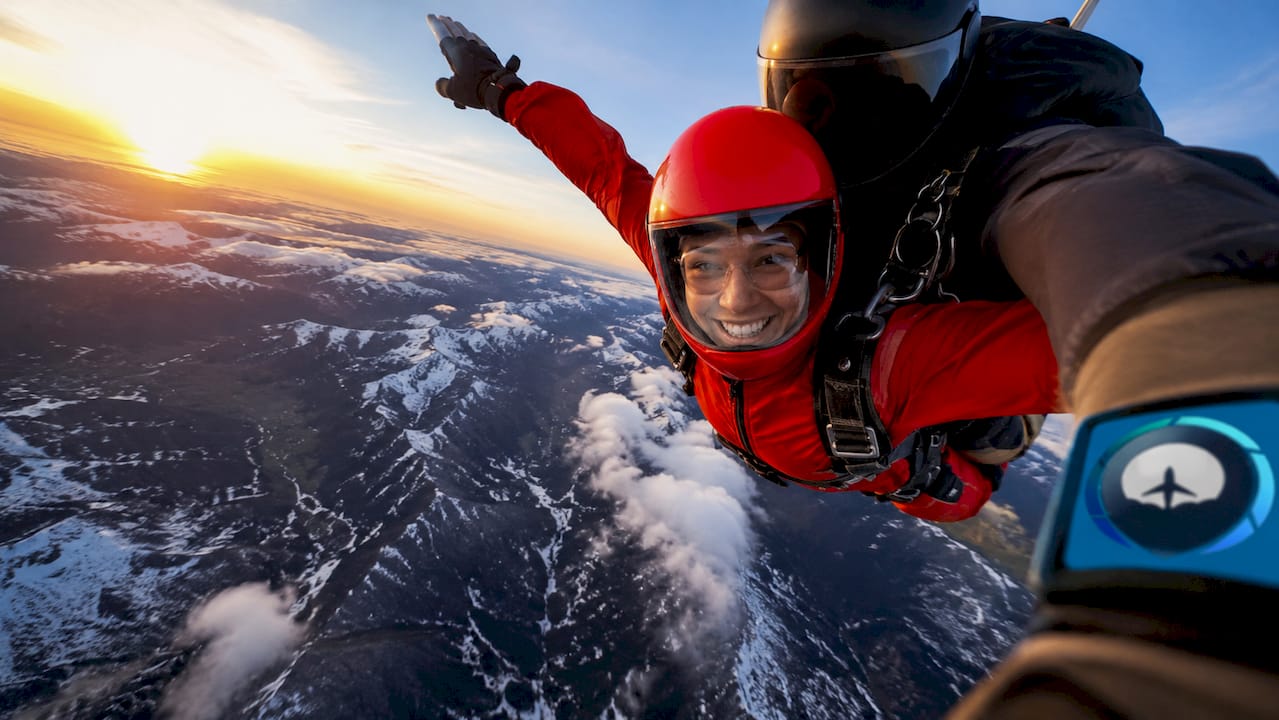
Skydiving is the clearest test of whether you can override your own fear response. The Swiss Alps, New Zealand’s South Island, and the Namib Desert all offer tandem jumps with views that make the freefall feel almost secondary. Almost. The physical sensation of terminal velocity at roughly 120 miles per hour is something no video captures accurately. Book a tandem jump first, then consider an Accelerated Freefall (AFF) course if you want full solo certification.
2. A whitewater river expedition
A serious whitewater expedition is not a weekend float trip. A 16-day river expedition covers approximately 130 miles and requires skills including kayak strokes, oar raft rigging, and active risk management. That level of commitment builds a kind of confidence that carries into every other area of life. The Colorado River through the Grand Canyon and the Zambezi below Victoria Falls are two of the most respected routes in the world.
3. Climbing Mount Kilimanjaro
Kilimanjaro is the highest freestanding mountain on Earth at 19,341 feet, and it requires no technical climbing skills. That combination makes it one of the top adventures for young adults who want a genuine high-altitude challenge without years of mountaineering training. The Lemosho Route takes seven to eight days and gives your body the best chance to acclimatize. The summit push starts around midnight, and watching sunrise from Uhuru Peak is the kind of moment that resets your perspective on what you’re capable of.
4. Scuba diving certification at a world-class reef
An Open Water scuba certification takes 3–4 days of intensive instruction and practice, and the certification is valid for life. That makes it one of the highest-value investments on any bucket list. The Great Barrier Reef, the Red Sea, the Philippines, and Belize all offer world-class certification programs with instructors who work with beginners every day. Getting certified at one of these locations means your first real dives happen in some of the most biodiverse water on the planet.
Pro Tip: Complete your pool and theory sessions at home before your trip, then do your open-water checkout dives at the destination. You save vacation days and get more reef time.
5. Multi-day trekking in Patagonia or Iceland
The W Trek in Torres del Paine takes approximately five days and crosses granite towers, glacial lakes, and hanging glaciers. The Laugavegur Trail in Iceland covers the route in about four days through volcanic highlands, hot springs, and obsidian fields. Both routes are physically demanding but accessible to anyone with solid hiking fitness and the right gear. They also happen to be among the most photographed trails in the world, which means Traveling Portrait readers will have no shortage of material.
Pro Tip: Book Torres del Paine refugio huts six months in advance for the October–March season. They sell out completely, and wild camping spots are limited.
6. The Salkantay Trek to Machu Picchu
The Salkantay Trek is the best alternative to the classic Inca Trail, and many trekkers argue it’s the more rewarding route. Patagonia’s W Trek, the Salkantay, and Nepal’s Everest Base Camp are all high-altitude routes that require solid fitness but no technical climbing skills. The Salkantay crosses a 15,213-foot pass before descending into cloud forest, and you arrive at Machu Picchu through the Sun Gate at dawn. That approach, on foot after five days of hiking, hits differently than arriving by bus.
7. Viewing the Northern Lights in Iceland or Norway
The Northern Lights are one of those experiences tied to specific seasonal windows that genuinely cannot be rescheduled on your terms. The aurora season in Iceland and northern Norway runs from september through march, with peak activity in december and january. You need clear skies, darkness, and solar activity to align. Iceland adds the bonus of geothermal pools, volcanic landscapes, and the option to rent a camper van and chase the lights across the country on your own schedule.
8. Safari in Tanzania or Kenya
A safari in the Serengeti or Masai Mara is not just wildlife viewing. It’s a recalibration of your sense of scale. The Great Migration moves roughly 1.5 million wildebeest across the Serengeti and into Kenya’s Masai Mara between july and october, and witnessing a river crossing is one of the most raw, chaotic, and beautiful things you’ll ever see. Tanzania and Kenya both offer camps ranging from budget tented sites to high-end lodges, so this adventure fits more budgets than people assume.
9. Swimming in a bioluminescent bay
Bioluminescent bays exist in only a handful of places on Earth. Puerto Rico’s Mosquito Bay on Vieques Island is consistently rated the brightest in the world. The dinoflagellates that create the glow are sensitive to light pollution and chemical runoff, which means these bays are under real environmental pressure. Swimming through water that lights up blue-green around every movement of your body is genuinely surreal. Go now, while these ecosystems are still healthy enough to experience.
10. Paragliding or zip-lining in a world-class adventure hub
Paragliding over Interlaken in Switzerland or Pokhara in Nepal gives you 20–30 minutes of silent flight above landscapes that most people only see from the ground. Zip-lining in Costa Rica’s Monteverde Cloud Forest or Queenstown, New Zealand, is faster and louder but equally memorable. Both activities require minimal training and no prior experience. They’re also the kind of thing you can add to an existing trip without building an entire itinerary around them.
How to plan and prioritize your life goals before 40
Planning is what separates a bucket list from a wish list. Approaching age 40 often triggers a psychological shift that makes “someday” feel uncomfortable. Most goals are more achievable with basic planning than people assume. Here’s how to actually make it happen:
- Start with the most physical adventures first. Your recovery speed and stamina are assets right now. Use them on Kilimanjaro, Patagonia, and whitewater expeditions before you move to slower-paced cultural trips.
- Treat trip savings like a financial goal. Set a dedicated travel savings account and automate a monthly contribution. Naming the account after your next adventure makes it harder to raid for other expenses.
- Align timing with your real life. A 16-day river expedition requires planning around work leave, not just money. Map your adventures against your actual calendar, not an ideal one.
- Book time-sensitive trips early. Northern Lights season, the Great Migration, and Torres del Paine huts all have hard windows. These go on the calendar first.
- Let your list evolve. Travel style shifts by decade: your twenties favor raw energy and discovery, your thirties blend excitement with comfort, and your forties pursue meaning and depth. A bucket list that doesn’t change as you do is just a static document.
The adventure travel planning benefits go beyond logistics. Travelers who plan deliberately report higher satisfaction and fewer regrets from their trips. Planning is part of the experience, not just prep work.
Pro Tip: Review your bucket list every january and add one new adventure, retire one you’ve outgrown, and book at least one deposit for the year ahead.
Key takeaways
The most fulfilling bucket list adventures before 40 combine physical challenge, personal passion, and smart timing, because your energy, flexibility, and sense of possibility are all at their peak right now.
| Point | Details |
|---|---|
| Prioritize physical adventures first | Stamina and recovery peak before 40; use that advantage on demanding treks and expeditions. |
| Scuba certification is a lifetime asset | Open Water certification takes 3–4 days and qualifies you to dive anywhere in the world forever. |
| Time-sensitive trips need early booking | Northern Lights, the Great Migration, and Patagonia huts have hard seasonal windows. |
| Choose passion over prestige | Adventures aligned with genuine interests deliver lasting fulfillment, not just a good story. |
| Let your list evolve with you | Update your bucket list annually to reflect your changing energy, interests, and life stage. |
Why I stopped chasing the “perfect” bucket list
I spent most of my late twenties building a bucket list that looked impressive on paper. Everest Base Camp, the Amazon, Kilimanjaro, all the big names. What I didn’t account for was how different those experiences felt when I actually did them versus what I’d imagined. Kilimanjaro was harder and more emotional than I expected. The Laugavegur Trail in Iceland was quieter and more meditative than I thought a “bucket list” trip could be. And honestly, Iceland surprised me more than any summit.
The shift that changed everything was stopping to ask why I wanted each experience, not just what it was. Once I started filtering by genuine curiosity instead of external validation, the list got shorter and the trips got better. I stopped adding things because they looked good and started adding things because I’d been thinking about them for years.
The other thing nobody tells you: the run-up to 40 is actually a great motivator. That psychological urgency is real, and it’s useful. Use it to book the deposit, not just to add another item to the list. The adventures that matter most are the ones you actually go on.
If you’re in your early thirties, lean into the physical stuff now. If you’re closer to 40, don’t let that stop you. Kilimanjaro has no age limit. Neither does a bioluminescent bay. The only real deadline is the one you set for yourself.
— Justin Frazier
Traveling Portrait’s adventure travel resources
Traveling Portrait covers the destinations, gear, and planning details that turn bucket list ideas into real trips. Whether you’re researching your first high-altitude trek or trying to figure out the logistics of an Iceland road trip, the guides here go deep on the specifics.
The adventure travel guide breaks down what adventure travel actually means and how to identify the right experiences for your fitness level and interests. For destination research, the destinations hub covers iconic locations across every continent with firsthand detail. And if you want to avoid the planning mistakes that derail bucket list trips, the common trip mistakes guide is worth reading before you book anything.
FAQ
What are the best bucket list adventures before 40?
The top adventures for young adults before 40 include high-altitude treks like Kilimanjaro and the Salkantay, scuba certification at world-class reefs, Northern Lights trips, African safaris, and multi-day routes like the W Trek in Patagonia. Prioritize physically demanding experiences first, since recovery speed and stamina peak before 40.
How do I choose what goes on my bucket list?
Choose adventures that align with genuine long-held interests rather than social trends. Selecting three categories that reflect your true passions produces more fulfilling trips than building a list based on what looks impressive.
Is it too late to start a bucket list in your late 30s?
No. Most bucket list adventures require planning and money more than youth. A 38-year-old with a clear plan and a booked deposit will have a better experience than a 28-year-old who keeps saying “someday.”
Which bucket list trips have hard seasonal windows?
The Northern Lights (september through march), the Great Wildebeest Migration river crossings (july through october), and Torres del Paine hut bookings (october through march) all have fixed windows. Book these first when planning your list.
How long does scuba certification take?
An Open Water scuba certification takes 3–4 days of instruction and practice. The certification is valid for life, making it one of the most practical and high-value adventures to complete before 40.
Recommended
Other Posts You Might Like