Essential Gear Adventure Travel Checklist for 2026
An essential gear adventure travel checklist is a definitive set of items travelers must carry to stay safe, comfortable, and adaptable across varied environments. Packing right isn’t just about fitting everything into your bag. It’s about knowing exactly what you need before you leave the trailhead, the airport, or the hostel. Experts recognize ten core categories that cover everything from documents to activity-specific gear, and skipping any one of them can turn a great trip into a stressful ordeal. This guide walks you through every category so you can pack with confidence.
1. What documents and travel ID do you actually need?
Your passport is the single most critical item in your pack. Passport validity of 6 months beyond your return date is a mandatory requirement in many countries. Getting denied entry at the border because your passport expires in four months is a brutal way to start a trip.
Beyond your passport, gather these before you leave:
- Visas for every destination on your itinerary
- Travel insurance documents with emergency contact numbers printed on them
- Vaccination records if your destination requires proof
- A digital backup stored in cloud storage and a physical copy kept separately from the originals
Pro Tip: Store one set of copies in your carry-on and email another set to a trusted contact at home. If your bag gets stolen, you’ll still have access to everything you need.
Keep your documents in a waterproof document organizer inside your main bag. Accessibility matters when you’re rushing through customs at 2:00 AM.
2. How to choose luggage for adventure travel
The right bag makes every other item on your adventure travel packing list easier to manage. Recommended luggage capacity runs 40–60L for multi-day trips, giving you enough room without forcing you to check a bag on every flight.
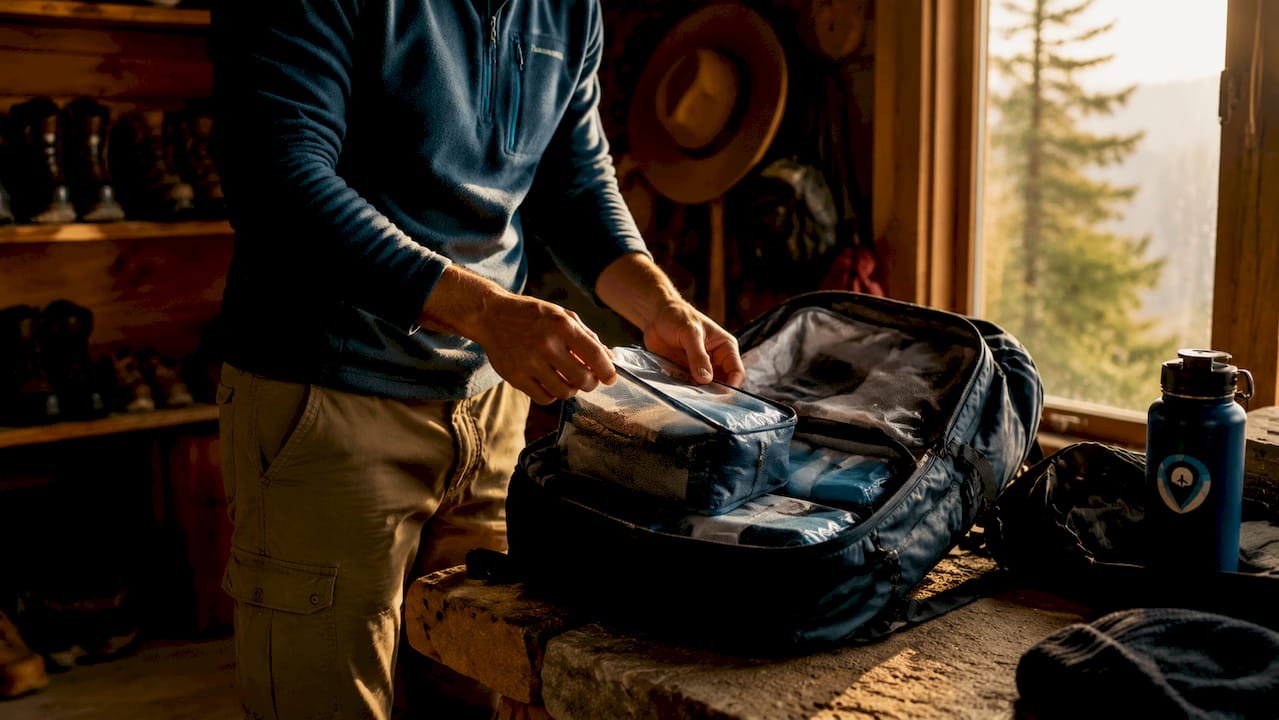
Hybrid luggage systems like convertible backpacks with stowable shoulder straps let you move between airport terminals and rugged trails without repacking. The Osprey Farpoint and Fairview series are widely recognized benchmarks in this category. They shift from carry-on to trail pack in seconds.
| Luggage type | Best for | Capacity range |
|---|---|---|
| Hybrid convertible pack | Mixed terrain and flights | 40–60L |
| Carry-on daypack | Short trips and urban travel | Up to 35L |
| Duffel with straps | Boat, bus, and base camp | 40–70L |
Look for recycled, bluesign-approved materials that offer light weatherproofing without adding bulk. Airline carry-on limits typically cap around 35L, so a 35L bag works well for trips under a week.
Pro Tip: Use semi-transparent packing cubes to compress clothing and spot what you need without emptying your entire bag. They’re genuinely one of the best packing upgrades you can make.
3. What clothing system works best for adventure trips?
The layering system is the foundation of any smart adventure travel packing list. Layering with a base, insulation, and outer shell lets you adapt to changing weather without carrying a separate outfit for every condition. Cotton fails in this system because it holds moisture and dries slowly.
Your clothing checklist should include:
- Base layer: Moisture-wicking merino wool or synthetic shirts and leggings
- Insulation layer: A lightweight down or synthetic jacket that compresses small
- Outer shell: A waterproof, breathable rain jacket
- Accessories: UV-protective hat, lightweight gloves, and a buff or neck gaiter
Quick-dry fabrics improve comfort dramatically when you’re moving through unpredictable weather. One pair of pants that converts to shorts covers two scenarios in a single item.
Pro Tip: Break in your hiking boots at home for at least two weeks before your trip. Blisters on day one of a ten-day trek are completely avoidable and genuinely miserable.
For footwear, match the terrain. Stiff hiking boots work for rocky or technical trails. Trail running shoes handle light hiking and long travel days. A pair of sandals or camp shoes gives your feet a break at the end of the day.
4. Which health, safety, and navigation tools are critical?
Safety gear is the part of the outdoor gear for travel checklist that most people underpack. A solid first aid kit covers the basics: adhesive bandages, antiseptic wipes, blister care like moleskin, pain relievers, and any personal prescription medications. Carry extra prescription medication beyond your minimum supply because delays happen and remote pharmacies are rare.
Sun protection is non-negotiable. SPF 30+ sunscreen, UV-blocking sunglasses, and a wide-brim hat protect you at altitude and in open terrain where exposure is intense. Insect repellent with DEET or a picaridin-based alternative handles mosquito and tick country.
For navigation, offline map apps and power banks are safety tools, not just conveniences. Cellular service disappears fast in remote areas. A power bank with at least 10,000 mAh keeps your phone and GPS device charged through multi-day stretches without access to power.
- Offline maps downloaded before departure (apps like Maps.me or Gaia GPS)
- Portable GPS device as a backup to your phone
- Water purification tablets or a filter like a Sawyer Squeeze
- Personal locator beacon for truly remote expeditions
Pro Tip: Download your offline maps at home on Wi-Fi. Trying to download a 2GB map file at a slow hostel connection the night before you leave is a recipe for frustration.
5. What activity-specific gear and sustainable items should you pack?
Your adventure equipment checklist shifts depending on what you’re actually doing. Trekking poles reduce knee strain on long descents. A headlamp with extra batteries handles pre-dawn starts and power outages. Dry bags protect electronics, documents, and clothing on water-based activities or in heavy rain.
For climbing or via ferrata routes, a helmet and harness are non-negotiable. A multi-tool or Swiss Army knife handles dozens of small tasks from gear repair to food prep. A microfiber travel towel dries fast, packs small, and works everywhere from jungle waterfalls to guesthouse showers.
Sustainable gear choices reduce your footprint without adding weight:
- A reusable water bottle with a built-in filter
- Solid toiletries like shampoo bars and conditioner bars that pass carry-on liquid rules
- Reef-safe sunscreen for coastal and marine environments
- A lightweight tote bag to avoid single-use plastic at markets
Multifunctional gear reduces weight and complexity in ways that go beyond simple space savings. Every item that does two jobs is one less item you need to carry.
6. What comfort and convenience accessories make a real difference?
Small accessories have an outsized impact on how well you actually feel during a long trip. A travel pillow, sleep mask, and earplugs turn a noisy overnight bus or a dorm room into something approaching real rest. You’ll make better decisions and enjoy the trip more when you’re not running on broken sleep.
Dry bags deserve a second mention here because they protect more than just gear. Seal your passport copies, phone, and camera in a dry bag during river crossings, boat rides, or sudden downpours. It takes ten seconds and saves you from a genuinely awful situation.
- Semi-transparent compression packing cubes for clothing organization
- A money belt worn under clothing for cards and emergency cash
- Multiple payment cards from different networks in case one gets blocked abroad
- A small padlock for hostel lockers and bag zippers
Pro Tip: Carry at least $100–$200 in local currency as emergency cash. ATMs in remote areas run out of money, and card readers fail more often than you’d expect.
Key Takeaways
A well-built adventure travel packing list covers ten categories, prioritizes multifunctional items, and keeps total bag weight manageable without sacrificing safety or comfort.
| Point | Details |
|---|---|
| Passport validity matters | Your passport needs at least 6 months of validity beyond your return date to avoid entry denial. |
| Luggage capacity sweet spot | A 40–60L hybrid convertible pack handles most multi-day adventure trips and fits airline requirements. |
| Layer your clothing | A base, insulation, and shell system in quick-dry fabrics adapts to any weather without overpacking. |
| Power banks are safety gear | A 10,000 mAh power bank keeps navigation and communication devices running in areas without power access. |
| Multifunctional items win | Every item that serves two purposes reduces weight and frees up space for what actually matters. |
What I’ve learned from packing for adventure trips
After years of adventure travel and photography, the biggest mistake I see travelers make isn’t forgetting something. It’s bringing too much of the wrong things and not enough of the right ones.
I used to pack a different outfit for every day. Now I pack a four-day clothing rotation built entirely on the layering system, and I’ve never once wished I had more clothes. What I have wished for, more than once, is a better power bank, a proper first aid kit, and a dry bag I didn’t leave at home.
The gear that earns its place in my bag every single trip is the stuff that does more than one job. My merino base layer works as a hiking shirt, a sleep layer, and a casual top in town. My rain jacket doubles as a wind layer at altitude. My multi-tool has fixed gear, opened bottles, and cut medical tape on the same trip.
The adventure travel planning process matters as much as the gear itself. Knowing your itinerary in detail lets you cut items that don’t fit the specific conditions you’ll face. A checklist for adventure trips is a starting point, not a fixed rule. Refine it every time you travel, and your pack gets smarter with each trip.
One more thing: don’t skip the common packing mistakes research before you leave. The errors that ruin trips are almost always avoidable with a bit of preparation.
— Justin Frazier
Traveling Portrait’s adventure travel resources
Traveling Portrait covers adventure travel from the gear level up, with firsthand guides built for travelers who want to go further and come back with great stories and photos.
Whether you’re heading into the backcountry or planning a photography-focused expedition, the adventure travel guides on Traveling Portrait give you destination-specific context that a generic checklist can’t. You’ll find gear breakdowns, packing strategies, and real-world advice from people who’ve actually done the trips. Check out the best travel gear guide for curated recommendations across every category on this checklist, updated for 2026.
FAQ
What is the ideal bag size for adventure travel?
A 40–60L bag covers most multi-day adventure trips. For flights where you want to avoid checked baggage, a 35L carry-on size is the practical upper limit.
How far in advance should I check my passport validity?
Check your passport at least three months before your trip. Many countries require at least 6 months of validity beyond your scheduled return date, and renewing a passport takes time.
Do I really need a power bank for adventure travel?
Yes. A power bank with at least 10,000 mAh capacity keeps your phone, GPS device, and camera battery charged in areas without reliable power access, making it a genuine safety item.
What fabrics work best for adventure travel clothing?
Merino wool and synthetic quick-dry fabrics outperform cotton in every condition. They wick moisture, dry fast, and regulate temperature across a wide range of environments.
How do I protect my documents while traveling?
Store originals in a waterproof organizer, keep a physical copy in a separate bag, and save a digital backup in cloud storage. Email a copy to a trusted contact at home as a final backup.
Recommended
Other Posts You Might Like