Your Golden Circle Itinerary: Best Stops and Timing
Choose the classic one-day clockwise loop if you’re a first-time visitor with a single day to spare. Pick the relaxed two-day route if photography time and a geothermal soak are on your list. And if you’re working with a winter schedule, build your entire plan around five usable daylight hours and cut everything except the three main stops.
The Golden Circle route covers roughly 230 km (about 140 miles) from Reykjavík, and a comfortable day with stops runs 8–10 hours. Here’s the quick breakdown:
- Half-day essentials (4–5 hours): Þingvellir only, or Geysir/Strokkur + Gullfoss. Best for travelers with a tight afternoon window or winter daylight constraints.
- Classic one-day loop (8–10 hours): Þingvellir, Geysir/Strokkur, Gullfoss, with optional Kerið add-on. The go-to for most first-timers.
- Relaxed 2-day/photography-focused (2 days): All main stops plus Brúarfoss, Laugarvatn Fontana or the Secret Lagoon, and Silfra or Langjökull if pre-booked. Ideal for photographers and anyone who hates feeling rushed.
One quick seasonal note: summer gives you nearly endless daylight and heavy crowds, while December and January have much shorter usable daylight hours. Before you leave for any season, check Safetravel for current road and weather alerts — it takes two minutes and can save your whole trip.
Key Takeaways
The classic one-day clockwise Golden Circle loop covers roughly 230 km from Reykjavík, takes 8–10 hours with stops, and rewards travelers who arrive early and resist cramming in too many extras.
| Point | Details |
|---|---|
| Pick your itinerary by goal | One day for first-timers; two days for photographers; winter short plan when daylight is ~5 hours |
| Arrive early at Þingvellir | Tour buses arrive 9:30–10 AM; being there before 9 AM gives you the rift valley in near-silence |
| Book guided activities in advance | Silfra snorkeling and Langjökull glacier tours sell out in peak season and each takes 3–5 hours |
| Check official safety sources | Verify road and weather conditions on Safetravel.is and road.is every morning before driving |
| Traveling Portrait workshops | Guided photography sessions on the Golden Circle with hands-on instruction at every main stop |
Table of Contents
- What does the Golden Circle route actually look like?
- What to see at Þingvellir, Geysir, and Gullfoss
- Which detours and add-ons are worth your time?
- Should you self-drive or book a Golden Circle tour?
- Sample timed itineraries for every type of traveler
- How much does the Golden Circle actually cost?
- Photography tips and local expert advice from Traveling Portrait
- A photographer’s honest take on the Golden Circle
- Guided photography on the Golden Circle with Traveling Portrait
- Sources
What does the Golden Circle route actually look like?
The classic Golden Circle loop starts and ends in Reykjavík, running clockwise through three anchor stops that Icelandic tourism authorities officially designate) as the route’s core: Þingvellir National Park, the Haukadalur geothermal area (home to Geysir and Strokkur), and Gullfoss waterfall. Driving the loop without stopping takes roughly 4 hours. Add real time at each site and you’re looking at a full day.
Clockwise is the standard direction because Þingvellir sits closest to Reykjavík, making it a natural first stop. There’s a practical crowd-management angle too: driving counterclockwise can sometimes let you arrive at popular spots just as tour buses are pulling out, but arrival timing matters far more than direction. Get to Þingvellir before 9 AM and you’ll have the rift valley largely to yourself.
Parking at Þingvellir is charged at most lots (pay at the machine before you return to your car). Kerið crater charges a small admission fee at the gate. Geysir and Gullfoss parking are currently free, though that can change seasonally. For live road conditions and closures, Road and Safetravel.is are your two official go-to sources — bookmark both before you leave the hotel.
What to see at Þingvellir, Geysir, and Gullfoss
These three stops are the backbone of every Golden Circle itinerary, and each one rewards a different kind of attention. Don’t rush them to squeeze in extras — experts consistently flag that underestimating stop time is the single most common mistake on this route.
Þingvellir National Park
Time to budget: 1.5–2.5 hours
Þingvellir is where Iceland’s parliament, the Althing, met from 930 AD onward, and where the North American and Eurasian tectonic plates are visibly pulling apart. You can walk right through the rift. The main path along Almannagjá gorge is paved and accessible for strollers; the Silfra fissure area requires a short walk on uneven ground. Wheelchair access is limited beyond the main visitor center paths.
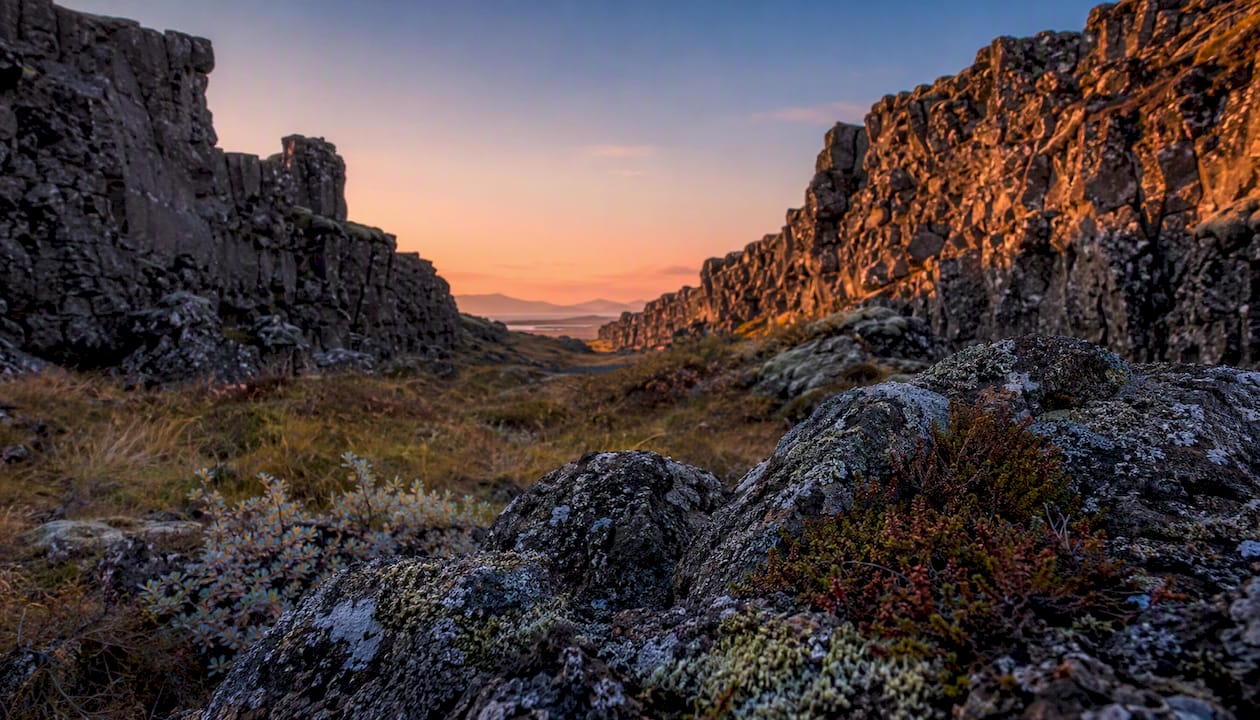
For photography, the wide rift valley with the lake (Þingvallavatn) in the background is the signature shot. Arrive at golden hour in summer (around 10 PM or 4–5 AM) for side-lit rock textures and no crowds. In winter, the low sun angle stays dramatic all day. The Öxará river bridge near Lögberg (Law Rock) gives a strong foreground element for wide-angle compositions.
- Walk the Almannagjá gorge path (30–45 min, mostly flat)
- Find Lögberg (Law Rock) for the historical anchor of the site
- Check the Silfra parking area even if you’re not diving — the water color is extraordinary from the bank
Pro Tip: Arrive before 9 AM. Tour buses typically roll in between 9:30 and 10 AM, and the gorge path gets genuinely crowded. An early arrival gives you the whole rift valley in near-silence.
Geysir geothermal area (Strokkur)
Time to budget: 45 minutes–1 hour
The original Geysir geyser has been largely dormant for years, but Strokkur erupts reliably every 5–15 minutes, shooting boiling water 15–30 meters into the air. It’s one of the most dependable natural spectacles you’ll find anywhere. The surrounding geothermal field has bubbling mud pools and steaming vents — stay on the marked paths, because the ground crust can be thin.
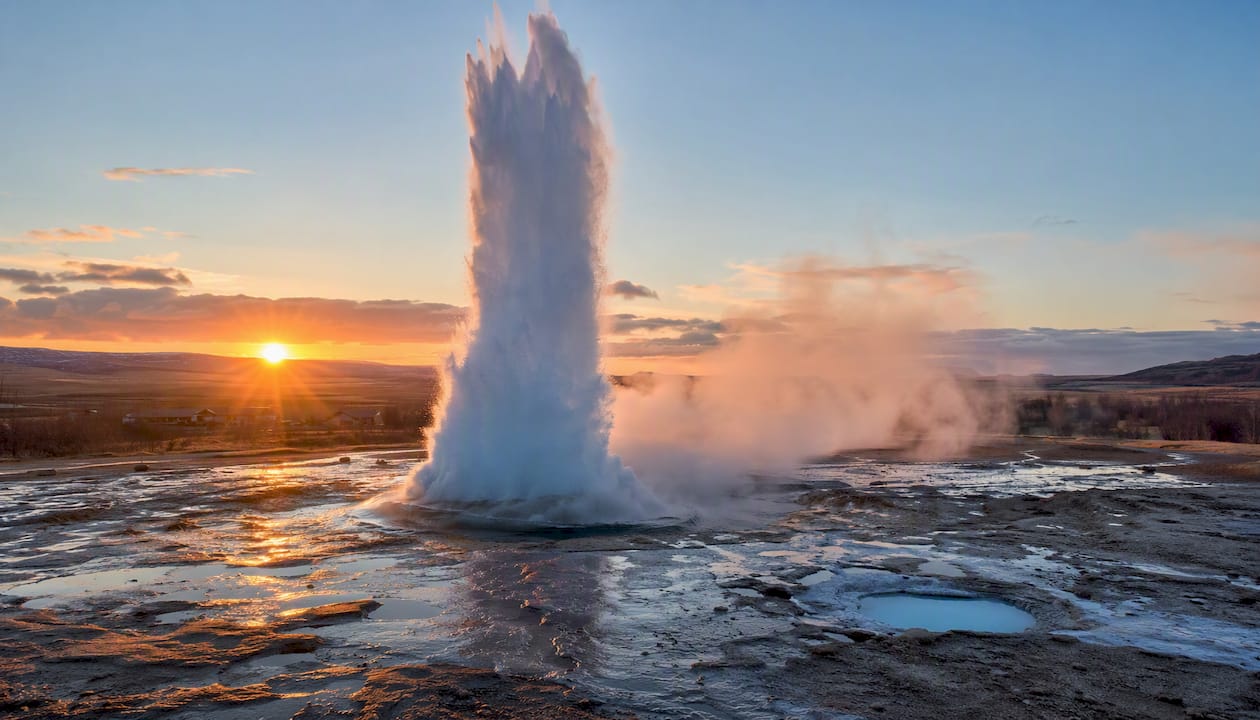
For photographers, position yourself on the downwind side so steam blows away from your lens. Shoot in burst mode and pre-focus on the water dome that forms just before the eruption. A wide-angle lens captures the eruption column against the sky; a short telephoto isolates the water arch. Early morning light is ideal, but honestly Strokkur looks great at almost any time of day.
Accessibility is solid here: the main loop around the geothermal field is gravel-packed and relatively flat. The visitor center has a café and restrooms. Avoid the 12 PM–2 PM window if you can — the café queue gets long and the field gets packed with tour groups.
Gullfoss waterfall
Time to budget: 45 minutes–1.5 hours
Gullfoss (“Golden Falls”) drops in two stages into a canyon roughly 70 meters deep, and it can be extremely windy and wet at the lower viewing platform. Bring a rain cover for your camera and waterproof layers for yourself — the spray reaches farther than you’d expect. The upper viewing platform is paved and accessible; the lower path to the canyon rim is rougher and can be icy in winter.
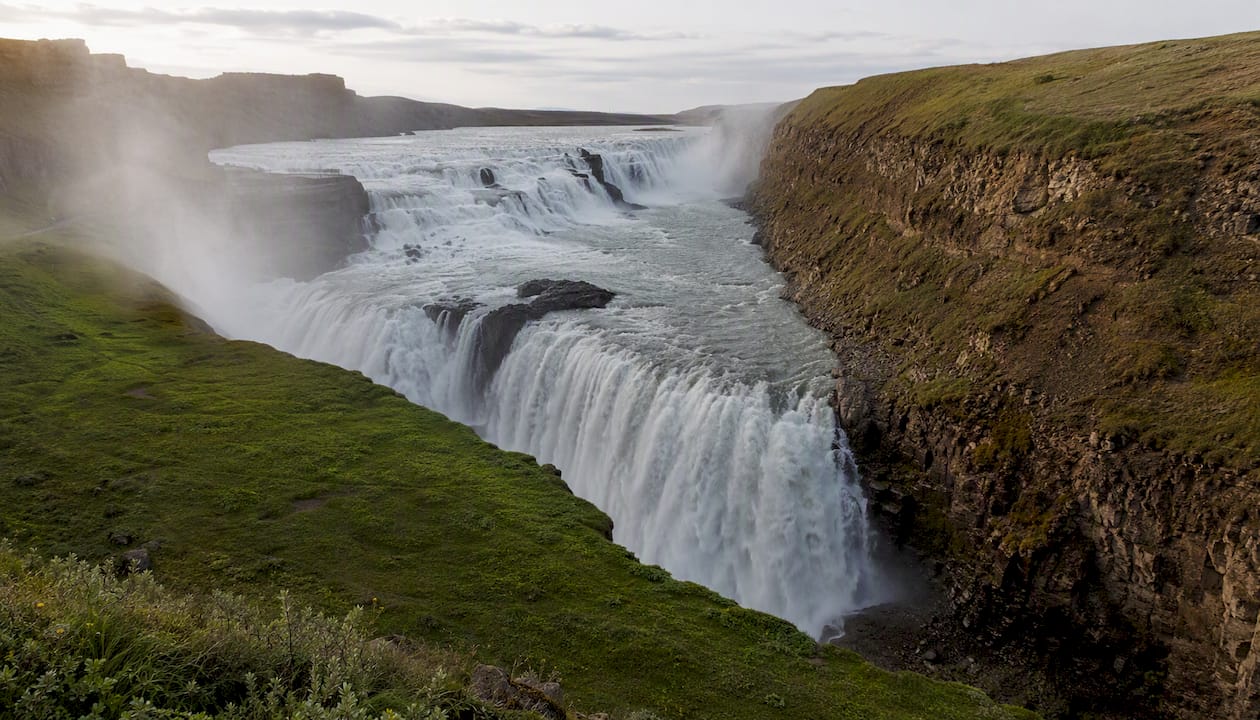
The best photography angle is from the lower path, looking back upstream with the canyon walls framing the falls. A polarizing filter cuts glare on the water. For long exposures, come in overcast conditions — direct sun creates harsh contrast in the canyon. In winter, ice formations on the canyon walls add a completely different visual layer.
Which detours and add-ons are worth your time?
The main loop is genuinely satisfying on its own, but several add-ons are worth the extra time depending on what you’re after. The key is knowing which ones require advance booking — guided activities like Silfra and Langjökull can consume most of a day if you include them, so plan accordingly.
Kerið volcanic crater
A 30–45 minute stop with a small admission fee paid at the gate. The crater lake sits in vivid contrast to the red volcanic rock walls — genuinely striking, especially in morning light. The path around the rim is about 15 minutes and involves some uneven terrain. No advance booking needed. Kerið sits on the route between Reykjavík and the main loop, making it easy to add at the start or end of the day.
The Secret Lagoon (Flúðir) and Laugarvatn Fontana
Both are geothermal soaking spots, and both benefit from advance booking in peak season. The Secret Lagoon in Flúðir is a naturally heated outdoor pool with a rustic, low-key feel — budget about 1.5–2 hours including changing time. Laugarvatn Fontana sits right on the Golden Circle route near Laugarvatn village and offers steam baths built over natural geothermal vents, plus a lake for a cold plunge. Either one adds roughly 2 hours to your day and works best as an afternoon wind-down stop.
Brúarfoss waterfall
Often called Iceland’s bluest waterfall, Brúarfoss requires a 3–4 km round-trip hike from the parking area. The vivid turquoise color comes from glacial meltwater, and it photographs beautifully in overcast light. Add 1.5–2 hours total. No fee, no booking required, but the trail can be muddy — waterproof boots are a must.
Silfra snorkeling and diving
Silfra is a fissure in Þingvellir where you can snorkel or dive between the two tectonic plates in water with visibility exceeding 100 meters. It’s a genuinely bucket-list experience. Book well in advance through a licensed operator — tours typically run 3–4 hours including gear fitting and briefing. Dry suits are provided (water temperature hovers around 2–4°C year-round), but you need to meet basic swimming requirements. A standard car gets you to the Silfra parking area without issue.
Langjökull glacier activities
Snowmobiling on Langjökull or exploring the man-made ice tunnel inside the glacier are both half-day commitments. The glacier is accessed via a purpose-built road that requires a 4WD vehicle or a guided transfer from the Golden Circle route. Book these well in advance, especially in summer when slots fill fast. Budget 4–5 hours minimum including travel from the main loop.
Should you self-drive or book a Golden Circle tour?
Self-driving is the most flexible option and, for most travelers, the best one. The driving-only loop takes 4–5 hours, which means you control exactly how long you linger at each stop. Organized tours are a solid fallback if you’re not comfortable driving in Iceland’s conditions or if you want a local guide’s commentary built in.
Self-drive
Pros:
- Full control over timing and stops
- Cheaper per person for groups of 2–4
- Freedom to add detours like Brúarfoss or Kerið spontaneously
- Works well for photographers who need to wait for light
Cons:
- Requires confidence driving on unfamiliar roads, potentially in winter conditions
- You handle all navigation and parking logistics
A standard 2WD car handles the Golden Circle’s paved roads comfortably in summer. In winter, a 4WD with winter tires is strongly recommended — most Icelandic rental companies fit winter tires as standard from October through April, but confirm this when booking. For a multi-day trip with overnight stops, a campervan rental adds flexibility and cuts accommodation costs, though high winds can make larger vehicles tricky on exposed roads. Check wind forecasts before driving a high-profile vehicle on open stretches.
When booking a rental car, take the gravel protection insurance (SAAP) seriously — it covers windshield and undercarriage damage from loose stones, which is a real risk on Icelandic roads. Book early in peak season; inventory shrinks fast.
Organized tours
Day tours from Reykjavík typically run 8–10 hours and cost roughly ISK 10,000–20,000 per person depending on inclusions (some include Kerið or a geothermal soak). They’re convenient, include a guide, and handle all logistics. The tradeoff is a fixed schedule — you move when the group moves, which can feel frustrating at photogenic spots where you want more time.
Public transport
Bus services connecting the Golden Circle stops do exist but run on limited schedules and don’t cover all stops with convenient timing. For a day trip with any flexibility, public transport is genuinely impractical. It works only if you’re traveling to a single stop (like Þingvellir) and back.
Sample timed itineraries for every type of traveler
These are ready-to-use plans. Adjust start times by season — in summer you can push starts later since daylight runs past midnight; in winter, January daylight can be as short as five hours, so earlier is always better.
Classic one-day loop (first-timers)
Photographer-focused one day
Relaxed 2-day itinerary
Winter short itinerary (limited daylight)
If a stop runs long or roads are slow: cut Kerið first, then Brúarfoss. Never cut Gullfoss — it’s the visual payoff of the whole loop.
How much does the Golden Circle actually cost?
The Golden Circle is one of Iceland’s more budget-friendly big-ticket experiences because most of the main stops are free to enter. That said, costs add up quickly once you factor in transport, food, and any add-on activities.
Typical cost breakdown:
- Þingvellir parking: Paid at most lots (around ISK 750–1,000 per vehicle, though fees can vary)
- Geysir and Gullfoss: Free entry and free parking currently
- Kerið crater: Small admission fee charged at the gate (roughly ISK 900 per adult)
- Secret Lagoon / Laugarvatn Fontana: Roughly ISK 2,500–4,500 per person depending on the facility and season
- Silfra snorkeling tour: Typically ISK 20,000–25,000 per person through licensed operators
- Langjökull glacier activities: Snowmobile tours often run ISK 20,000–35,000+ per person
- Organized day tour from Reykjavík: Roughly ISK 10,000–20,000 per person
- Car rental (standard, per day): Varies widely; budget ISK 8,000–15,000+ depending on season and vehicle type
- Fuel for the loop: Roughly ISK 3,000–5,000 for a standard car
Money-saving tips:
- Pack your own lunch. The Geysir-area café is convenient but pricey, and the 12 PM–2 PM queue is genuinely long. A cooler with sandwiches and snacks saves both money and time.
- Book guided activities (Silfra, Langjökull, geothermal baths) in advance. Same-day rates at popular spots can run higher, and in peak season some tours simply sell out.
- Visit in shoulder season (May, September, or October) for lower rental rates, smaller crowds, and better photography light than peak July.
- Iceland is a card-first economy. Virtually every parking machine, café, and ticket booth accepts Visa and Mastercard. Carrying ISK cash is useful as a backup but rarely essential.
Tipping is not customary in Iceland. You won’t be expected to tip at restaurants, cafés, or on tours — though rounding up is always appreciated.
Daylight by season
| Season | Usable daylight hours (approx.) | Itinerary impact |
|---|---|---|
| June–July | 20+ hours | Full flexibility; crowds peak in July |
| April–May | 8–10 hours | Shoulder season sweet spot |
| September–October | 8–10 hours | Good light, fewer crowds |
| November–March | 5–8 hours | Prioritize main three stops only |
| December–January | ~5 hours | Winter short itinerary essential |
Safety and packing checklist
- Waterproof outer shell: Gullfoss spray is relentless; a packable rain jacket is non-negotiable
- Windproof layer: Exposed viewpoints like the Gullfoss rim can have gale-force gusts
- Sturdy, waterproof footwear: Trails at Þingvellir and Brúarfoss get muddy; Gullfoss lower path can ice over
- Warm mid-layer: Even in summer, temperatures at altitude drop quickly
- Phone power bank: Iceland’s landscapes are photogenic at every turn, and battery drain is real
- Sunglasses and sunscreen: Summer sun at high latitude reflects off snow and water intensely
- Emergency snacks and water: Service stops between Gullfoss and Reykjavík are limited
For general travel safety habits on the road, practical safety checklists are worth reviewing before any self-drive trip in unfamiliar terrain.
High winds deserve a specific callout: if you’re driving a campervan or any high-profile vehicle, check the wind forecast for exposed sections of the route. Strong gusts can make larger vehicles genuinely difficult to handle on open roads, and a flexible itinerary lets you wait out the worst of it.
Photography tips and local expert advice from Traveling Portrait
The Golden Circle rewards photographers who plan their timing as carefully as their compositions. Here’s the workflow that consistently produces the best results.
Composition and framing at each stop
Þingvellir: Use the gorge walls as natural leading lines toward the lake. The Öxará river offers strong foreground interest — position low and wide for maximum depth. In winter, frost on the basalt columns adds texture that a standard tourist shot misses entirely.
Strokkur: Pre-focus on the water dome that forms 1–2 seconds before eruption. Shoot in burst mode at a fast shutter speed (1/1000s or faster) to freeze the water column mid-air. Position yourself so the steam blows away from your lens — check wind direction before you set up.
Gullfoss: Overcast days are your friend here. Direct sun creates blown-out highlights in the spray. Use a polarizing filter to cut glare, and a 6–10 stop ND filter for silky long-exposure water if you have a tripod. The lower canyon path gives the most dramatic angle; the upper platform is better for context shots showing the full two-stage drop.
Scout, shoot, move
The Golden Circle gets busy, and lingering too long at a prime spot blocks other visitors and draws frustration. The better workflow: scout the vantage point first (walk the full path before setting up your tripod), identify your two or three best compositions, shoot them efficiently, then move. You’ll get better images and leave with goodwill intact.
Crowd-avoidance strategies
- Arrive at Þingvellir before 9 AM — tour buses typically arrive between 9:30 and 10 AM
- Hit Strokkur mid-morning (10–11 AM) when the first wave of buses is still at Þingvellir
- Leave Geysir before 1 PM to avoid the lunch-hour peak
- Gullfoss is busiest between 11 AM and 2 PM; early morning or late afternoon gives you cleaner shots
Photographer gear checklist
- Weather-sealed camera body (spray and wind are real at Gullfoss)
- Wide-angle lens (16–24mm equivalent) for rift valley and waterfall context shots
- Short telephoto (70–200mm) for isolating Strokkur eruptions
- Circular polarizing filter
- ND filter (6–10 stop) for waterfall long exposures
- Lens cloths and a rain cover for your camera bag
- Sturdy tripod (carbon fiber handles wind better than aluminum)
Pro Tip: Shoot Gullfoss in the last two hours before sunset in summer — the low-angle light turns the spray golden and the canyon walls glow. It’s a completely different scene from the midday version most visitors photograph.
Understanding why Iceland draws photographers and adventurers in every season helps frame the Golden Circle not just as a checklist but as a genuine creative opportunity.
A photographer’s honest take on the Golden Circle
The Golden Circle is genuinely one of the most photogenic day trips on the planet, but it’s easy to let the logistics eat the experience. My preferred rhythm is to treat Þingvellir as a slow morning — arrive early, walk the gorge without a shot list, and let the compositions reveal themselves. The rift valley has a scale that doesn’t compress well into a rushed 30-minute visit.
The one workflow tip I keep coming back to: decide before you leave the hotel which stop is your priority image of the day, and give it the most time. Trying to get a portfolio-worthy shot at every single stop in one day is how you end up with six mediocre images instead of one great one. Pick your hero shot, commit to it, and let the others be supporting characters.
For more Iceland coverage and trip stories, the Traveling Portrait adventure stories page has firsthand accounts from the field that go well beyond the standard itinerary format.
Guided photography on the Golden Circle with Traveling Portrait
If you want more than a self-guided loop, Traveling Portrait’s Iceland photography workshop puts you on the Golden Circle with an experienced photographer who knows exactly where to stand, when to shoot, and how to work the light at each stop. It’s built for travelers who want to come home with images they’re actually proud of, not just proof they were there.
The workshop covers composition at all three main stops, timing strategies for Strokkur and Gullfoss, and hands-on guidance for shooting in Iceland’s challenging spray and wind conditions. Spots are limited to keep the group small and the shooting time personal. To check availability or ask about upcoming dates, visit the workshops page and send an inquiry directly.
Sources
Use these to verify road conditions, book tickets, and cross-check the facts in this guide before you travel.
Official safety and road resources:
Route and planning references:
Seasonal travel context:
Recommended
Other Posts You Might Like