The Role of Photography at Festivals: A Field Guide
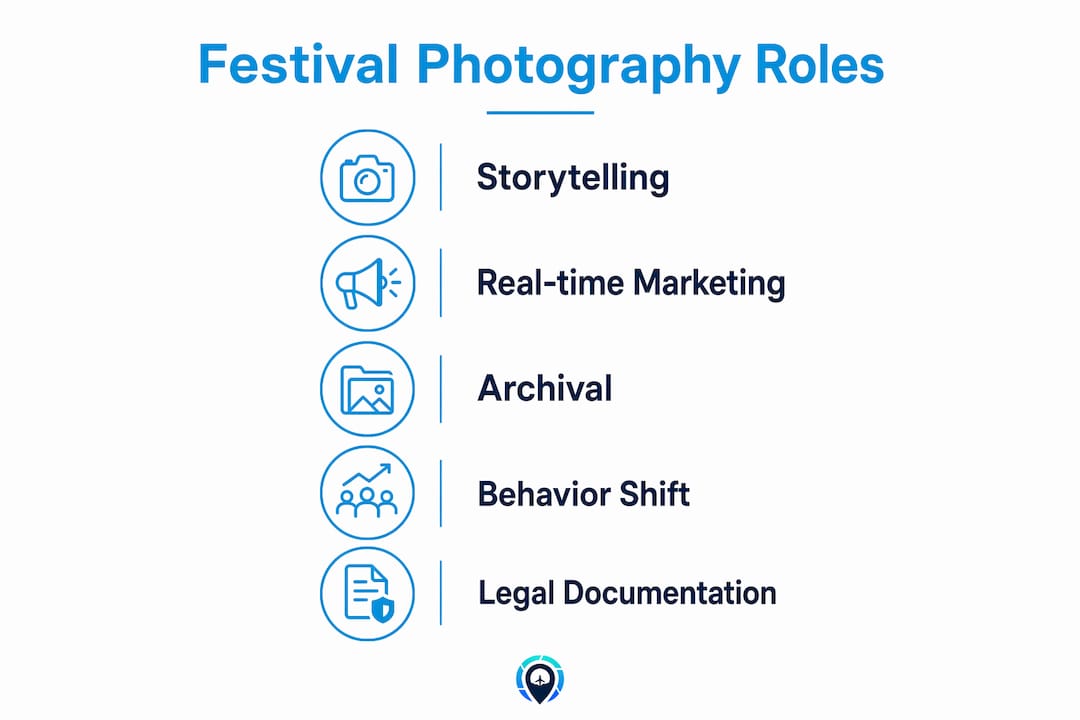
Photography at festivals does three things at once: it tells the story of the event, fuels year-round marketing, and creates an archival record that outlives the moment. That’s the short version. The longer version is that festival photojournalism sits inside a photography services market projected to grow by USD 11.57 billion at a CAGR of 4.8% between 2024 and 2029, and a single photo attached to a tweet can boost retweets by roughly 35%. This increase in retweets illustrates the marketing power of photographic content in festival social activity. Whether you’re an attendee wanting to capture memories, an aspiring photographer building your portfolio, or an organizer trying to squeeze every dollar of ROI from your event, this guide covers all of it.
Table of Contents
- What role does photography play at festivals?
- How photography changes festival dynamics and attendee behavior
- Why organizers invest in festival photography
- Ethics, privacy, and U.S.-specific legal considerations
- Your practical field guide for shooting festivals
- How to repurpose festival photos after the event
- When should you hire a pro vs. shoot it yourself?
- Key Takeaways
- What the camera actually does to a festival
- Traveling Portrait workshops for festival photographers
- Useful sources for further reading
What role does photography play at festivals?
Photography at festivals wears a lot of hats, and knowing which one you’re shooting for changes everything about how you approach the day.
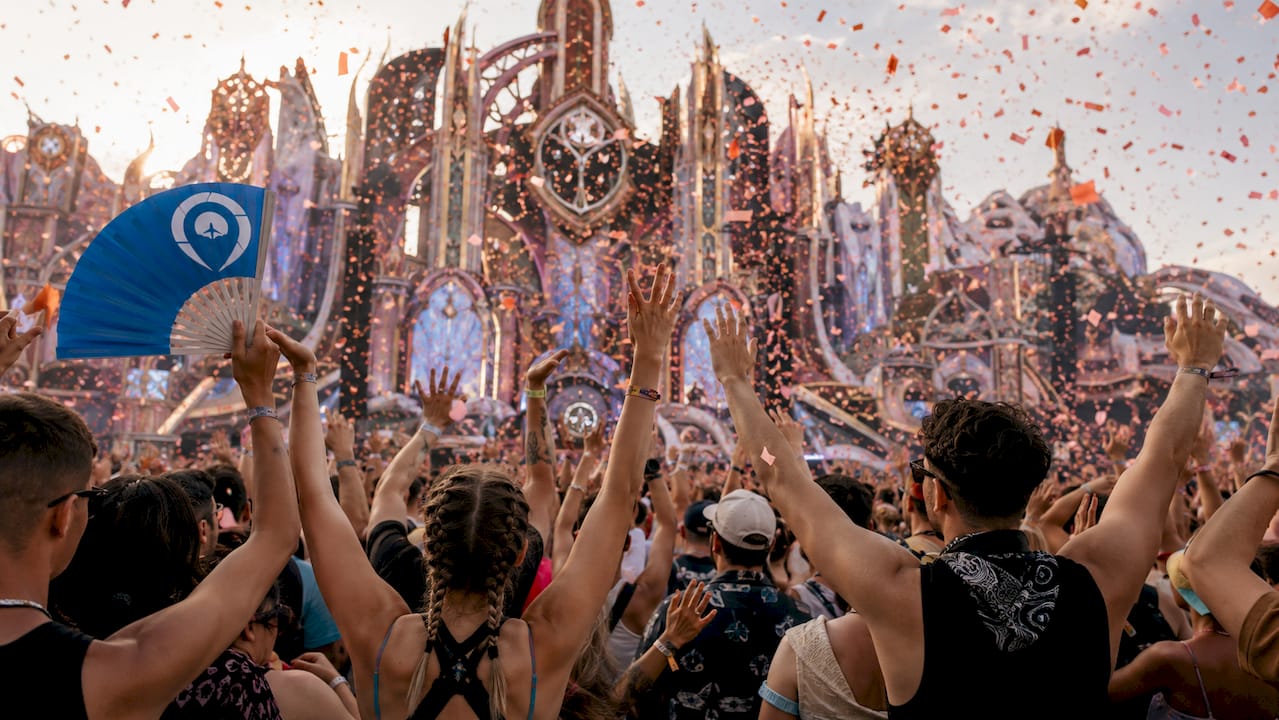
- Visual storytelling. A sunset-silhouette crowd shot with the main stage glowing in the background tells the whole emotional story of a festival in one frame. Attendees and travel photographers both benefit here.
- Marketing and promotional asset creation. Organizers reuse hero images in ticket ads, email campaigns, and sponsor decks for months after the event. The importance of photography at events for brand credibility is hard to overstate.
- Real-time attendee engagement. UGC hashtag walls and live social feeds create a feedback loop: attendees photograph moments hoping to see themselves featured, which generates more content for the festival’s digital footprint.
- Press and documentation. Artists, labels, and media outlets all need press-ready images. Concert photographers often deliver a curated batch to management the morning after a show.
- Archival and cultural record. Academic research frames photography as a tool for mediated memory, helping attendees reconstruct and relive experiences long after the event ends.
If you want to see how food festivals use storytelling to draw travelers, that’s a great companion read.
How photography changes festival dynamics and attendee behavior
Cameras don’t just document festivals. They change them. Once a photographer shows up, people start performing for the lens, adjusting their outfits, their poses, and even which sets they attend based on what will look good in a photo.
Industry analysts have tracked this shift from passive documentation to active cultural participation. Organizers now design sets, LED walls, and oversized props specifically with mobile camera framing in mind, because a shareable moment is worth more than a billboard. That changes your job as a photographer: the best angles are often the ones the organizers already planned for you.
That framing matters. When you understand that festival design is partly built around shareable moments, you stop fighting the crowd for a “natural” shot and start working with the environment. Attendees are also increasingly aware they might end up in someone else’s story or feed, which adds a layer of self-consciousness that a skilled photographer can either lean into or work around.
Why organizers invest in festival photography
Professional photography isn’t a one-day expense, and organizers often enhance engagement by offering digital photo albums that showcase event highlights in a lasting, high-quality format. It’s a year-long content engine that feeds social media, press releases, sponsor reports, and next year’s ticket campaign.
Typical deliverables organizers should request:
- Hero images (wide crowd shots, stage moments, branded signage)
- Curated social selects (vertical crops for Stories/Reels, square for feed)
- Speaker and performer portraits
- Sponsor asset photos (logo placements, activations)
- Short b-roll clips, since hybrid photo-video capture significantly multiplies social engagement
Turnaround tiers to expect:
- Fast selects (20–50 images): 24–48 hours
- Full social gallery: 5–7 days
- Full edited library: 2–4 weeks
Stat to know: Adding a photo to a tweet can boost retweets by roughly 35%, which highlights the impact of timely visual content after an event.
Pricing reality check: Single-day professional festival coverage in the U.S. typically runs $500–$2,500 depending on experience, deliverables, and market. Multi-day team coverage scales from there. Always confirm usage rights are included.
| Metric | Why it matters |
|---|---|
| Social referral traffic | Tracks how many site visits come from image-linked posts |
| Engagement lift | Measures likes, shares, and saves on image posts vs. text-only |
| Press pickup | Number of outlets that use your images |
| Sponsor asset reuse | How many times sponsor photos appear in partner campaigns |
| Market growth | Photography services market projected to grow USD 11.57B, CAGR 4.8% (2024–2029) |
Ethics, privacy, and U.S.-specific legal considerations
Most festival photography is lawful in public spaces, but permits, venue rules, and the presence of minors can change that fast. Here’s a practical checklist before you shoot:
- Photographer credentials: Many festivals require a media pass or photo pass. Apply early; some close applications weeks before the event.
- Permits: Outdoor public festivals on city property often require a permit from the local parks or events office. Check with the municipal permitting office for your specific city.
- Model releases: For editorial use (press, news), releases are generally not required. For commercial use (ads, sponsor materials), you need signed releases from identifiable subjects.
- Minors: Never publish identifiable photos of children without parental consent, regardless of the setting.
- Drone rules: The FAA requires recreational drone operators to pass the TRUST test and register drones over 0.55 lbs. Commercial drone use at events requires a Part 107 certification. Many festivals ban drones entirely, so check the event policy first.
- Venue contracts: Private festival grounds can restrict photography even if the event is publicly ticketed. Read the terms on your ticket and any photographer agreement.
- Cultural sensitivity: If you’re shooting festivals across different regions, research local customs around photographing rituals or religious ceremonies.
Pro Tip: Schedule a 15–30 minute call with the festival’s marketing director before the event. A pre-event alignment call that maps your shot list to their campaign calendar transforms your output from documentation into campaign-ready assets.
Your practical field guide for shooting festivals
The single most valuable habit is building a short shot list tied to marketing goals before you ever leave home. Everything else flows from that.
Gear checklist:
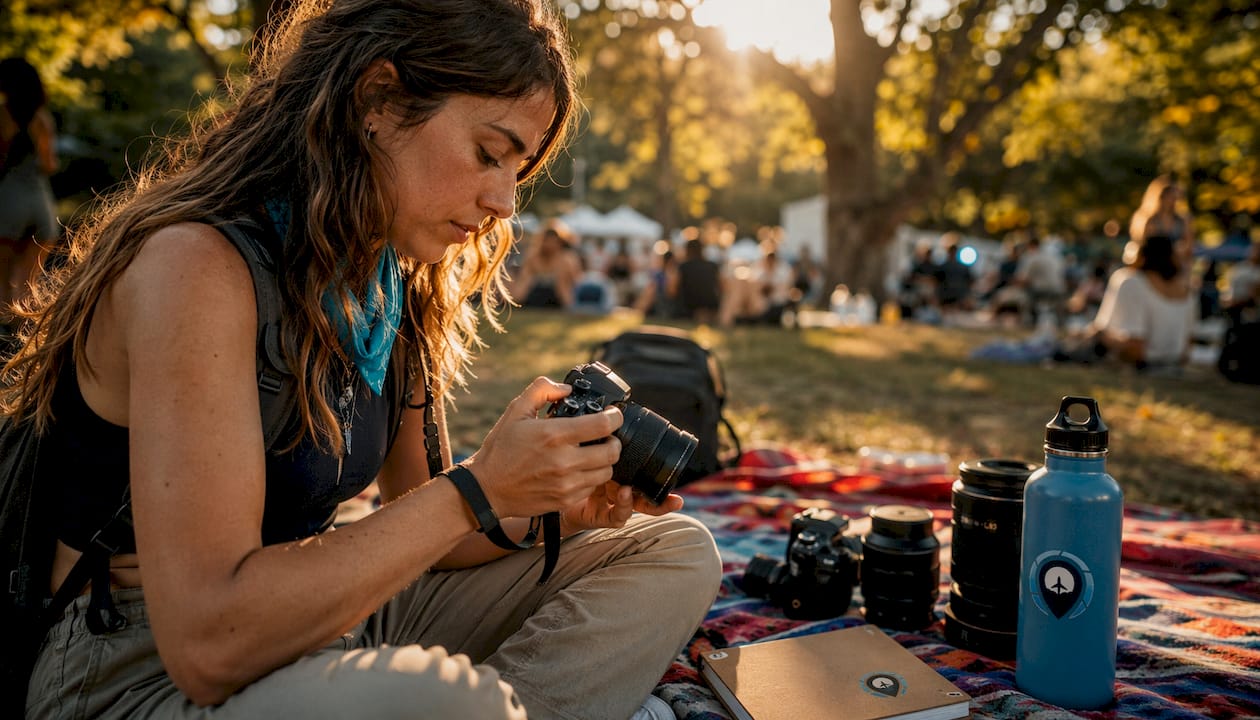
- Two camera bodies (one fails, the show goes on)
- 24–70mm f/2.8 for crowd and environmental shots
- 70–200mm f/2.8 for stage and performer close-ups
- 50mm f/1.4 or 35mm f/1.8 fast prime for low-light candids
- Extra batteries, multiple memory cards, weatherproof bag
- Check the best travel photography gear for a full kit breakdown
Priority shot list (in order):
- Opening crowd reaction (wide, emotional)
- Headliner performance (tight, peak moment)
- Environmental detail (signage, decor, branded elements)
- Candid attendee interaction (genuine, unposed)
- Sponsor activation or branded installation
- Performer portrait (if access allows)
- Closing moment or crowd exit (emotional bookend)
| Shot type | Primary use case |
|---|---|
| Wide crowd shot | Ticket ads, social hero image |
| Stage performance close-up | Press, artist media kit |
| Environmental detail | Sponsor reports, editorial |
| Candid attendee | UGC-style social content |
| Performer portrait | Artist management, press |
Shooting tactics: For mixed stage lighting, start at ISO 1600–3200, f/2.8, and 1/500s shutter, then adjust. Use continuous autofocus (AI Servo on Canon, AF-C on Nikon/Sony) for moving subjects. Compose environmental shots with people in the foreground to create that mediated memory effect that resonates long after the event.
Crowd navigation: Move between sets, not during them. Communicate with security before you start working a restricted area. Pack light: one bag, two bodies, done.
Pro Tip: Start culling your fast selects delivery during set breaks. Delivering 20–30 strong images within 24 hours captures the social momentum when it’s hottest.
How to repurpose festival photos after the event
A planned repurposing timeline multiplies the value of every image you captured.
0–48 hours: Deliver fast selects to organizers and performers. Post 3–5 images to social with the event hashtag while the buzz is live.
1–2 weeks: Deliver the full social gallery. Provide vertical crops for Instagram Stories and Reels, square crops for feed posts, and horizontal hero images for Facebook and YouTube thumbnails.
1–3 months: Build out campaign assets: email headers, sponsor packages, and press kits. LinkedIn works well for professional event recaps and sponsorship ROI reports.
On licensing: editorial use (news, press) generally doesn’t require a release, but commercial reuse in ads or sponsor materials does. Set a usage window in your contract (typically 1–3 years for commercial use) and include a clause that grants the organizer rights to repurpose images across their owned channels. Photographers retain copyright unless a work-for-hire agreement says otherwise.
When should you hire a pro vs. shoot it yourself?
Hire a professional when you need reusable marketing assets, sponsor deliverables, or press-ready images. DIY makes sense for personal memories and casual social UGC.
Questions to ask a potential photographer:
- Do you have festival or live-event experience specifically?
- What’s your turnaround for fast selects vs. full gallery?
- Who owns the copyright, and what usage rights are included?
- Do you carry liability insurance?
- What’s your backup plan if a camera fails mid-event?
Must-have contract items: deliverables list, usage rights scope, turnaround dates, cancellation terms, indemnity clause, and model-release handling responsibility.
Pricing bands: Short single-day coverage (4–6 hours, one photographer) typically runs $500–$1,500. Full-day multi-photographer team coverage runs $2,500–$6,000+, depending on deliverables and market. Always get a written quote that itemizes editing time and licensing.
A hybrid approach works well for many organizers: hire a pro for hero shots and key moments, then activate a UGC hashtag campaign to generate volume content from attendees. You get quality and quantity without paying for both from a single source. Building a strong travel photography portfolio starts with exactly this kind of mixed-coverage experience.
Key Takeaways
Photography’s role at festivals spans storytelling, marketing ROI, and legal documentation, and treating it as a year-long content strategy rather than a one-day shoot is what separates forgettable coverage from genuinely useful assets.
| Point | Details |
|---|---|
| Photography serves three core roles | Storytelling, real-time marketing, and archival documentation all happen simultaneously at every festival. |
| Fast selects drive social ROI | Delivering 20–30 curated images within 24–48 hours captures peak social momentum for organizers and performers. |
| Legal checklist is non-negotiable | Permits, model releases for commercial use, FAA drone rules, and venue contracts must be confirmed before you shoot. |
| Pre-event alignment unlocks ROI | A 15–30 minute planning call mapping shots to campaign goals transforms documentation into campaign-ready assets. |
| Traveling Portrait workshops | Hands-on festival photography practice through Traveling Portrait accelerates the skills covered in this guide. |
What the camera actually does to a festival
Here’s something most photography guides won’t tell you: the camera doesn’t just record a festival. It reshapes it. Organizers now build stages and install LED walls with your phone’s camera frame in mind. Attendees dress for the shot. Even the crowd’s energy shifts when a photographer moves through it.
That’s not a criticism. It’s an opportunity. When you understand that how photography enhances festivals is partly a designed experience, you stop chasing “authentic” moments that were staged anyway and start making deliberate creative choices. The best festival photographers I’ve seen work aren’t fighting the environment. They’re reading it.
The Music Business Journal puts it well: concert photography is “an intersection of storytelling” where the performance’s narrative meets the photographer’s. That intersection is where the images that actually get used, shared, and remembered come from. Not the technically perfect ones. The ones that felt like something.
Traveling Portrait workshops for festival photographers
If this guide got you fired up to actually shoot a festival, the fastest way to level up is hands-on practice with real feedback. Traveling Portrait’s travel photography workshop puts you in the field at scenic locations where you practice the exact skills covered here: low-light exposure, crowd composition, and building a shot list that serves both your portfolio and a client’s marketing goals.
You can also explore lesser-known global festivals to find lower-pressure environments to practice before tackling a massive event. For readers combining festival travel with broader adventure itineraries, the adventure travel planning guide is a solid next step. Check the workshop dates at Traveling Portrait and book your spot before they fill up.
Useful sources for further reading
These sources back the claims in this guide and are worth bookmarking for your own planning.
- Cambridge University Press: Mediated Memory at Live Events — Academic research on why attendees photograph events and how it shapes memory. Essential reading for understanding attendee behavior.
- Music Business Journal: Freeze Frame — Four professional concert photographers on craft, access, and deliverables.
- Event Photojournalism: Benefits of Professional Event Photography — Practical breakdown of how professional photography becomes a marketing asset.
- 5th Avenue Digital: Corporate Event Photography ROI — Covers pre-event alignment, fast selects delivery, and measuring marketing impact.
- FAA: Recreational UAS TRUST Test — Required reading before flying any drone at a U.S. festival.
- Hazel Oliver Creative: Video and Photo Teams at Festivals — Explains hybrid photo-video capture and how b-roll multiplies engagement.
- Susannah Fields on Event Photography (The Events Cast) — Industry perspective on photography as brand storytelling.
- Canon Outside of Auto: Festival Photography as Cultural Participation — Covers how festival design has shifted to accommodate cameras and social sharing.
Check your local municipal permitting office and the specific festival’s media policy early. Rules vary significantly by city, venue type, and event size, and finding out the week before is always too late.
Recommended
Other Posts You Might Like