Experience Local Cultural Celebrations: A Photographer’s Guide
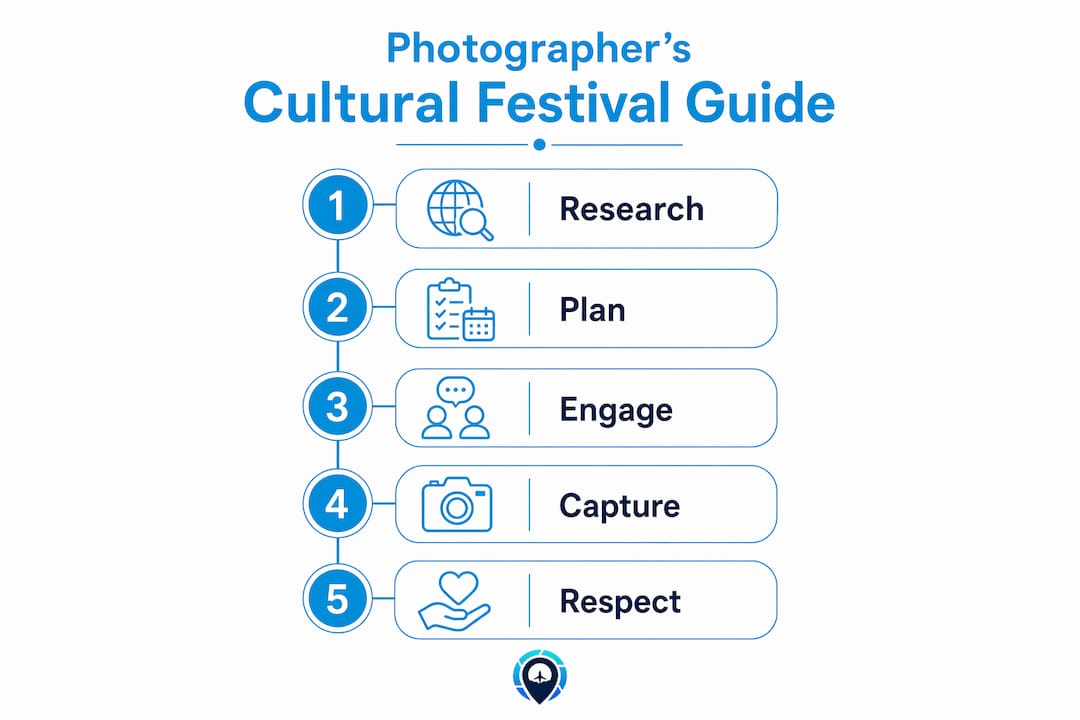
The best way to experience local cultural celebrations is to show up prepared, curious, and respectful. Search a trusted calendar like the Smithsonian Folklife Festival or a national events directory, lock in your logistics early, and treat every ceremony as a living tradition rather than a photo backdrop. Justin Frazier and the Traveling Portrait team have built this guide around exactly that approach.
Quick-start checklist:
- Search “[your city] cultural festival calendar 2026” or browse the Smithsonian Folklife Festival listings for free, nationally recognized events
- Book tickets and accommodation at least six weeks out for popular multi-day festivals
- Pack a fast prime lens (50mm f/1.8 or 35mm f/1.4) for low-light portraits
- Always ask permission before pointing a camera at an individual
- Check the organizer’s media policy before you arrive
Table of Contents
- Where can you find local cultural celebrations in the United States?
- How to plan logistics and prepare for respectful participation
- How do you photograph cultural celebrations respectfully and effectively?
- How to engage respectfully and support local communities
- U.S. cultural celebrations worth adding to your photography itinerary
- What should you do when a festival gets canceled or rescheduled?
- How do you capture audio and video at cultural celebrations without causing harm?
- Key Takeaways
- The thing most photographers get wrong at cultural festivals
- Ready to shoot cultural celebrations with more confidence?
- Useful sources and further reading
Where can you find local cultural celebrations in the United States?
The fastest route is combining a few discovery sources rather than relying on one. Start with official tourism boards, then layer in community-specific channels.
- National calendars: The Smithsonian Folklife Festival site, USA TODAY 10Best cultural festival rankings, and Eventbrite’s “cultural” category filter
- Regional tourism sites: State arts councils (e.g., the National Endowment for the Arts’ grantee database) and county tourism offices often publish annual festival roundups
- Community channels: Facebook Groups, Nextdoor, and local cultural centers are where smaller, community-led events actually get announced. Search “[ethnicity/heritage] community center [city]” to find them
- Press kits and photo passes: Contact festival media coordinators directly. Many mid-size festivals offer complimentary press credentials to photographers with a portfolio link
- Photo clubs and arts organizations: Local chapters of the American Society of Media Photographers (ASMP) often share festival leads members have scouted
For lesser-known global festivals, the same layered approach applies: start broad, then drill into community-specific sources.
Pro Tip: Subscribe to two or three festival newsletters in late January, when most U.S. events announce their summer and fall lineups. You’ll get early-bird ticket windows and, sometimes, open calls for festival photographers.
How to plan logistics and prepare for respectful participation
Good planning is what separates a stressful day of missed shots from a genuinely immersive experience. Here’s a practical order of operations:
- Confirm dates and ticketing. Many cultural festivals sell out or require advance registration. Check whether the event is free (like the Smithsonian Folklife Festival on the National Mall) or ticketed, and whether photography permits are separate.
- Map your transport. Festival timing matters enormously. Arrive during setup or early-morning hours when crowds are thin and performers are relaxed.
- Download the festival app or PDF schedule. Musikfest publishes interactive maps and stage schedules that let you plan your shooting day by performance time.
- Check accessibility. Confirm mobility access, parking, and whether strollers or large camera bags are permitted through security.
- Research attire and behavior expectations. Some Indigenous or religious celebrations require modest dress or prohibit photography in specific areas. Email the organizer a week before and ask directly.
For remote or Indigenous-led festivals, organizers often set strict site entry times. Arriving before your authorized window can disrupt cultural work that happens before the public program begins. Follow the schedule exactly.
Contingency planning: Festival cancellations happen, especially for outdoor events. Save the organizer’s social media handles and sign up for SMS alerts. Have a backup event in the same region bookmarked so the trip isn’t wasted.
How do you photograph cultural celebrations respectfully and effectively?
The gear matters less than the approach, but having the right kit helps you stay unobtrusive. Check out Traveling Portrait’s travel photography gear guide for a full breakdown.
Gear essentials:
- Fast prime lens (35mm or 50mm f/1.8) for portraits in tight spaces
- Zoom lens (70–200mm) to capture stage performances without crowding performers
- Extra batteries and a compact charger; festivals run long
- Weather-sealed body or a rain sleeve for outdoor events
- Small directional microphone if you’re capturing audio alongside stills
Shooting techniques:
- Work the edges and local transit routes rather than planting yourself in the main photo pit. Side streets and adjacent marketplaces yield candid, contextual images that tell a fuller story
- Shoot sequences: one wide establishing shot, one mid-range activity shot, one tight detail (hands, textiles, food). Three frames tell a story; one frame is just a snapshot
- For low-light performances, set ISO 3200–6400, open your aperture wide, and use burst mode to catch peak expressions
Ethics checklist:
- Ask for verbal consent before photographing individuals, especially children
- Follow no-flash rules without exception; flash disrupts performers and signals disrespect
- Treat sacred or private ceremonies as off-limits unless explicitly invited
- Follow your local guide’s lead on what is and isn’t appropriate to document
Pro Tip: Switch to silent shutter mode during quiet ceremonial moments. It’s a small thing, but performers and community members notice, and it often earns you more access, not less.
How to engage respectfully and support local communities
Cultural festivals blend performance, food, crafts, and community ritual. Your behavior as a visitor shapes whether you’re welcomed back.
Do:
- Wait for an invitation before joining dances or rituals
- Buy directly from artisan vendors; ask about the provenance of crafts before purchasing
- Tip street performers and musicians when cash is accepted
- Use public transportation to get to the event; it puts you alongside locals rather than apart from them
- Donate to community programs listed in the festival program
Don’t:
- Stage or rearrange cultural objects for a better photo
- Share intimate ritual imagery without explicit permission from community leaders
- Treat the event as a tourist product. Indigenous-led celebrations prioritize living traditions and local control
For sensitive or community-led events, responsible tourism guidance consistently recommends hiring a professional local guide. A good guide provides cultural context, makes introductions, and handles permission checks so you can focus on the experience. Look for guides affiliated with recognized cultural organizations rather than generic tour aggregators. For a deeper look at what this kind of heritage travel experience actually involves, it’s worth reading up before you book.
U.S. cultural celebrations worth adding to your photography itinerary
These events offer strong photographic opportunities and represent a range of traditions across the country.
- Smithsonian Folklife Festival (Washington, D.C.): Free, held annually on the National Mall, featuring master artisans and tradition bearers from across the U.S. and abroad. Best shot: craft demonstrations in natural light during morning hours. Check the festival’s media policy for portrait consent guidelines.
- Celtic Music and Heritage Festival (St. Augustine, FL): Held in spring, this festival includes Highland games, parades, and traditional music performances. The parade route offers great sequential storytelling shots. Arrive early for the Highland games setup.
- Musikfest (Bethlehem, PA): A massive free multi-day music festival with hundreds of performers across many stages. Use the interactive map to pre-plan your stage rotations. The adjacent marketplace is where the best candid portraits happen.
- Fiestas de la Calle San Sebastián (San Juan, Puerto Rico): One of the most vibrant street festivals in the U.S. territories, with elaborate costumes, live music, and artisan markets. Shoot at golden hour when the colonial architecture adds depth to every frame.
Pro Tip: For the Smithsonian Folklife Festival, register for the free press list through the festival’s media office. You’ll receive advance schedules and access to artisan demonstration areas before general admission opens.
What should you do when a festival gets canceled or rescheduled?
It happens more than you’d think, and the photographers who handle it best are the ones who built flexibility into their plans from the start.
Check the organizer’s official social media accounts first; cancellation announcements almost always go there before email. Follow the festival’s Instagram and Facebook pages the moment you register, not the day before you travel.
If a cancellation hits after you’ve already traveled, pivot to the community rather than the event. Cultural neighborhoods, local markets, and community centers often host informal gatherings around the same dates. Some of the most compelling cultural photography comes from exactly these unscheduled moments.
For ticketed events, document your purchase confirmation and check the refund policy before you book. Many festivals offer credit toward the following year rather than cash refunds. Travel insurance that covers event cancellation is worth adding for multi-day trips built around a single event.
How do you capture audio and video at cultural celebrations without causing harm?
Audio and video carry more privacy weight than still photography, and the rules are stricter at most events.
Always check the organizer’s media policy for video rights before you record. Many festivals license their performances to broadcasters and prohibit independent video recording of main-stage acts. Recording sacred or ritual audio without permission is a serious breach of trust in many Indigenous and religious communities.
For ambient sound and crowd atmosphere, a small directional microphone pointed away from individuals is generally acceptable. For interviews or close-up audio of performers, ask explicitly and get a verbal yes on camera before you start rolling.
Privacy considerations matter for video in a way they don’t always for stills. A photograph captures a moment; a video captures identity, voice, and behavior over time. Before posting any video that features recognizable individuals, reach out and confirm they’re comfortable being identified publicly. This is especially true for children and for participants in religious ceremonies.
When sharing content afterward, credit the community and the event by name in your caption. Tag the official festival account rather than individual participants unless they’ve asked to be tagged. If you’re unsure whether an image or clip is appropriate to share, the safest default is to ask the organizer first.
Key Takeaways
Attending cultural celebrations with preparation, curiosity, and ethical awareness produces stronger photography and more meaningful experiences than showing up with just a camera.
| Point | Details |
|---|---|
| Find events through layered sources | Combine national calendars, community centers, and press contacts to discover both major and local celebrations. |
| Plan logistics six weeks out | Confirm tickets, transport, attire requirements, and organizer media policies well before the event date. |
| Photograph with consent and context | Always ask permission for portraits, follow no-flash rules, and shoot sequences that tell a story beyond a single frame. |
| Hire a local guide for sensitive events | Professional guides provide cultural context, introductions, and permission checks at Indigenous or community-led festivals. |
| Traveling Portrait workshops | Traveling Portrait’s travel photography resources teach ethical, immersive shooting techniques for exactly these situations. |
The thing most photographers get wrong at cultural festivals
Most photographers show up to a cultural celebration thinking their job is to capture it. The better frame is that your job is to participate in it , and the photographs are what you bring home from that participation.
The difference shows in the work. Images made from inside the experience, where you’ve eaten the food, talked to the artisans, and waited for the right moment rather than manufacturing one, have a quality that staged or rushed shots simply don’t. You can feel the difference between a photographer who was present and one who was hunting.
The consent conversation is also where most people stumble. Asking permission doesn’t kill spontaneity. Done right, it creates a moment of connection that often produces a far better portrait than the candid you were going to steal. A smile that knows you’re there is more honest than one you caught by surprise.
The other thing worth saying: not every moment needs to be documented. Some ceremonies are meant to be experienced, not archived. Putting the camera down at the right time is its own kind of skill, and communities remember the photographers who understood that.
Ready to shoot cultural celebrations with more confidence?
Traveling Portrait’s travel photography workshop is built for photographers who want hands-on practice in exactly these situations: crowded festivals, low-light performances, and communities where trust matters as much as technique. The workshops emphasize local partnerships and ethical practice, so you leave with images you’re proud of and relationships you can return to. If you’re planning a festival trip and want a structured approach to the whole experience, that’s the place to start.
Useful sources and further reading
A short list of the authoritative sources used throughout this guide:
- Smithsonian Folklife Festival: Official site for dates, featured cultures, and media access information. The most reliable source for the festival’s annual program.
- Musikfest / ArtsQuest: Official schedule, interactive maps, and performer listings. Use it to plan your shooting day.
- USA TODAY 10Best Cultural Festivals: Annually updated ranking of the best cultural festivals in the U.S., including the Celtic Music and Heritage Festival.
- Worldpackers: How to Immerse Yourself in Local Culture: Practical immersion tactics including public transport, local food, and community engagement.
- ResponsibleTravel: Festival Highlights: Guidance on attending festivals responsibly, including recommendations for local guides at sensitive events.
- Traveling Portrait: What Is a Cultural Festival?: Background on what defines cultural festivals and their roles in communities, for readers who want deeper context.
Recommended
Other Posts You Might Like