
Antelope Canyon: Your Complete 2026 Visitor Guide
Antelope Canyon is a network of slot canyons carved by centuries of flash flooding on Navajo Nation land near Page, Arizona, and it’s one of the most photographed natural wonders in the American Southwest. Every visit requires a licensed Navajo guide. No exceptions. The canyon’s famous sandstone waves, swirling orange walls, and iconic light beams draw travelers and photographers from around the world. Whether you’re planning your first trip or trying to nail the perfect shot, knowing how the canyon works before you arrive makes all the difference.
What are the main sections of Antelope Canyon?
The slot canyon system splits into three distinct sections: Upper Antelope Canyon, Lower Antelope Canyon, and Canyon X. Each offers a genuinely different experience, and picking the right one depends on your priorities.
Upper Antelope Canyon is shaped like an inverted V, which means it has a flat, walkable floor and a narrow opening at the top that funnels dramatic light beams downward. This is the section you’ve seen in every viral photo. It’s the most accessible option for visitors with mobility concerns, and it draws the largest crowds. Tours run $90–$120 per person, including the $8 Navajo Nation permit fee.
Lower Antelope Canyon is a V-shaped canyon. You descend via metal staircases into a narrow, winding passage that feels genuinely immersive. The light here is broader and more indirect, which creates rich, layered color in photos rather than the sharp beam effect. It’s roughly 30% cheaper than Upper, with tours running $60–$85, and the crowds are noticeably thinner.
Canyon X is the least known of the three. It uses private 4x4 shuttles to reach exclusive viewpoints near Horseshoe Bend, and group sizes stay small. Tours run $105–$160, which puts it at the top of the price range, but the payoff is a quieter, more personal experience. Photographers who want unobstructed compositions without strangers walking into every frame will love it.
| Section | Price Range | Difficulty | Light Beams | Crowd Level | Best For |
|---|---|---|---|---|---|
| Upper Antelope | $90–$120 | Easy (flat walk) | Yes, 11 AM–1 PM | High | First-timers, accessibility |
| Lower Antelope | $60–$85 | Moderate (stairs) | Indirect only | Medium | Hikers, budget travelers |
| Canyon X | $105–$160 | Moderate (4x4 shuttle) | Partial | Low | Photographers, privacy |
Pro Tip: If you want the iconic light beams and don’t mind crowds, book Upper Antelope. If you want a more adventurous feel and better value, go Lower. If you want both solitude and great shots, Canyon X is worth the extra cost.
Check out Traveling Portrait’s guide to Arizona slot canyons for a broader look at what the region offers beyond Antelope.
How to plan your visit: booking, timing, and safety
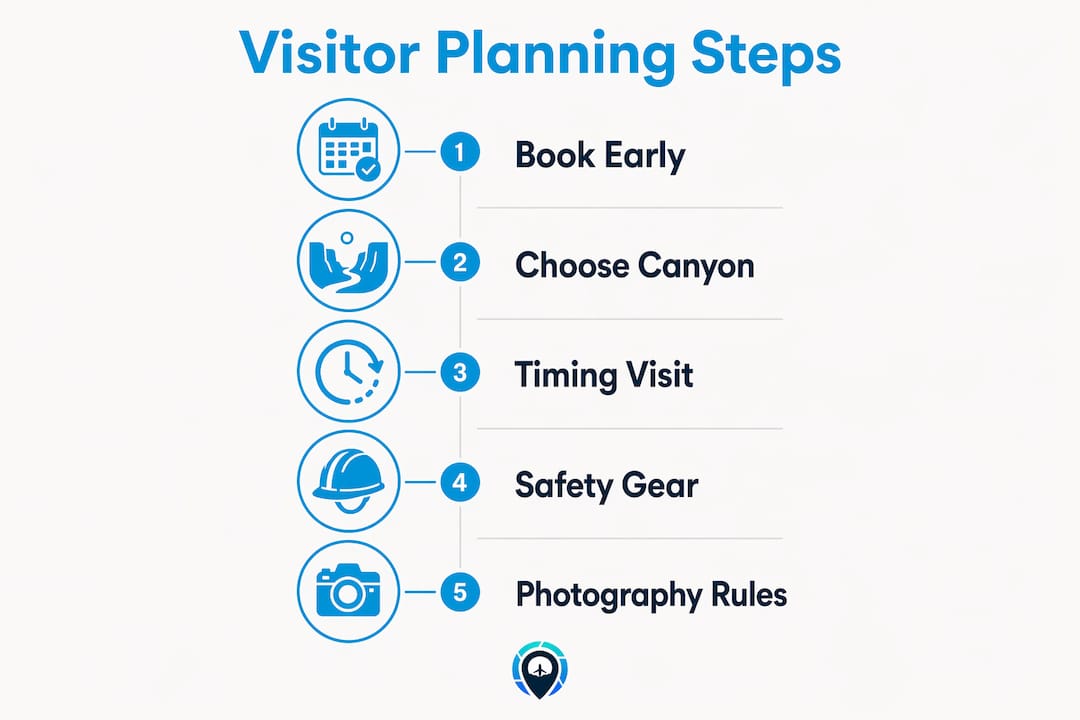
Booking early is not optional during peak season. Tours for Upper Antelope Canyon in particular sell out weeks, sometimes months, in advance between march and october. The light beam window, 11 AM to 1 PM, is the most sought-after slot, and those spots go fast.
One scheduling detail that trips up a lot of travelers: Page, Arizona operates on Mountain Standard Time year-round with no daylight saving time. In summer, that puts Page one hour behind neighboring states like Utah and Nevada. If you’re driving from Las Vegas or Salt Lake City and you haven’t adjusted for this, you will miss your tour. Double-check your booking confirmation against local Page time, not your phone’s auto-adjusted clock.
The permit fee is included in every licensed tour price, so you don’t need to purchase it separately. What you do need to do is book through a Navajo-authorized operator. Independent access is not permitted. Navajo guides provide cultural context and geological education throughout the tour, which genuinely adds to the experience rather than just fulfilling a legal requirement.
Flash flood safety is serious here. Monsoon season runs june through september, and tour operators hold the authority to cancel at any time if conditions become dangerous. The canyon’s narrow walls amplify flood risk dramatically. A storm miles away can send water rushing through with no warning. Operators monitor conditions in real time and will pull tours without hesitation.
Here’s a practical booking checklist to keep things smooth:
- Book your tour at least 4–6 weeks ahead for spring and summer visits, and 2–3 months ahead for the march to october peak window.
- Confirm your tour time in Page, Arizona local time, accounting for the no-DST rule.
- Check the operator’s cancellation and refund policy before paying, especially if you’re visiting during monsoon months.
- Arrive at the meeting point 15–20 minutes early. Tours depart on schedule and won’t wait.
- Wear closed-toe shoes. The sandy floor and metal stairs in Lower Canyon make sandals a bad idea.
Pro Tip: Late march and early october offer the best combination of light beams, manageable crowds, and lower flash flood risk. If you can be flexible on dates, those shoulder months are the sweet spot.
Essential tips for photographing the canyon
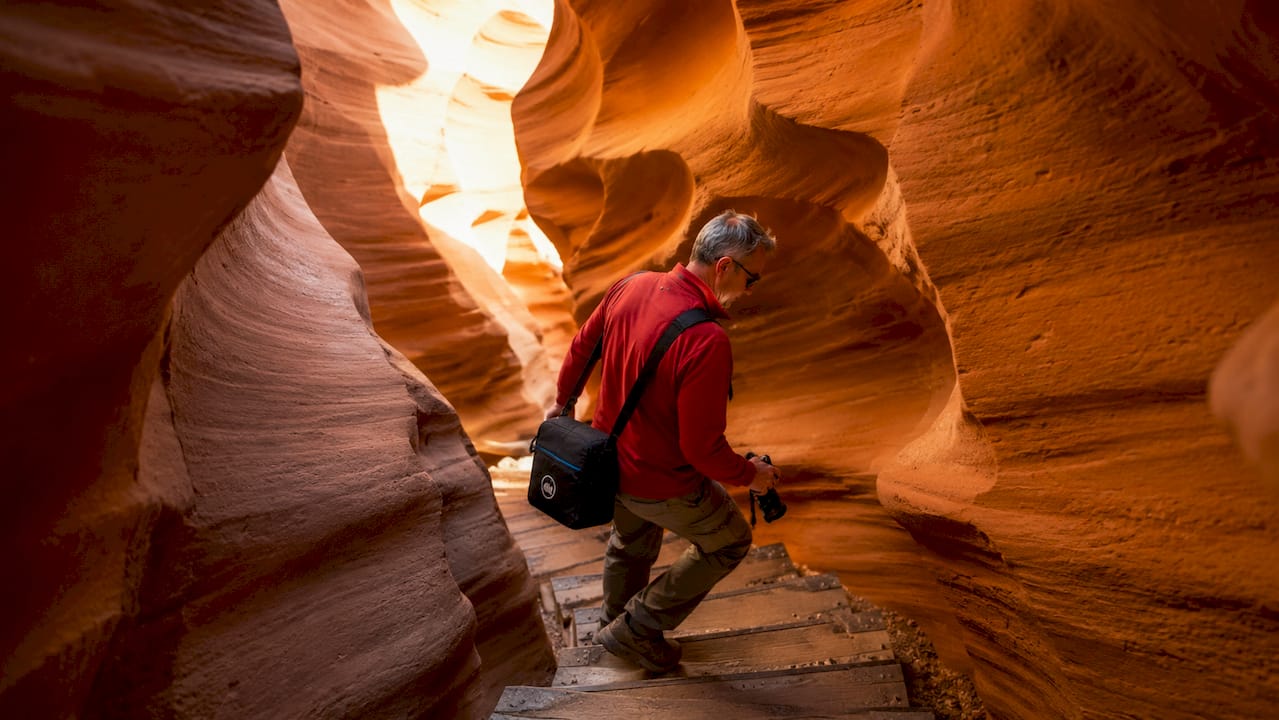
Photography inside the canyon comes with firm rules, and knowing them before you show up saves a lot of frustration. Tripods, monopods, and selfie sticks have been banned since 2019 across all sections. Bags are also prohibited inside the canyon. You carry your camera in your hands or around your neck. That’s it.
The no-bag policy catches a surprising number of visitors off guard and causes real delays at the entrance. Leave your camera bag in the car or at your hotel. Bring only what you can carry on your body.
Sand is everywhere, and it’s fine enough to get into every crevice of a camera body or lens. A plastic shower cap stretched over a DSLR body protects the camera between shots without adding bulk. It’s an old trick, but it works. Mirrorless cameras with sealed bodies handle the environment better, but no camera is fully immune to fine desert sand.
For the best light beam shots in Upper Antelope, aim for the 11 AM to 1 PM window between march and october. Outside that window, the beams don’t appear. For Lower Antelope, the broader indirect light creates beautiful color saturation throughout the day, so timing is less critical. Canyon X rewards wide-angle lenses and patience since the smaller groups give you more time to compose shots without people crowding the frame.
- Shoot in RAW format to preserve the full dynamic range of the canyon’s deep shadows and bright highlights.
- Use a wide-angle lens (16–24mm equivalent) to capture the full sweep of the walls.
- Increase ISO rather than using a flash. Flash photography flattens the texture that makes these walls so striking.
- Shoot upward as well as straight ahead. The narrow opening above creates natural framing that most visitors miss.
Pro Tip: Ask your Navajo guide where to stand for the best compositions. They know every angle in the canyon and will often position you for shots that casual visitors walk right past.
For deeper guidance on gear and technique, Traveling Portrait’s photography workshop resources cover shooting in challenging desert light conditions.
Navigating Page, Horseshoe Bend, and nearby logistics
Page, Arizona is the gateway city for the canyon and sits about 130 miles from the Grand Canyon’s North Rim. The nearest major airports are in Las Vegas (about 280 miles) and Phoenix (about 270 miles). Most travelers rent a car and drive, which gives you the flexibility to combine multiple stops.
Horseshoe Bend is the most natural pairing with a canyon visit. The iconic Colorado River overlook sits just 5 miles south of Page and takes about 20–30 minutes to walk from the parking lot. The recommended sequence is an early morning canyon tour followed by a late afternoon visit to Horseshoe Bend around 4:30–6 PM. That timing avoids the midday heat and crowds at the overlook while catching the warm golden light on the river.
Lake Powell is another worthwhile stop if you have an extra day. The reservoir’s red rock shoreline and houseboat rentals make it a completely different kind of Arizona experience compared to the canyon.
| Attraction | Distance from Page | Best Time to Visit | Notes |
|---|---|---|---|
| Antelope Canyon | In/near Page | 8–10 AM tour start | Book in advance |
| Horseshoe Bend | 5 miles south | 4:30–6 PM | Free entry, paid parking |
| Lake Powell | 3–15 miles | Morning | Boat tours available |
Packing for the desert environment matters more than most travelers expect. Temperatures in Page regularly exceed 100°F in summer. Hydration, sun protection, and light breathable clothing are non-negotiable. Check Traveling Portrait’s travel gear recommendations for a solid packing list built for desert conditions.
Key takeaways
Visiting Antelope Canyon requires advance booking, a licensed Navajo guide, and clear knowledge of photography rules, timing windows, and flash flood safety protocols.
| Point | Details |
|---|---|
| Guided tours are mandatory | All three canyon sections require a licensed Navajo guide; permits are included in tour fees. |
| Section choice matters | Upper offers light beams and easy access; Lower offers adventure and value; Canyon X offers privacy. |
| Book well in advance | Peak season tours sell out weeks ahead; book 4–6 weeks early at minimum. |
| Photography rules are strict | No tripods, bags, or selfie sticks allowed; protect cameras from fine sand with a plastic cover. |
| Time zone awareness is critical | Page, Arizona does not observe daylight saving time, which affects tour scheduling from neighboring states. |
What I actually learned visiting both Upper and Lower
I’ll be honest with you: I went into Upper Antelope Canyon expecting it to be the obvious winner. The light beams are real, they’re stunning, and yes, they look exactly like the photos. But the experience of being shuffled through with a large group, stopping at designated spots for 60 seconds before moving on, felt a bit rushed. The canyon itself is breathtaking. The logistics around it are a little factory-like during peak hours.
Lower Antelope surprised me. Descending those metal stairs into a narrowing passage that twists and turns felt genuinely adventurous. The colors were richer than I expected, and the smaller group size meant I could actually stop and look without someone bumping into me. If I had to pick one for a first-time visitor who isn’t obsessed with capturing the light beam shot, I’d recommend Lower without hesitation.
The Navajo guides made both experiences better than they would have been alone. They pointed out formations I would have walked past, shared the Navajo name for the canyon (Tse’ bighanilini, meaning “the place where water runs through rocks”), and explained how flash floods shaped every curve in those walls. That cultural layer is something you genuinely can’t get from a photo or a YouTube video.
My advice: if you can swing two days in Page, do Upper one morning and Lower the next. You’ll understand the canyon in a way that one visit simply can’t give you. And if you’re serious about photography, add Canyon X to the list. The private access and smaller groups make it worth every extra dollar.
— Justin Frazier
Plan your next adventure with Traveling Portrait
Antelope Canyon is the kind of place that makes you want to keep exploring. The American Southwest is full of destinations that reward the traveler who shows up prepared and curious.
Traveling Portrait covers adventure travel and photography across some of the world’s most striking destinations. From desert slot canyons to volcanic coastlines, the blog delivers firsthand guides built for travelers who want more than a surface-level visit. If you’re ready to plan your next trip with the same depth and detail, start with Traveling Portrait’s adventure travel planning guide for a framework that works across any destination. You’ll also find gear reviews, photography tips, and destination guides at Traveling Portrait to keep your planning sharp.
FAQ
Do you need a guide to visit Antelope Canyon?
Yes. Entry to all sections of Antelope Canyon requires a licensed Navajo guide. Independent access is not permitted under Navajo Nation regulations.
What is the best time to see light beams in Upper Antelope Canyon?
Light beams appear between 11 AM and 1 PM from march through october. Outside that window, the beams do not form.
How far in advance should you book antelope canyon tickets?
Book at least 4–6 weeks ahead for spring and summer visits. Peak months like march through may and september through october sell out fastest.
Is Lower Antelope Canyon worth visiting?
Lower Antelope Canyon is absolutely worth visiting. It offers a more immersive hiking experience, richer indirect light for photography, and smaller crowds at a lower price point than Upper.
Can you visit Horseshoe Bend on the same day as the canyon?
Yes. The recommended itinerary pairs an early morning canyon tour with a late afternoon Horseshoe Bend visit, which captures the best light at both locations.
Recommended
Other Posts You Might Like